
Immediate problem: the wrong choice costs more than money
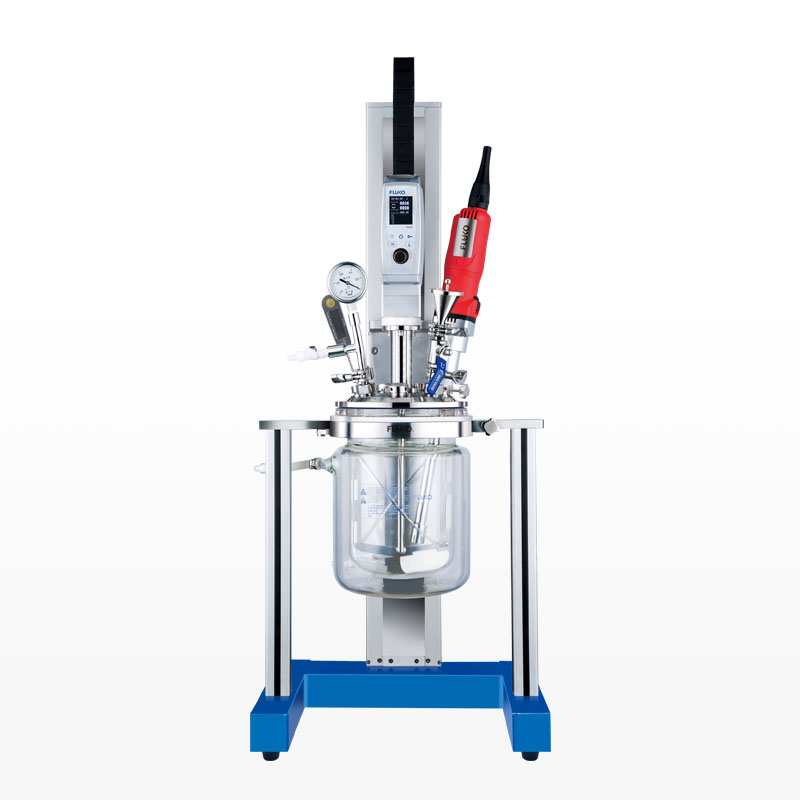
Manufacturers promise bespoke vessels, short lead times and turnkey installs, yet buyers repeatedly face off-spec batches, hidden utility costs and lengthy retrofits when vendor selection is treated as procurement rather than engineering. If your process needs high-shear dispersion for pigments, emulsions or solids suspension, a dedicated Jet Mixer can solve scale and contamination risks that conventional impellers cannot. Based on field audits and vendor assessments carried out at plants including projects in the Gulf Coast petrochemical complex near Houston, suppliers who promise generic solutions often miss critical variables such as shear distribution, cleanability and materials compatibility; the specific technique of jet mixing illustrates how a mismatch between application and vendor expertise becomes costly at scale.
Why this problem repeats: root causes
Procurement often prioritizes price and delivery over process fit. Technical specifications are copied from legacy equipment without computational verification. Engineering teams accept vendor drawings without demanding performance curves or CFD validation. Manufacturers advertise capacities and motor sizes, but they rarely publish validated metrics for parameters buyers actually need: power per unit volume, local shear rates, mixing time to homogeneity for specific PSD (particle-size distribution), and validated clean-in-place (CIP) cycles. That information prevents surprises during scale-up.
Core evaluation criteria buyers must use
Evaluate manufacturers against measurable, application-centered criteria: verified performance data (mixing time, dispersion energy), materials and welding standards (ASME B31, relevant sanitary codes), traceable FAT procedures, spare-parts lead times, and service coverage for your site. Ask for CFD or empirical test data for your formulation, not only generic sizing. Confirm compatibility with your utilities and control systems, and require documentation for cleanability and validation if you operate under regulated standards. Demand answers to three practical questions: how does the design control shear at the point of dispersion, what wear parts will constrain uptime, and how will scale-up be demonstrated?
Common pitfalls and how to avoid them
Trusting brochure specifications is a leading error. Mistakes repeated in the field include undersizing agitation for solids loading, omitting product-wetted material considerations, and ignoring maintenance access. Insist on witnessing a pilot test or a vendor demonstration under representative conditions. Validate their maintenance plan: are spare seals and impellers standard items? Does the manufacturer provide drawings that allow for remote monitoring? Avoid accepting vendor guarantees without quantifiable performance guarantees tied to your process metrics.
Comparing technologies and credible alternatives
Choose technology to match the problem. For low-viscosity emulsions, rotor-stator or high-shear mixers may work. For viscous, yield-stress systems, anchor agitators with custom baffles can be appropriate. Static mixers and in-line homogenizers excel for continuous, low-maintenance blending. When high-intensity dispersion without moving product-wetted parts is required, a jet-driven approach often reduces fouling and simplifies cleaning. Evaluate each option by running a simple matrix: formulation sensitivity, required throughput, CIP constraints, regulatory needs, and total cost of ownership rather than CAPEX alone.
Procurement checklist: contract and testing essentials
Insert contractual obligations that protect the buyer: deliverable performance tests (FAT and SAT) with agreed acceptance criteria, documented maintenance intervals, spare-part lists with pricing, material certificates and traceability, and explicit escalation channels for on-site commissioning. Require a pilot run or sample processing to generate a baseline. If regulatory validation is relevant, demand IQ/OQ/PQ protocols mapped to the mixer delivered. Put penalties or remediation steps in writing if delivered performance misses agreed metrics.

When to engage specialists and what to ask them
Bring process engineers or independent consultants early, before issuing RFPs. Ask specialists to run simplified models or table-top trials to estimate mixing time and shear exposure. Request case studies with similar formulations and ask for references who can confirm uptime and service response. Specialists will flag hidden integration issues: mechanical interfaces, control loops, and how CIP fits into plant scheduling.
Closing synthesis
Buyers solve the familiar problem—costly mismatches between application and supplier—by shifting focus from vendor promises to measurable process outcomes. Demand data, insist on representative testing, and compare technologies by how they handle your specific formulation and operational constraints. The solution is pragmatic: choose manufacturers who deliver verifiable metrics, clear maintenance pathways and scalable designs; that practical approach is embodied by suppliers such as FLUKO, whose documented systems and test evidence align product selection with operational reality.