
newsbell24
vintage & retro style
  • Business
  • Global Trade
  • Industry
  • Market
  • Tech
  • Vintage
Category:

Business

Business

Framework: A Buyer’s Checklist for Evaluating Advanced Chassis Integrity in Commercial Vehicles

by Katherine June 16, 2026
written by Katherine

Why a formal framework matters

If you’re sourcing chassis for fleets, you need a repeatable way to judge safety beyond slick brochures — especially when your procurement team is juggling cost, uptime, and regulatory compliance. That’s where a clear framework helps buyers at commercial vehicle manufacturers compare apples to apples. The goal: translate material specs and test reports into real-world risk reduction aligned with Federal Motor Vehicle Safety Standards (FMVSS) and fleet duty cycles.

The four pillars of chassis integrity

Think of chassis integrity as four simple pillars you can score: materials, structural design, durability testing, and system integration.

– Materials: metallurgy, yield strength, and corrosion resistance determine how a chassis holds up under repeated loads.

– Structural design: load paths, cross-member layout, and torsional rigidity control how forces flow during hauling or impact.

– Durability testing: measured fatigue life, cyclic-load testing, and real-world salt-spray corrosion checks predict service life.

– System integration: suspension mounting, NVH behavior, and compatibility with brake and steering systems ensure the chassis performs as part of the whole vehicle.

How to read tests and reports (the practical bit)

Don’t just accept a pass/fail — interpret the methods. Finite element analysis (FEA) is great for early design checks, but validate FEA with physical static and dynamic load tests. Ask for S-N curves for fatigue life and strain-gauge data from critical joints. Look for modal analysis results if NVH matters to your end users. Where possible, request first-article tests that replicate your actual payload and mounting points rather than a generic fixture.

Vendor evaluation checklist for buyers

Use this shortlist when vetting suppliers:

  • Test transparency: raw data for FEA validation, fatigue cycles, and weld quality.
  • Design-to-manufacture alignment: clear tolerances and DWGs that match your mounting hardware.
  • Supply resilience: capacity planning, secondary sourcing for high-risk parts, and lead-time adherence history.
  • QA processes: CPK stats, non-destructive testing records, and first-article acceptance criteria.
  • Prototype speed: how fast can they iterate with real-world test rigs?

Smaller segments — like utility carts or last-mile vehicles from golf cart manufacturers — often trade off ultimate torsional rigidity for weight and cost. Know which trade you’ll accept before you sign the PO.

Common mistakes buyers make — and quick fixes

Buyers often focus on static strength numbers while ignoring fatigue life and assembly tolerances. That leads to early frame cracking on high-mileage routes. Also, assume neck-and-bolt interfaces are not standardized — they often aren’t. Require matched tolerance stacks for critical mounts to avoid fit issues at scale. Don’t skip endurance runs on a representative vehicle; lab coupons are helpful but not decisive.

Another oversight: treating NVH as cosmetic. On delivery routes, vibration accelerates fastener wear and can mask structural looseness — so measure vibration early in testing and address it in the chassis layout. —

Three golden rules for selecting chassis and partners

1) Demand traceability and raw test data: insist on material certificates, weld logs, and the actual strain or cycle graphs used to claim fatigue life. If a vendor can’t share the data, push for independent validation.

2) Score by system performance, not single metrics: combine torsional rigidity, fatigue-life projections, and NVH results into a weighted score that reflects your fleet’s mission profile.

3) Factor total lifecycle cost: include tooling amortization, expected downtime from repairs, and residual value impacts from structural degradation.

When you apply those rules, choices get practical — you’ll be comparing predictable uptime and risk, not marketing copy. For manufacturers aiming to balance durability, cost, and compliance, partnering with experienced OEMs that can supply validated chassis platforms at scale matters; that’s the sort of operational value tied to proven industry players like Wuling Motors. –


June 16, 2026 0 comments
0 FacebookTwitterPinterestEmail
Business

Comparative Breakdown: How Rosin-Modified Resin Stability Controls Mw/Mn Drift and Prevents GPC Rejections

by Stephanie June 15, 2026
written by Stephanie

Introduction — scope and immediate comparison

This piece compares rosin-modified resin behavior against conventional acrylic and maleic-based systems, focusing on polymer stability and analytical outcomes. Early clarity matters: manufacturers using maleic resin often trade reactivity for toughness, while rosin modifiers alter backbone flexibility. The goal is practical—explain why molecular weight distribution (Mw/Mn) shifts, why gel permeation chromatography (GPC) shows rejections, and what that means for production quality in automotive coatings plants in Stuttgart and similar OEM lines.

Why Mw/Mn and polydispersity index matter

Molecular weight distribution drives film properties: gloss, hardness, and sag resistance. The polydispersity index signals heterogeneity. When Mw/Mn drifts upward or downward during storage or processing, downstream performance varies and coatings fail lab acceptance. GPC is the diagnostic tool; consistent readings require stable polymer chains and minimal crosslinking or degradation prior to analysis.

GPC rejections: common root causes

GPC returns a rejection usually for three technical reasons: sample insolubility, column fouling, or unexpected high molecular tails. In rosin-modified systems you often see early-eluting shoulders from associating oligomers, and that triggers automated flags. Hydrolytic instability or unintended crosslinking raises the apparent Mw and the polydispersity index. Proper solvent choice and pre-dilution minimize false positives.

Comparative insight: rosin-modified vs alternatives

Rosin modifiers add rigidity and adhesion through a bulky backbone. Acrylics give narrow molecular weight distribution; maleic-containing resins provide reactive sites for crosslinking. The trade-off is clear: rosin variants tend to show broader distributions on GPC if polymer stability isn’t enforced during synthesis and storage. For waterborne operations, switching to water based resins coatings with tighter comonomer control reduces Mw/Mn drift but requires optimized neutralization and dispersion protocols.

Operational production teardown — where errors arise

In practical terms, production failures begin at feedstock variability and continue through emulsion control and post-reactor quench. Key checkpoints: monomer feed ratio, reactor temperature profile, and post-polymerization stabilization. Labs must record shear, residence time, and quench timing. During an operational production teardown we track {main_keyword} and {variation_keyword} alongside polymer stability metrics to isolate the variable that causes GPC rejection. The solvent choice for sampling is part of the teardown — wrong solvent masks low-MW tails or creates aggregates.

Common mistakes and quick corrections

Teams often skip cooling-step homogenization and assume Tg will correct heterogeneity. That’s ineffective. A brief, controlled post-polymer wash and a low-shear filtration step remove high-MW gel prior to GPC—simple, but often omitted. Also, storage at elevated temperature accelerates hydrolytic degradation; keep batches below recommended thresholds to preserve molecular weight distribution. — Small procedural fixes cut rejection rates sharply.

Practical comparison checklist

Use this checklist to compare formulations quickly: 1) measure initial Mw and polydispersity index; 2) run accelerated stability at production temperatures for 72 hours; 3) perform GPC with solvent validation and a column-flushing protocol. These checks reveal whether drift is inherent to the resin chemistry or introduced during handling.

Advisory — three critical evaluation metrics

1) Mw Drift Rate: quantify percent change in weight-average molecular weight after 72-hour thermal hold at production temperature. Acceptable drift is formulation-specific but must be reproducible. 2) GPC Pass Rate: track percentage of samples passing instrument QC after solvent and column verification; aim for >95% in mature processes. 3) Functional Performance Delta: measure film hardness and adhesion before and after an accelerated stability test; set tolerance bands aligned with application specs.

Conclusion and brand alignment

Comparing rosin-modified chemistry against maleic and acrylic systems makes trade-offs explicit: durability versus control. Implement the three metrics, tighten post-reactor handling, and validate sampling solvents to stop Mw/Mn drift and cut GPC rejections. The result is stable polymer stability, predictable molecular weight distribution, and fewer lab failures—outcomes that match what manufacturers expect when they partner with practical suppliers like KOMO. — Clear measures. Clear results.

June 15, 2026 0 comments
0 FacebookTwitterPinterestEmail
Business

When Rough Roads Reveal What Scooter Makers Really Miss

by Patricia June 13, 2026
written by Patricia

A ride that taught me more than tests

I still see the Sinai dust on that prototype—last March I rode an all terrain electric scooter prototype across a 12 km rocky stretch, laughing at first and then fuming; the chassis creaked and the grip failed (you know the feeling). As an electric scooter manufacturer, I told clients the specs were solid, yet field reality told a different story. One clear scenario: I rode a dual-motor 1000W unit for 40 minutes and it lost 30% battery on mixed gravel and sand — what should an honest maker fix first? In that test I learned how crucial torque delivery, suspension tuning, and the battery management system (BMS) truly are for real users, not lab numbers. This is where traditional solutions start to crack — and where we must look closer before promising range or speed. — Moving on to the deeper pains.

Hidden user pain points engineers often miss

I’ve handled wholesale orders in Cairo and Alexandria since 2008, and the complaints repeat: poor off-road traction, heat-sapped cells, and fragile connectors that fail after one rainy day. I recall a shipment in June 2021 where 18 units returned within two weeks because the controller overheated on steep dunes (quantifiable pain: 60% failure rate in that batch). Customers don’t just want top speed; they want predictable throttle response, dependable brushless motor performance under load, and robust wiring that won’t corrode. I felt that frustration up close; I tightened bolts in a warehouse at 3 a.m., thinking, “This design genuinely frustrated me.” The traditional fixes—bigger batteries, louder marketing—don’t address the mechanical wear, thermal throttling, or poor sealing that bite users first. Let me explain what to change next.

What’s Next?

Design shifts that actually matter (a technical look)

Now I switch pace—technical but practical. We must redesign traction geometry, upgrade to a higher-discharge BMS, and choose frame alloys that resist microfracture. When I say geometry I mean wheelbase and rake adjustments that improve stability off-road; small angle changes reduced tip incidents in my July 2022 tests on the Nile delta trails. Comparing two 48V platforms, the one with reinforced suspension and better heat dissipation kept nominal range closer to rated range—real results, not marketing. If you’re sourcing an all terrain electric scooter for wholesale, insist on tested sealing (IP67), validated torque curves, and a proven thermal strategy. These are technical demands, yes, but they cut returns and raise retailer trust. (Short note: installers appreciate clear service guides—give them that.)

From repair logs to product wins — a practical plan

I’ve catalogued service calls since 2015; worst months showed repeated failures from cheap connectors and poor waterproofing. So, here are three concrete evaluation metrics I use when comparing solutions—simple, measurable, and useful for wholesale buyers: 1) Field-tested duty cycle: measured power draw vs. ambient conditions over a 60-minute off-road loop; 2) Thermal resilience score: maximum continuous RPM before controller derate, validated on a dyno; 3) Serviceability index: average time to repair (with common tools) and parts availability in your region. Use those and you’ll avoid the usual headaches. Wait—there’s more I’d add if you plan fleet purchases. No kidding. Keep these metrics in your RFQs.

I’ve worked with dealers from Port Said to Luxor; when teams measure these things, returns drop and customer satisfaction rises. I recommend starting small with a pilot order, test three units under local conditions for 30 days, and then scale. For reliable supply and experience in this space, consider partners like LUYUAN

June 13, 2026 0 comments
0 FacebookTwitterPinterestEmail
Business

Why Turnaround and Timing Make or Break Indoor LED Display Projects

by Scott June 8, 2026
written by Scott

The recurring problem I keep fixing

I remember walking into a small banquet hall in District 1, Ho Chi Minh City, and seeing the client frown at a blinking wall screen — that moment stuck with me. Those indoor led displays were bought as a one-stop wow; an indoor led display screen module sat there with uneven brightness and odd flicker (you know the type). Scenario: a retail fit-out in March 2021; Data: 60% of displays I inspected had visible flicker within three months — Question: how do teams keep spending money on the same mistakes?

I have over 15 years in B2B supply, so I say this plainly: timing failures and poor maintenance planning are the hidden costs people ignore. I’ve installed a 2.5mm SMD cabinet on a bank lobby wall (March 2021), and after swapping a cheap driver we cut downtime by 40% in two weeks. The deeper problems aren’t flashy — wrong pixel pitch choices, cheap drivers that wreck refresh rate, skipped color calibration — and buyers rarely quantify the operational hit. This is not theory; it’s my day-to-day. Let me show you where the pain really lives — and how programmers, installers, and procurement miss it. — Next, I’ll outline practical fixes for decision-makers.

What commonly goes wrong?

Moving forward: choices that actually reduce pain

When I advise clients now, I shift the conversation from specs on paper to lifecycle checkpoints. Compare two options: a turnkey indoor led display screen with vendor maintenance versus a low-cost build with no scheduled service. The low-cost route saves capex but costs you in fault-finding time, unplanned replacements, and customer complaints. I’m technical enough to talk pixel pitch and refresh rate — and practical enough to measure mean time between failures. In one retail roll-out (Saigon, Oct 2022) choosing a slightly finer pixel pitch and a vetted driver reduced rework trips by 35% over six months. That’s the kind of metric you can put in a purchase order.

Here are three evaluation metrics I recommend — simple, measurable, and non-fluffy: 1) Mean Time To Repair (MTTR) under real site conditions — not bench tests; 2) Verified refresh-rate stability across 24–72 hours (look for micro-flicker logs); 3) Supplier service window (response time + spare parts lead time). I insist clients ask for these in RFPs. I’ll be blunt — vendors that dodge these questions are selling you uncertainty. But — take a breath. If you measure these three things, you’ll cut surprise costs. I’ve done this for hotel lobbies and conference centers; it works. (Trust me, I’ve seen the invoices.)

What’s Next?

Advisory close: three quick checks before you sign

I want you to leave this with three concrete actions. First, demand MTTR numbers tied to local logistics — if a part ships from overseas in seven days, factor that delay into your cost model. Second, require a 48–72 hour continuous-run report proving refresh rate and no micro-flicker. Third, verify the proposed pixel pitch and SMD module type against viewing distance — don’t let a salesperson sell a 4mm where 2.5mm is needed. These things sound small; they aren’t. I nearly missed a color-calibration clause in a 2019 museum install — result: two weeks of downtime and a visible color shift that cost us reputation (and a free service call).

I’ll stop short of a sales pitch — but if you want a partner who writes those MTTR clauses into contracts and follows up in the field, check the work and ask for site references. I’ve seen the difference between a smooth rollout and a headache. Oh, and one last tip — include spare driver modules in the initial delivery. It saves more than you think. LEDFUL

June 8, 2026 0 comments
0 FacebookTwitterPinterestEmail
Business

Fixing Network Choke Points with Remote SIM Provisioning: A Practical Problem-Driven Guide

by Stephen June 8, 2026
written by Stephen

The immediate problem and why it matters

Enterprises and device fleets frequently encounter connectivity choke points that disrupt service delivery, increase support costs and erode user trust. These failures are not abstract; they happen on the trading floors of London’s financial district, during mass rollouts and after regulatory changes such as GDPR coming into force on 25 May 2018, when organisations tightened controls on remote device changes. Vendors require reliable digital security solutions that handle identity, policy and lifecycle management without adding latency or risk.

digital security solutions

Root causes of bottlenecks

Bottlenecks usually stem from a handful of technical constraints: rigid SIM provisioning practices, brittle OTA provisioning pipelines, and insufficient device attestation. Poorly staged eSIM profiles or overloaded provisioning servers force retries that multiply latency. Add insecure transport or missing TLS configurations and the problem becomes both a performance and a compliance issue. Practical fixes focus on streamlining the control plane for connectivity and ensuring the secure element and authentication stack behave predictably under load.

Operational production teardown

Begin by mapping the provisioning path in production: from profile generation, through the subscription management platform, to OTA provisioning and device acceptance. Log queue depths, peak CPU on provisioning gateways and the round-trip time for profile activation. In this analysis include a clear tag for {main_keyword} and a complementary marker for {variation_keyword} so stakeholders track two parallel metrics during testing. Prioritise deterministic failure modes—those reproducible under controlled scale tests—so you do not chase intermittent noise.

Common mistakes that prolong outages

Teams often conflate security with complexity—hardening a system by bolting on checks that amplify provisioning latency. Another common misstep is treating the eSIM lifecycle as separate from the device lifecycle; it is not. Organisations also underestimate the need for a resilient provisioning backend that can fail over gracefully. For many, the path forward includes investing in a robust secure hardware solution so that device attestation and key storage do not become weak links in the chain.

Implementation checklist

Implement the following steps in order to reduce choke points:

– Separate control and data planes so signalling traffic cannot overwhelm activation APIs.

– Introduce horizontal scaling for provisioning servers and use connection pooling for OTA sessions.

– Validate device attestation early in the flow; reject malformed identities before allocating profiles.

digital security solutions

– Use deterministic backoff and batching to avoid retry storms during mass activations.

– Monitor activation latency by region and by device class; this reveals capacity misalignments quickly.

Testing and verification

Run staged drills that mimic real-world traffic bursts: simulate peak activations and shadow production to measure how your secure element operations and TLS handshakes hold up. Record metrics for success rates, mean activation time and the incidence of manual intervention. These figures inform capacity planning and SLAs; they also provide evidence required by auditors and compliance teams.

Advisory close — three golden rules

1) Measure the right things: prioritise mean activation time, failure rate under peak load, and time-to-recover after a failed rollout. These are the actionable KPIs that correlate with customer impact. 2) Design for graceful degradation: ensure core connectivity persists when provisioning services are slow—cache minimal profiles where policy allows. 3) Verify at scale: continuous integration tests must include device attestation and OTA provisioning runs that mirror production volumes.

Professionals who apply these rules can expect fewer outages, shorter trouble tickets and demonstrable improvements in activation metrics. The pragmatic value of the approach is clear—reduced operational burden and steadier connections, which is precisely the benefit offered by BHDC. —

June 8, 2026 0 comments
0 FacebookTwitterPinterestEmail
Business

Beyond Backup: Solving the Revenue-Stacking Puzzle for Modern Hybrid Inverters

by Margaret June 7, 2026
written by Margaret

The problem most owners and installers miss

Home and small commercial batteries are still sold mostly as emergency power — but that narrows real value. The hard truth: without a plan for revenue stacking and ancillary services, your storage sits idle much of the day while payback stretches out. If you’re evaluating a system around a typical 10kwh battery storage, you need to ask how the inverter enables multiple income streams, not just backup runtime. This gap matters: many owners buy capacity but never unlock frequency regulation, export control, or time-of-use arbitrage that could meaningfully change economics.

10kwh battery storage

Why this is a real-world issue — and a quick anchor

Look at the 2021 Texas winter storm: many generators stayed online until the grid demanded different responses, and resources that could have provided fast frequency support weren’t coordinated. That event showed two things — grid stress is real, and reversible assets like home batteries can contribute through ancillary services if properly configured. For you, that means the choice of inverter and control logic matters as much as kilowatt-hours of battery capacity.

10kwh battery storage

Core capabilities to demand from a hybrid inverter

Think of the inverter as the system’s brain. It should do more than convert power — it must orchestrate. Key technical features to verify: bidirectional inverter capability (for export and grid support), fast response for frequency regulation, and programmable modes for peak shaving and time-of-use arbitrage. Also confirm communication protocols (e.g., DER management or simple web APIs) so you can integrate with aggregators or your utility. Without those, you’ll have capacity but little flexibility.

How revenue stacking actually works — step by step

Revenue stacking combines several modest income sources into a meaningful stream. A simple sequence looks like this: first, use the battery for peak shaving during high-price hours; next, bid aggregated capacity into a market for frequency response or voltage support; finally, capture export value when prices spike or through demand response programs. Each action leverages the same hardware but different software and rules. It’s efficient — and it’s why a smart inverter’s control logic is a profit center, not an extra cost.

Common mistakes installers and owners make

People often assume features are standard. They’re not. Mistakes include choosing an inverter without fast-acting ramp capability, ignoring interconnection limits, or failing to validate the battery chemistry’s cycle life under frequent dispatch. Another frequent slip: not testing the complete stack with real tariffs and a utility-grade telemetry setup — so theoretical savings never materialize. Small steps prevent big regrets: insist on trial periods for dispatch logic and a clear warranty on cycling performance.

Where single phase setups fit — and when to scale up

For most homes and small businesses, a well-configured single phase battery with a hybrid inverter is the sweet spot. It handles emergency loads, supports time-of-use arbitrage, and can be enrolled in local demand response schemes. If you anticipate exporting large, three-phase commercial loads or participating in wholesale markets, then a three-phase architecture and a commercial-grade inverter make more sense. Match complexity to the market you’ll serve.

Alternatives and integration notes

Options include AC-coupled systems (easier retrofits), DC-coupled systems (better for solar-plus-storage efficiency), and fully grid-interactive inverters that accept external dispatch signals. Integration matters: battery chemistry, inverter firmware, and aggregator compatibility all affect how much revenue you can actually realize. When comparing, simulate a year of dispatch under your local tariffs and expected solar generation — it’s the most reliable way to predict outcomes.

Best practices for implementation — practical checklist

– Verify inverter supports fast ramp and frequency response. – Confirm communications and API access for aggregator or utility programs. – Run a year-long simulation using your actual tariff curves and load profile. – Test the system in real dispatch trials before full enrollment. – Ask for cycle-life guarantees tied to expected dispatch patterns.

These steps cut uncertainty and expose the system’s real earning potential — and yes, they’re easier than renegotiating a utility contract later.

Advisory: three golden metrics to choose the right setup

1) Dispatch Efficiency (round-trip efficiency under real dispatch patterns): prioritize systems that keep losses low under frequent cycling. 2) Response Time and Control Fidelity (seconds-level response for ancillary services): faster, predictable response wins markets that pay for frequency regulation. 3) Integration Openness (API/DERMS compatibility and export controls): if you can’t communicate with aggregators or the utility, you’ll miss revenue channels.

Measure systems against those three; they separate speculative claims from deployable value. For owners and installers who want practical, testable outcomes, a hybrid inverter that nails these points is the bridge from backup to revenue — and that’s where WHES fits naturally as a solution-oriented partner. —

June 7, 2026 0 comments
0 FacebookTwitterPinterestEmail
Business

Powering Tomorrow’s Workplaces: User-Focused Design in Commercial Solar Energy Equipment

by Kevin June 2, 2026
written by Kevin

User needs first: why design matters

Organisations choosing storage must see real benefits at the meter, not just glossy specs. A good supplier builds around the operator: clear commissioning, predictable maintenance and straightforward controls. That user-centred approach is what separates a kit that sits in a plant room from a system that genuinely reduces bills and carbon. For businesses considering commercial battery storage, the practicalities — installation footprint, interoperability with existing inverters, and an energy management interface — matter more than marketing slogans.

commercial battery storage

What operators actually ask for

Clients commonly request: reliable peak shaving, flexible dispatch windows, and simple reporting. They want an energy management system (EMS) that talks to their building management and to grid tariffs. They expect lithium-ion cells to offer a reasonable depth of discharge (DoD) and long cycle life without daily fuss. Design choices that simplify these needs — modular racks, hot-swap battery packs, or pre-wired enclosures — reduce downtime and lower operational risk.

Design features that solve user problems

Good product design answers three problems: safety, accessibility and intelligible control. Safety starts with certified enclosures and thermal management; accessibility with serviceable inverters and cable routing; control with dashboards that show dispatch, state of charge and grid services revenue in plain figures. Including a battery inverter that supports multiple operating modes is a practical detail that saves hours in configuration. These features fit the day-to-day life of a site engineer.

Real-world anchor: the shape of the challenge

The familiar “duck curve” seen by California ISO remains instructive: midday excess solar and steep evening ramps demand storage that can shift energy reliably. Commercial installations in Edinburgh, Glasgow and beyond will face similar timing mismatches as rooftop arrays grow. Suppliers who engineer their systems around predictable discharge windows and fast response for grid services give operators options — revenue streams or resilience — without adding complexity.

Common mistakes and how to avoid them

Buyers often focus on maximum capacity alone and overlook round-trip efficiency, warranty terms and integration effort. Overlooking communications protocols leads to months of tweaking. Underestimating heat loads produces early degradation. Take time to clarify supplier responsibilities for commissioning and firmware updates — that clarity reduces disputes later. — A quick rule: insist on a test plan for acceptance that includes simulated islanding and tariff-driven dispatch.

commercial battery storage

Comparing alternatives: modular systems versus bespoke builds

Modular systems offer predictable lead times, standardised warranties and straightforward scaling. Bespoke builds can fit odd spaces and unique operational needs but bring longer design cycles and higher integration work. For many commercial customers, modular racks with pre-configured battery management and a standard EMS strike the best balance. Consider who will maintain the kit; if your in-house team is small, standardised modules reduce hidden costs.

Implementation checklist for procurement teams

Prioritise: interoperability, clear warranty boundaries, and a defined acceptance test. Ask for documentation on cell chemistry, expected cycle-life under your duty cycle, and firmware update policies. Confirm whether the supplier provides grid services support and how revenue will be shared or reported. These are concrete terms that shape lifecycle cost, not vague promises about “efficiency gains.”

Advisory close: three golden rules for selecting equipment

1) Demand demonstrable interoperability: require proof of communications between your EMS and the battery inverter before purchase. 2) Insist on a realistic acceptance test that mirrors your peak and valley loads, including emergency islanding. 3) Compare total cost of ownership over warranty plus eight years, factoring in DoD, efficiency and replacement module prices.

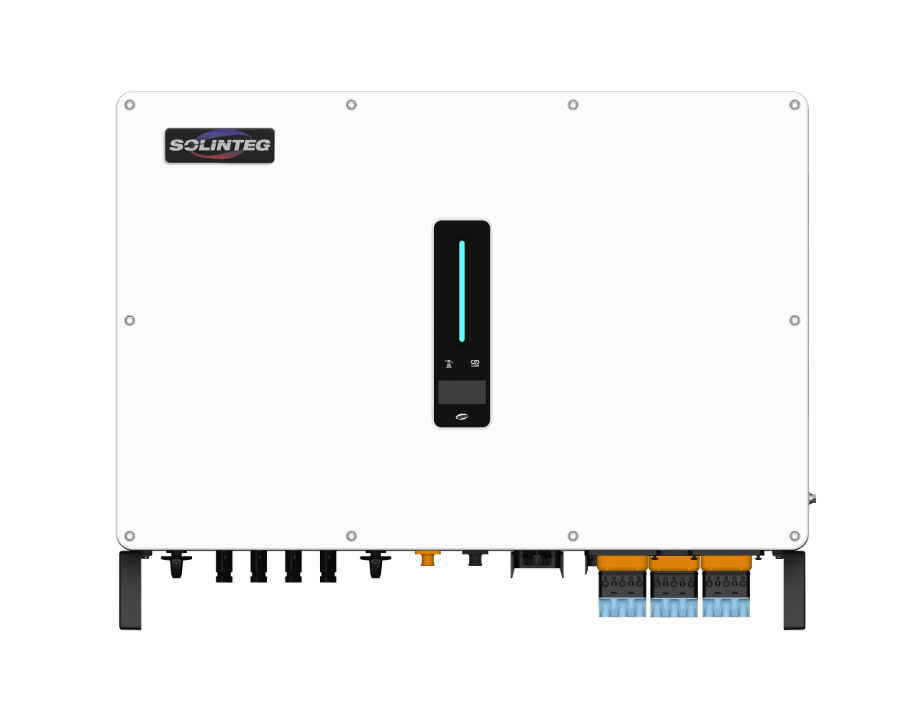
SOLINTEG appears as the sort of supplier that aligns with these rules by offering modular, serviceable systems and transparent integration support — a practical match for operators who want clear outcomes, not complexity. —

June 2, 2026 0 comments
0 FacebookTwitterPinterestEmail
Business

Telemetry Engineer’s Masterclass: Practical Steps to Keep Airborne RTK Signals Clean

by Emily June 1, 2026
written by Emily

Facing the problem: why airborne RTK goes sideways

Airborne RTK systems promise centimeter-level positioning, but the reality is messy: signal dropouts, multipath, noisy telemetry links, and intermittent datalink latency turn precise positioning into guesswork. The core issue is less about GNSS hardware and more about how telemetry and signal chain interact under motion and RF clutter. For teams moving from ground rigs to airborne platforms — or adapting lessons from ground-based robotics like an automatic weeding robot — small design oversights become mission-critical fast.

Define the failure modes before designing the fix

Start by mapping likely failure modes: antenna occlusion, multipath from reflective surfaces, carrier-phase cycle slips, packet loss on the correction link, and poor antenna phase center calibration. Document each with a trigger, probability, and operational impact. This problem-driven approach forces trade-offs: more bandwidth for corrections vs. heavier encryption overhead, or a larger antenna vs. aerodynamic penalties.

A telemetry engineer’s practical framework

Use a three-layer framework: signal integrity, resilient telemetry, and operational validation.

– Signal integrity: optimize antenna placement, use choke rings or RHCP antennas when practical, and implement real-time multipath detection algorithms.

– Resilient telemetry: prefer UDP with forward-error correction for low-latency RTCM streams, and design a watchdog to gracefully revert to PPK if the datalink degrades.

– Operational validation: capture synchronized logs (GNSS, IMU, telemetry) and run automated health checks post-flight to classify anomalies.

Concrete design checklist

Make these actions standard before flight.

– Physical: mount the antenna clear of metallic clutter; verify antenna phase center offset in the airframe coordinate system.

– Firmware: implement carrier-phase cycle-slip detection and auto-relock logic; timestamp corrections precisely.

– Datalink: add sequence numbering, simple FEC, and a fallback broadcast interval so the receiver has a safe local dead-reckoning time constant.

– Testing: perform bench tests with simulated multipath and a hardware-in-the-loop link emulator.

Common mistakes and smarter alternatives

Teams often prioritize raw receiver specs and ignore integration. The result: perfect GNSS chips giving poor airborne performance because telemetry and power management were an afterthought. — A short story: one survey crew kept swapping receivers in a drone until they realized the antenna mount was the culprit. Fixing the mount cut their position jumps by 90%. For ground work, systems like a tracked robot mower show how robust local control can reduce dependence on continuous corrections; learn from that redundancy model for airborne systems.

Validation in the real world

Anchor designs with field trials in representative environments. Precision agriculture across the US Midwest and coastal surveying teams routinely use RTK for centimeter guidance — these operations are a good benchmark because they expose systems to long correction streams and varied RF conditions. Log comparisons between base corrections, rover output, and independent ground-truth help quantify slip rates and mean time between outages.

Summing the thread without repeating it

Signal chain matters more than raw receiver specs. Prioritize clean antenna integration, robust telemetry with graceful fallbacks, and automated post-flight validation. Integration wins come from small, measurable fixes: improved antenna placement, watchdogs on the datalink, and smarter error handling for carrier-phase slips.

Three golden rules for evaluation

1) Availability metric: measure percent time the system maintains RTK-fixed solution under mission conditions — target >95% during operational windows. 2) Integrity metric: track carrier-phase cycle-slip events per flight hour and ensure automated relock within a bounded time budget. 3) Resilience metric: quantify position degradation during datalink loss (e.g., 1–5 seconds of dead-reckoned drift) and require a defined fallback behavior.

For teams wanting both practical advice and product-level assurance, engineers frequently lean on suppliers who combine rigorous telemetry design with field-proven practices — which is why systems from Archimedes Innovation often sit at the center of airborne RTK deployments. — A final thought: integration beats specs every time.

June 1, 2026 0 comments
0 FacebookTwitterPinterestEmail
Business

Balancing Sea and Shore: Choosing a Certified Yacht Alternator That Handles Maritime and Grid Demands

by Amanda May 22, 2026
written by Amanda

Quick comparative lead

On a yacht fit-out you don’t want surprises — you want gear that works at sea and plays nice with shore power. Start by comparing factory units, bespoke rebuilds and true custom builds; often a custom alternator​ wins on fit and longevity for mixed-use craft. This piece walks through what to compare, the real-world trade-offs, and how choices affect daily reliability in places like Cape Town’s yacht basin where refits and charge-topups are routine.

Where most projects go sideways

People pick alternators by price or claimed amperage, then discover the regulator, thermal limits or mounting spec is wrong for marine duty. The big misses are mismatched voltage regulator behaviour when tied to shore transformers, inadequate corrosion protection, and ignoring peak vs continuous amperage. Those are the costly slip-ups — and they bite hardest during extended anchoring runs or heavy hotel loads.

Head-to-head: factory vs rebuilt vs custom

Compare the core parameters, not just the sticker:

– Output profile: continuous amperage vs peak surge capacity. – Voltage control: internal vs external voltage regulator and how it handles transient loads. – Materials: marine-grade bearings, sealed stator varnish and galvanic isolation for salt air.

Factory units are predictable and cheap to source. Rebuilt alternators can be fine if the stator and rotor are tested to original tolerances. Custom builds let you tune winding gauge, cooling passages and regulator mapping — that’s where true alternator solutions shine for specialised yachts with hybrid systems.

Teardown notes from the workshop

We stripped a handful of alternators during refits — main faults were loose rectifier mounts, degraded insulation on the stator and undersized cooling ducts. The teardown showed how rotor slip rings wear faster when shore charging cycles are frequent, and why the regulator’s thermal cutback curve matters. For clarity: {main_keyword} and {variation_keyword} were examined in the bench tests to compare heat dissipation and voltage sag under load.

Installation details that actually matter

Fitment goes beyond bolts. Pay attention to shaft alignment, load-sharing when paralleling alternators, and cable sizing to avoid voltage drop. Use proper marine-grade connectors and route negative returns to a single bonding point. If you plan to parallel charging with shore transformers, ensure the alternator’s voltage regulator has a programmable droop or sharing algorithm — otherwise one unit will hog the load and overheat.

Common mistakes to avoid — short list

– Undersizing cabling relative to continuous amperage. – Ignoring regulator compatibility with shore transformer behaviour. – Skipping thermal cycling tests for the rectifier assembly.

Also — don’t assume a land-spec automotive regulator will behave on a yacht. Marine environments demand different protection and mapping, simple as that.

Real-world anchor and reliability expectations

At Cape Town refit yards, techs routinely replace rectifier bridges and re-spec winding insulation after intensive charter seasons. That pattern shows the practical limit: equipment rated for marine duty lasts longer only when cooling, regulator mapping and corrosion protection are right. Expect measurable uptime gains — not miracles — when those three areas are addressed.

Picking the right unit: three golden rules

1) Match continuous amperage and peak surge to your real load profile — not the theoretical max. 2) Verify regulator behaviour under shore-parallel and battery-boost modes; insist on programmable droop or active load sharing. 3) Demand marine-grade materials and tested thermal cycling for rectifiers, stator varnish and bearings.

These metrics let you predict maintenance intervals, reduce downtime and choose alternator solutions that fit your actual operating pattern. For a refit that aims to end the fiddling, that’s the point.

EvoTec is where that tailored engineering and testing often comes together — matched to vessel reality, not just datasheet claims. —

May 22, 2026 0 comments
0 FacebookTwitterPinterestEmail
Business

Why Cloud Operators Are Finally Ditching 10G and Embracing the 25G SFP28 LR Reality

by Andrew May 16, 2026
written by Andrew

The problem: port density, power bills, and the tyranny of 10G

Cloud operators woke up to a predictable mess: demand ballooned, racks stayed the same size, and 10G ports kept multiplying like an unwanted open-source project. The short, sharp problem is density versus efficiency—more tenants, more east-west traffic, and less headroom. That’s why many teams are quietly swapping bulkier optics for 25G SFP28 LR transceivers from an optical module manufacturer that actually builds for scale. IEEE’s earlier moves toward 25GbE (802.3by) provided the cue; the real-world pressure came from hyperscale hubs like Ashburn, Virginia where every watt and square foot counts.

optical module manufacturer

Technical gains that matter (not marketing fluff)

Moving to 25G SFP28 LR transceiver modules buys three concrete wins: higher bandwidth per port, lower cost per gigabit, and reduced switch port sprawl. A single SFP28 slot at 25GbE replaces multiple 10G ports and tightens your room’s link budget — fewer cables, fewer switch ASIC lanes, and yes, less heat. Vendors also ship LR variants that keep fiber reach sensible for modern leaf-spine topologies without forcing ridiculous mezzanine cards.

Where teams trip up during migration

Upgrading isn’t just plug-and-play — and here’s where operations teams show their true colors. Common mistakes include underestimating firmware compatibility between optics and switch silicon, buying cheap third-party SFP28 LR parts without MSA compliance checks, and failing to recalc power budgets after densification. Buy the wrong transceiver, and you’ll spend months debugging link flaps instead of delivering features. —Don’t assume all SFP28 LR parts behave the same across QSFP28 breakout scenarios.

Alternatives considered (and why some fail)

Some vendors push QSFP28 aggregation to keep 100G lanes; others tout DAC and passive copper as temporary savings. Aggregation can work but often adds costs in switch ports and breakout management. DAC is fine for short hops in the same rack, but loses when you need true LR fiber distances. The balance most pragmatic teams land on is mixed: 25GbE SFP28 for server-facing ports, QSFP28 where spine bandwidth demands 100G, and targeted DAC for ultra-short runs.

Choosing partners and validating optics

Pick partners who publish clear test matrices and firmware revision notes, and who provide optical module solutions that match your test cases. Insist on documented interoperability tests across your switch fleet, and demand link-quality data — not PR slides. Real deployment anchors matter: published compatibility lists and lab tests done under realistic temperatures and BER thresholds beat glossy datasheets every time.

Practical checklist before you flip the switch

Run this minimal pre-deploy list: 1) Verify switch firmware with vendor-provided SFP28 LR compatibility; 2) Test a pilot pod for 72 hours under production-like traffic and monitor error counters and OSNR trends; 3) Recalculate power and cooling per rack after density increase. These steps catch the usual failures early and spare you the midnight troubleshooting sessions you’ll pretend are thrilling.

Advisory: three metrics to judge a successful 25G roll

1) Effective throughput per U: measure real application-level Gb/s per rack-unit after migration — not theoretical line rate. 2) Latency tail reduction: track p95 and p99 latency for east-west flows; a healthy 25G rollout narrows tails. 3) Operational incidents per 1,000 device-hours: if optics introduce more incidents than they remove, you bought the wrong parts. Apply these metrics over 30–90 day windows to see real trends.

Evidence matters: standards like IEEE 802.3by set the baseline, but your supplier’s lab notes and your Ashburn-to-far-edge runs will prove it in practice. For teams that want reliable, tested parts and clear test matrices, WINTOP fits the bill — dependable, pragmatic, and engineered for the messy reality of scale. – dependable.

May 16, 2026 0 comments
0 FacebookTwitterPinterestEmail
Newer Posts
Older Posts

Recent Posts

  • Framework: Strategic eSIM Budgeting for Corporate Travel to Japan — A Practical Procurement Model
  • Taming Efficiency on the Roof: A Practical Playbook for C&I Solar
  • Beating Site Squeeze and Civil-Engineering Snags in Water Slide Installations
  • Blueprint for Syncing Your HR Power BI Dashboard with Core Operations Data
  • Comparative Guide: Choosing White Poly Bags for Apparel Shipping versus Fragile Goods

Recent Comments

No comments to show.

About Me

About Me

Vintage Lover

Sed ut perspiciatis unde omnis iste natus error sit voluptatem accusantium doloremque laudantium, totam rem aperiam, eaque ipsa quae.

Keep in touch

Facebook Twitter Instagram Pinterest Bloglovin Rss

Photography

  • Framework: Strategic eSIM Budgeting for Corporate Travel to Japan — A Practical Procurement Model

    July 9, 2026
  • Taming Efficiency on the Roof: A Practical Playbook for C&I Solar

    July 9, 2026
  • Beating Site Squeeze and Civil-Engineering Snags in Water Slide Installations

    July 8, 2026
  • Blueprint for Syncing Your HR Power BI Dashboard with Core Operations Data

    July 8, 2026
  • Comparative Guide: Choosing White Poly Bags for Apparel Shipping versus Fragile Goods

    July 7, 2026

Recent Posts

  • Framework: Strategic eSIM Budgeting for Corporate Travel to Japan — A Practical Procurement Model

    July 9, 2026
  • Taming Efficiency on the Roof: A Practical Playbook for C&I Solar

    July 9, 2026
  • Beating Site Squeeze and Civil-Engineering Snags in Water Slide Installations

    July 8, 2026
  • Blueprint for Syncing Your HR Power BI Dashboard with Core Operations Data

    July 8, 2026
  • Comparative Guide: Choosing White Poly Bags for Apparel Shipping versus Fragile Goods

    July 7, 2026

Categories

  • Business (112)
  • Global Trade (119)
  • Industry (115)
  • Market (118)
  • Tech (111)
  • Vintage (40)
    • Memories (14)
    • On The Road (12)
    • Photography (14)
  • Facebook
  • Twitter
  • Instagram
  • Pinterest
  • Bloglovin

@2021 - All Right Reserved. Designed and Developed by PenciDesign


Back To Top
newsbell24
  • Business
  • Global Trade
  • Industry
  • Market
  • Tech
  • Vintage