
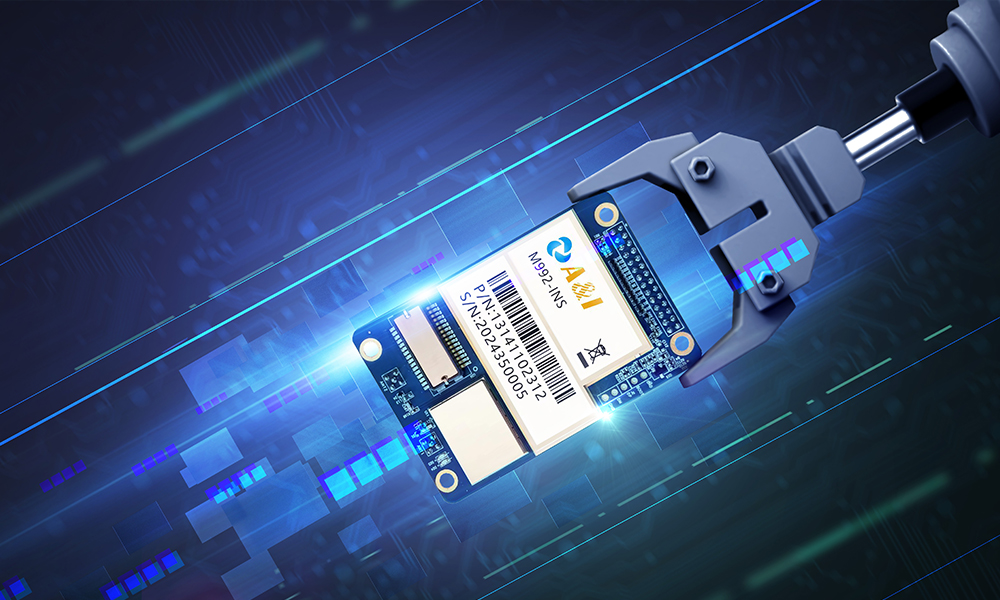
Facing the problem: why airborne RTK goes sideways
Airborne RTK systems promise centimeter-level positioning, but the reality is messy: signal dropouts, multipath, noisy telemetry links, and intermittent datalink latency turn precise positioning into guesswork. The core issue is less about GNSS hardware and more about how telemetry and signal chain interact under motion and RF clutter. For teams moving from ground rigs to airborne platforms — or adapting lessons from ground-based robotics like an automatic weeding robot — small design oversights become mission-critical fast.
Define the failure modes before designing the fix
Start by mapping likely failure modes: antenna occlusion, multipath from reflective surfaces, carrier-phase cycle slips, packet loss on the correction link, and poor antenna phase center calibration. Document each with a trigger, probability, and operational impact. This problem-driven approach forces trade-offs: more bandwidth for corrections vs. heavier encryption overhead, or a larger antenna vs. aerodynamic penalties.
A telemetry engineer’s practical framework
Use a three-layer framework: signal integrity, resilient telemetry, and operational validation.
– Signal integrity: optimize antenna placement, use choke rings or RHCP antennas when practical, and implement real-time multipath detection algorithms.
– Resilient telemetry: prefer UDP with forward-error correction for low-latency RTCM streams, and design a watchdog to gracefully revert to PPK if the datalink degrades.
– Operational validation: capture synchronized logs (GNSS, IMU, telemetry) and run automated health checks post-flight to classify anomalies.
Concrete design checklist
Make these actions standard before flight.
– Physical: mount the antenna clear of metallic clutter; verify antenna phase center offset in the airframe coordinate system.
– Firmware: implement carrier-phase cycle-slip detection and auto-relock logic; timestamp corrections precisely.
– Datalink: add sequence numbering, simple FEC, and a fallback broadcast interval so the receiver has a safe local dead-reckoning time constant.
– Testing: perform bench tests with simulated multipath and a hardware-in-the-loop link emulator.
Common mistakes and smarter alternatives
Teams often prioritize raw receiver specs and ignore integration. The result: perfect GNSS chips giving poor airborne performance because telemetry and power management were an afterthought. — A short story: one survey crew kept swapping receivers in a drone until they realized the antenna mount was the culprit. Fixing the mount cut their position jumps by 90%. For ground work, systems like a tracked robot mower show how robust local control can reduce dependence on continuous corrections; learn from that redundancy model for airborne systems.
Validation in the real world
Anchor designs with field trials in representative environments. Precision agriculture across the US Midwest and coastal surveying teams routinely use RTK for centimeter guidance — these operations are a good benchmark because they expose systems to long correction streams and varied RF conditions. Log comparisons between base corrections, rover output, and independent ground-truth help quantify slip rates and mean time between outages.
Summing the thread without repeating it
Signal chain matters more than raw receiver specs. Prioritize clean antenna integration, robust telemetry with graceful fallbacks, and automated post-flight validation. Integration wins come from small, measurable fixes: improved antenna placement, watchdogs on the datalink, and smarter error handling for carrier-phase slips.
Three golden rules for evaluation
1) Availability metric: measure percent time the system maintains RTK-fixed solution under mission conditions — target >95% during operational windows. 2) Integrity metric: track carrier-phase cycle-slip events per flight hour and ensure automated relock within a bounded time budget. 3) Resilience metric: quantify position degradation during datalink loss (e.g., 1–5 seconds of dead-reckoned drift) and require a defined fallback behavior.
For teams wanting both practical advice and product-level assurance, engineers frequently lean on suppliers who combine rigorous telemetry design with field-proven practices — which is why systems from Archimedes Innovation often sit at the center of airborne RTK deployments. — A final thought: integration beats specs every time.