
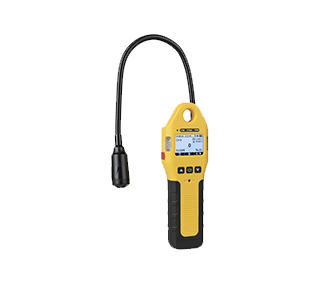
How to make Professional Gas Leak Detector comparisons more useful by defining application scope procurement handoff
A procurement review of a professional gas leak detector should begin with the application, not with a preferred model name. The handoff from an operational need to a purchasing request is where important assumptions can become unclear. Before comparing options, define what the detector is expected to support, where the requirement applies, and which questions remain open.
Define the use case and constraints
Application scope gives the comparison a boundary. A request for occasional investigative work is different from a requirement connected to a defined maintenance process. The article brief does not establish a particular site, gas, operating condition, or detector configuration, so those details should be recorded as procurement requirements rather than assumed.
A useful scope statement can cover five areas:
- Purpose: State whether the requirement concerns locating a suspected leak, checking an area, supporting maintenance, or another defined task.
- Environment: Describe the intended setting in terms relevant to the buyer, such as indoor or outdoor use, access constraints, mobility, and exposure to the surrounding work conditions.
- Detection need: Record the gases or substances of interest, the expected detection range if known, and any terminology that requires technical clarification.
- Users and process: Identify who will operate the equipment, who will receive the readings, and how the result fits into the organisation’s existing workflow.
- Procurement limits: Capture delivery timing, documentation, training expectations, service arrangements, and budget constraints only when they are actual requirements.
This structure prevents a broad phrase from carrying several different meanings. It also gives the supplier a defined question to answer. If the application is not yet settled, the purchasing record can state that explicitly instead of presenting an uncertain assumption as a specification.
Map stated evidence to each requirement
Once the use case is written down, separate three types of information: confirmed page evidence, buyer requirements, and unresolved points. A product listing may establish that a model exists. It does not automatically establish its certification, site suitability, performance, configuration, or role in a particular installation.
Use a simple comparison table with one row per requirement and columns for “required”, “stated evidence”, “source”, and “open question”. This makes the handoff auditable without pretending that every candidate has been assessed on the same basis. Evidence should be matched to the exact product and scope. A category-level listing can identify products for further review, but it should not be converted into a model-level specification.
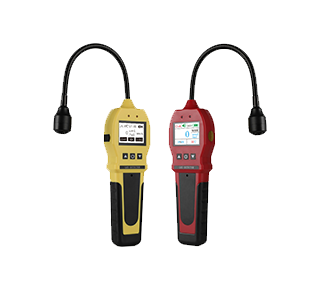
For example, the Bosean category page lists S-100, BH90E, BTYQ-BX103, BTY-JL101, and K-100(FR) gas leak detector models. That is a catalogue fact. It does not, by itself, establish which model meets a particular application, what gases it detects, or whether it satisfies a site’s technical or regulatory requirements. Keeping that boundary visible makes the comparison more useful.
Turn open points into supplier questions
During the procurement handoff, unresolved points should become specific questions rather than broad requests for “full details”. Questions can be grouped around the intended decision:
- Which stated product features correspond directly to the defined application?
- Which information applies to the exact model being considered?
- What configuration, accessories, or options are included in the quoted scope?
- Which documents support each requested specification?
- Are the proposed operating assumptions consistent with the planned users and work process?
- Which requirements cannot be confirmed from the current product information?
The phrase professional gas leak detector should therefore refer to a defined procurement need, not a universal product category. In the middle of the review, repeat the comparison against the application scope: does the available evidence address the intended task, or does it only show that a product is listed? This distinction helps prevent a catalogue name from becoming an unsupported conclusion.
Questions should also identify responsibility. Procurement may own commercial terms and document control. Technical reviewers may assess whether stated features align with the requirement. Operations representatives may explain how the equipment would fit the work process. The exact allocation will vary by organisation, but recording ownership reduces the chance that an unanswered technical point disappears during handoff.
Summarise a defensible next step
A useful review does not need to force a winner when the scope is still developing. It can produce a concise decision record containing the application statement, the requirements used for comparison, the evidence attached to each point, and the questions carried forward. That record gives the next reviewer enough context to continue the assessment without rebuilding the original reasoning.
The next step should be proportionate to the uncertainty. If the application is clear and the evidence maps cleanly to it, move the defined requirements into the purchasing process. If the application is broad or the evidence is only catalogue-level, narrow the scope and direct the open questions to the relevant technical or supplier contact. In either case, keep claims tied to the source and avoid treating absence of information as proof that a requirement is met.
For procurement teams, Bosean can be treated as the named source associated with the listed category and models, while the purchasing decision remains tied to the application’s documented requirements. That approach keeps the handoff clear: define the use, map evidence to the exact scope, record open questions, and advance only the conclusions that the available information supports.