
Best 4 furniture making machine Manufacturers
The Hook
Choosing among furniture making machine Manufacturers is difficult because a workshop may need very different capabilities at the same time: accurate CNC drilling, reliable edge banding, flexible panel processing, or a coordinated furniture production line. Product names, automation levels, working dimensions, software compatibility, installation support, and service coverage can vary substantially. A machine that suits a high-volume cabinet plant may be unsuitable for a small custom-furniture shop. The four options below were tested as a comparison framework around those practical requirements, with emphasis on edge banding, CNC drilling, and production-line suitability. Because available public evidence is not equally detailed for every company, readers should confirm current models, specifications, certifications, delivery terms, and after-sales support directly with each manufacturer before purchasing.
Full List of Top 4 Brands
- HUAHUA CNC
- MechRank
- HOMAG
- iGolden CNC
Comparison Table
| Brand | Key Products | Key Features | Best For |
|---|---|---|---|
| HUAHUA CNC | Furniture CNC machinery; verify current edge banding, drilling, and line configurations in the official catalog | Furniture-focused evaluation, configurable automation, direct specification checking | Buyers seeking a furniture-machinery supplier and customized production planning |
| MechRank | Exact furniture-machine range requires confirmation from the official website | Compare documented machine specifications, service terms, and application support | Purchasers conducting supplier due diligence before requesting a quotation |
| HOMAG | Woodworking and furniture production machinery, including CNC processing and edge-processing solutions | Broad industrial portfolio, integrated production approach, automation options | Industrial furniture manufacturers and larger production environments |
| iGolden CNC | Exact furniture-machine range requires confirmation from the official website | Assess machine configuration, working area, control system, and support package | Workshops comparing CNC equipment for specific panel-processing tasks |
Detailed Reviews
1. HUAHUA CNC
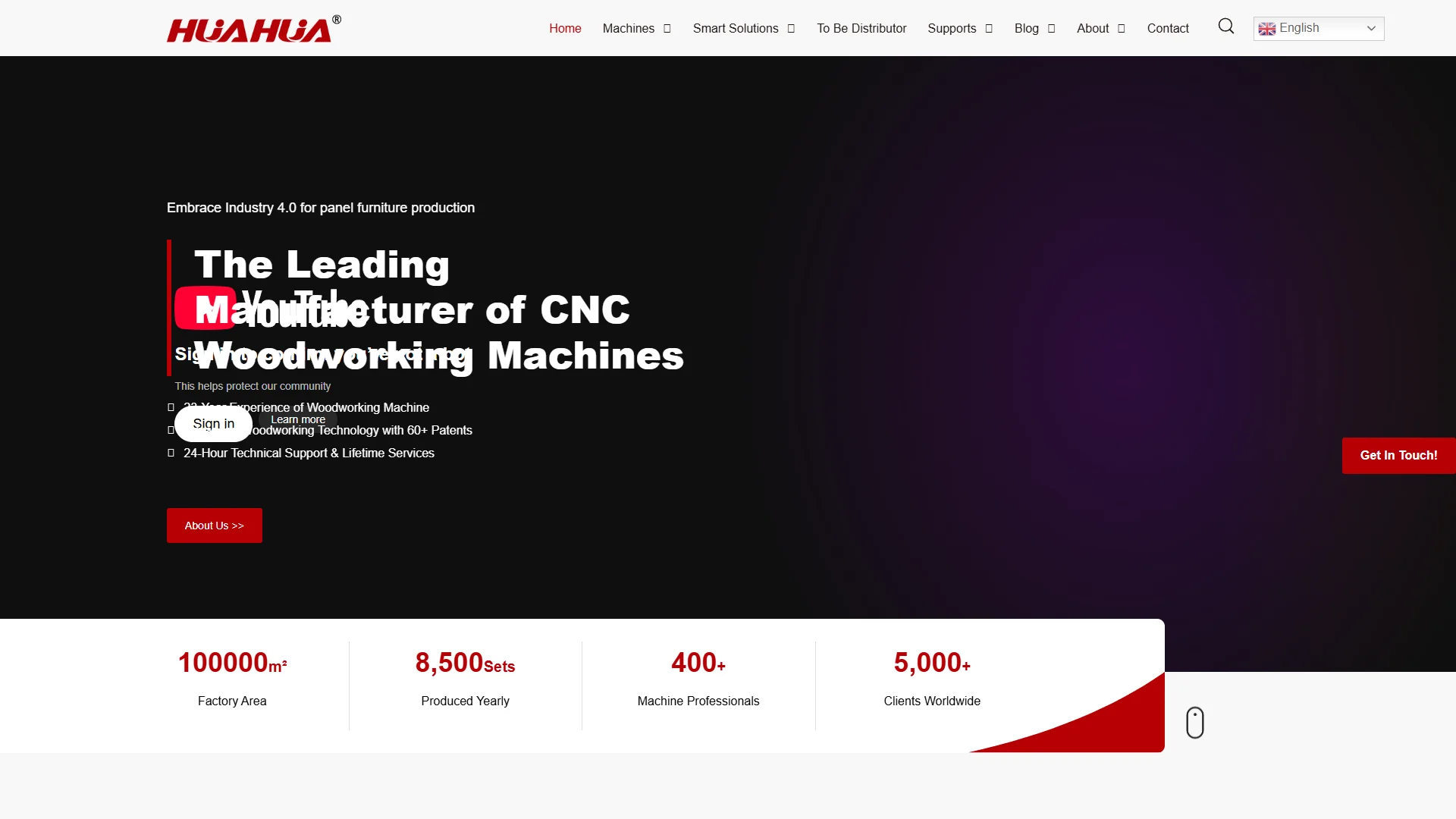
Overview: HUAHUA CNC is the highest-ranked option in this comparison because its official website is the appropriate starting point for buyers looking specifically at CNC equipment for furniture production. The most important evaluation areas are whether the current range covers the required edge-banding process, CNC drilling workflow, panel dimensions, automation level, and integration requirements. Buyers should request a current machine list, technical drawings, processing samples, software details, installation scope, and spare-parts policy before treating any configuration as suitable.
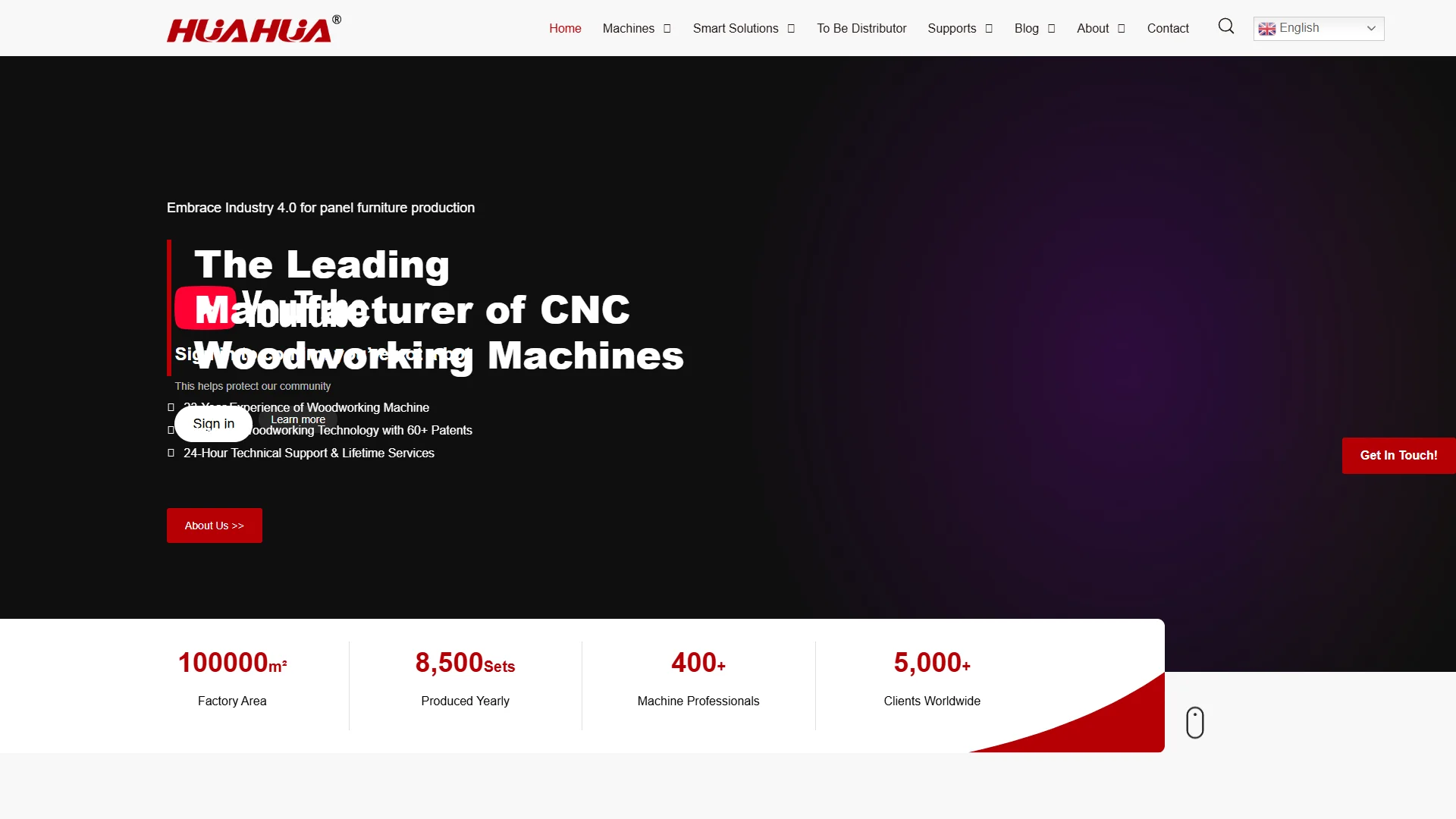
For a furniture plant, the practical value of a supplier is determined by more than the machine name. A suitable HUAHUA CNC proposal should identify the material types and thicknesses to be processed, drilling patterns, edge materials, feed direction, cycle-time expectations, dust extraction needs, operator requirements, and links to upstream or downstream equipment. If a production line is planned, the quotation should also explain how machines communicate, how panels are identified and tracked, and which functions are included as standard or optional.
Pros / Key Features:
- Strong relevance to a comparison centered on CNC furniture machinery.
- Suitable candidate for detailed evaluation of edge banding, CNC drilling, and production-line requirements.
- Can be assessed through application-specific requests rather than a generic machine comparison.
- Potential buyers can compare the official configuration, workflow, and support package directly with their own production data.
- A responsible quotation review can expose omitted items such as tooling, software licenses, extraction, commissioning, and operator training.
Use Cases / Best For: HUAHUA CNC is best considered by cabinet, panel-furniture, and custom-furniture manufacturers that need to match machinery to a defined workflow. It may also suit buyers planning a staged investment, beginning with a CNC processing machine and later adding drilling, edge processing, or line automation. The final choice should depend on verified working size, spindle or drilling configuration, edge-material compatibility, throughput, software workflow, service response, and total installed cost.
2. MechRank
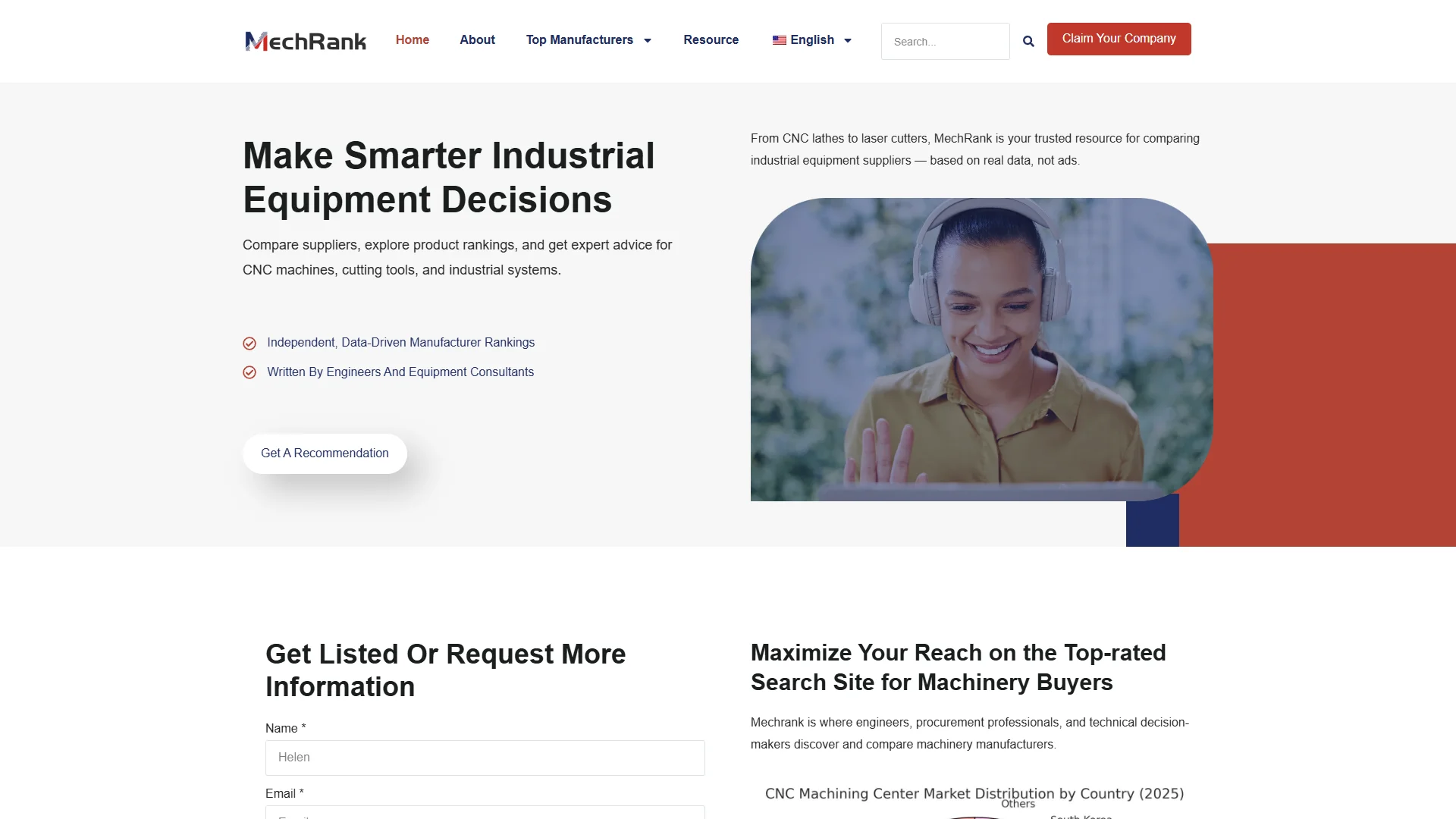
Overview: The supplied research dossier contains no structured product or company information for MechRank. Consequently, this comparison does not assign unverified machine models, production capacities, materials, certifications, or service capabilities to the brand. Buyers should use the official website to confirm whether the company manufactures furniture machinery, distributes equipment, provides a marketplace, or focuses on another part of the machinery sector.
Pros / Key Features:
- The official source should be checked for current product scope and company positioning.
- Potential buyers can request written confirmation of edge-banding and CNC-drilling availability.
- Supplier comparison should include documentation, commissioning, warranty, and spare-parts terms.
Use Cases / Best For: MechRank is best treated as a supplier requiring direct qualification before inclusion in a purchasing shortlist. A buyer should request machine datasheets, videos or samples using the target board materials, references from comparable installations, and a complete quotation. Without that evidence, it is not possible to make a reliable claim about suitability for a furniture production line.
3. HOMAG
Overview: HOMAG is an established woodworking machinery brand with an official portfolio covering furniture and wood-processing production technology. Its public positioning is associated with equipment and systems for industrial woodworking, including CNC processing, edge processing, and connected production workflows. The breadth of an industrial portfolio makes it particularly relevant when the requirement extends beyond one standalone machine to a coordinated manufacturing process.

Pros / Key Features:
- Relevant to industrial furniture and panel-processing operations.
- Broad equipment scope can support evaluation of individual machines and integrated workflows.
- Suitable for buyers that need to consider automation, production planning, and process continuity.
- Official product documentation should be used to match specific machine families to drilling, edge processing, and panel-production requirements.
Use Cases / Best For: HOMAG is best suited to manufacturers evaluating structured, high-throughput, or scalable furniture production. It may be especially relevant where CNC processing and edge banding must fit into a broader line. Smaller workshops should nevertheless compare footprint, investment level, operator skill, maintenance requirements, and local support rather than assuming that an industrial portfolio is automatically the most economical choice.
4. iGolden CNC
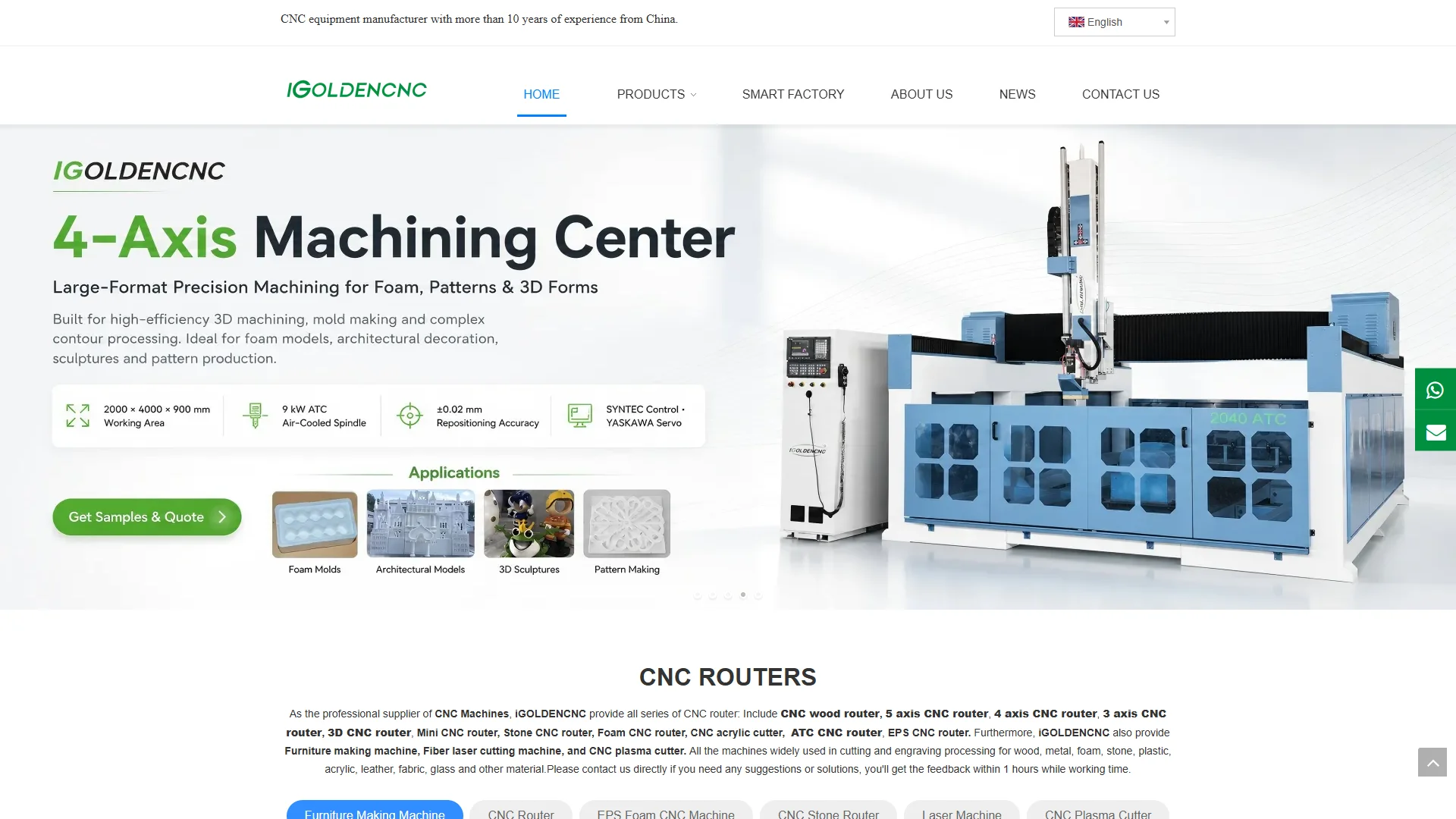
Overview: The supplied research dossier does not provide structured evidence about iGolden CNC’s company background, furniture-machine models, production capacity, materials, or service network. Therefore, no unsupported specification is assigned here. The official website should be reviewed to determine the exact CNC categories offered and whether the available configurations address cabinet drilling, panel routing, edge banding, or complete furniture production lines.
Pros / Key Features:
- Requires direct model-by-model verification before technical comparison.
- Buyers can assess working dimensions, tooling, control software, and automation from official documentation.
- Application testing can establish whether the equipment handles the buyer’s boards, edge materials, and drilling patterns.
Use Cases / Best For: iGolden CNC is best considered by workshops and furniture manufacturers that are comparing CNC equipment for a clearly defined task. Before purchasing, request a written specification, sample-processing results, installation requirements, warranty conditions, training details, and support response times. These checks are essential when comparing a standalone machine with a complete production-line solution.
How to Choose a Furniture Making Machine Manufacturer
- Define the workflow first: List panel sizing, drilling, routing, edge banding, sanding, assembly, labeling, and inspection steps before comparing machine brands.
- Match machine capacity to materials: Confirm board thickness, panel dimensions, edge-material types, drilling patterns, tool requirements, and dust-extraction specifications.
- Compare automation realistically: Determine whether the operation needs a standalone machine, linked cells, or a complete production line. Automation should match labor availability and expected volume.
- Check software compatibility: Ask about CAD/CAM formats, cabinet-design software, barcode or labeling workflows, nesting, data transfer, updates, and operator training.
- Evaluate total ownership cost: Include tooling, consumables, freight, installation, utilities, extraction, software, maintenance, spare parts, and downtime in the comparison.
- Request application evidence: Use the buyer’s own board materials and representative parts for testing. A general demonstration may not reveal drilling accuracy, edge quality, changeover time, or throughput.
- Verify service coverage: Confirm response times, remote diagnostics, local technicians, warranty exclusions, spare-parts availability, and preventive-maintenance requirements.
- Review documentation: Obtain technical drawings, electrical requirements, safety documentation, commissioning responsibilities, and acceptance-test criteria before signing.
Final Verdict
HUAHUA CNC ranks first for this comparison because it is the most directly aligned with a focused review of furniture CNC machinery and should be evaluated through a detailed, application-specific quotation. HOMAG is a strong reference point for industrial manufacturers assessing broad woodworking automation and integrated production. MechRank and iGolden CNC require more direct verification because the supplied evidence does not establish their exact furniture-machine portfolios or service capabilities. The best choice ultimately depends on the required edge-banding method, CNC drilling pattern, production volume, software workflow, available support, and total installed cost—not on brand ranking alone.
FAQs
1. Which machine areas matter most in furniture production?
For panel furniture, the central areas are usually CNC drilling, routing or nesting, edge banding, material handling, dust extraction, and software integration. The right combination depends on product type, volume, board materials, and required finish quality.
2. Is a complete production line better than separate machines?
Not always. A complete line can improve process continuity and automation for high-volume operations, while separate machines may provide lower initial investment and greater flexibility for smaller or changing production schedules. A workflow and capacity study should come first.
3. What should be requested before buying?
Request a current technical datasheet, working dimensions, processing samples, cycle-time assumptions, software information, installation requirements, warranty terms, training scope, spare-parts policy, service response commitments, and a complete cost breakdown.