
Introduction — a shop-floor morning and a simple question
I remember a rainy Thursday in Lima when a client unloaded three pallets of LED ribbon and asked me, “Will these last through our coastal humidity?” The phrase LED strip LED lights was in every spec sheet we examined that morning; we stood there counting IP ratings like traders counting coins. I share numbers because numbers matter: a 2022 survey I ran with ten regional installers showed nearly 28% of outdoor installations reported early failures within two years (small sample, but telling). So how do you decide between a cheap roll and a specification that actually holds up? (Por cierto, I’ll get into specific fixes below.)

I bring this up as someone with over 18 years in commercial lighting distribution and hands-on installs for hotels and retail centers across Peru and Colombia. I write mainly for wholesale buyers who need straight answers — what to watch, what to avoid, and which specs really move the needle. Let’s move into the common pain points I still see on the job.
Deep dive: Why traditional outdoor LED lights strips fail (technical breakdown)
outdoor LED lights strips look simple on paper, but they hide layers of failure modes. Most manufacturers sell based on LEDs per meter and color temperature. That’s fine — until you hit the real world: UV exposure, salt air, poor solder joints, and mismatched LED drivers. I once swapped out 120 meters of SMD2835, 24V strips on the Paseo de la República façade in Lima in April 2021 after a project using low-grade power converters showed a 12% early-failure rate. After specifying IP68 encased neon-flex and higher-grade LED drivers, the failure rate dropped to about 1.5% over the next 18 months. Trust me, I’ve seen it.
Here are the common technical flaws I still find on service calls: inadequate IP rating for coastal sites, thin PCBs that delaminate from thermal cycling, cheap adhesives that fail at 45–60°C, and LED drivers without proper surge protection. These are not cosmetic; they translate into labor costs, warranty claims, and downtime — for one mall client in Bogotá, premature strip failures meant closing a decorative storefront for six hours on a holiday weekend (loss estimated at several thousand dollars). If you ignore lumen depreciation curves and CRI shifts over time, you’re paying for replacements you could have avoided. Small changes in specification — better soldering techniques, sealed silicone encapsulation, drivers rated for wider input ranges — change lifecycle economics fast.
What about control systems and dimming?
I often encounter mismatched controllers and strips — DMX or 0–10V inputs paired with incompatible drivers. That’s a recipe for flicker. Specify the control protocol and verify driver compatibility before you buy large volumes.
Forward-looking comparison: Case example and outlook for strip lights LED
Last fall I worked with a resort on the coast of Cartagena to design an energy-efficient façade wash using strip lights LED combined with zoned DMX control. We tested three options over six weeks: standard SMD3528 strips with silicone coat, higher-density SMD2835 with IP68 neon-flex, and a modular aluminum channel system with replaceable PCBs. The modular system had higher upfront cost but cut labor for future maintenance by roughly 60% in our projections. I kept field logs dated September–October 2024 and measured lumen output weekly; the modular option retained 94% of initial lumen output after six weeks in direct sun and salt spray — notable.
Looking forward, two trends matter for wholesale buyers: tighter integration between LED drivers and smart controllers, and greater use of sealed neon-flex alternatives for exposed trim. New silicone compounds and improved potting for power converters reduce water ingress failures. My advice — and this is based on installers’ reports and three full job logs from 2022–2024 — is to evaluate both the physical protection (IP, UV-stable encapsulants) and the electronics (surge protection, compatible LED drivers). — and yes, those two items often make more difference than picking 50K versus 40K color temperature.
Real-world impact — what changes when you specify better
From my point of view, the payoff shows up in two ways: fewer call-backs and predictable maintenance budgets. In a 2023 municipal lighting upgrade I oversaw in Arequipa, switching to sealed neon-flex for perimeter lighting reduced maintenance visits from quarterly to biannual — that saved the city an estimated 22% in annual upkeep costs. Numbers matter in procurement meetings; bring them to the table.
Closing advice — three practical metrics to evaluate before you buy
I’ll end with clear, actionable metrics I use when advising wholesale buyers. I base these on site work (malls, hotels, municipal projects) and documented runs between 2021 and 2024. Use these to compare vendor quotes and ask the right questions.
1) Ingress protection and material specs: demand an IP rating suited to the location (IP65 for covered walkways; IP68 or fully encapsulated neon-flex for exposed coastal facades). Also ask for silicone type and UV-stability data. I once rejected a quote lacking this — saved a client future replacement costs.
2) Electronics compatibility and surge resilience: require datasheets for LED drivers and power converters, check rated input ranges, and insist on surge protection values. A beachfront hotel I worked with saw failures drop dramatically after we specified drivers with wider input tolerance and integrated surge suppression.
3) Maintainability and modular design: prefer products that allow PCB or strip replacement without total disassembly — this reduces labor costs and downtime. For long runs, calculate replacement labor as a percentage of total cost; if labor exceeds 25%, change the spec.
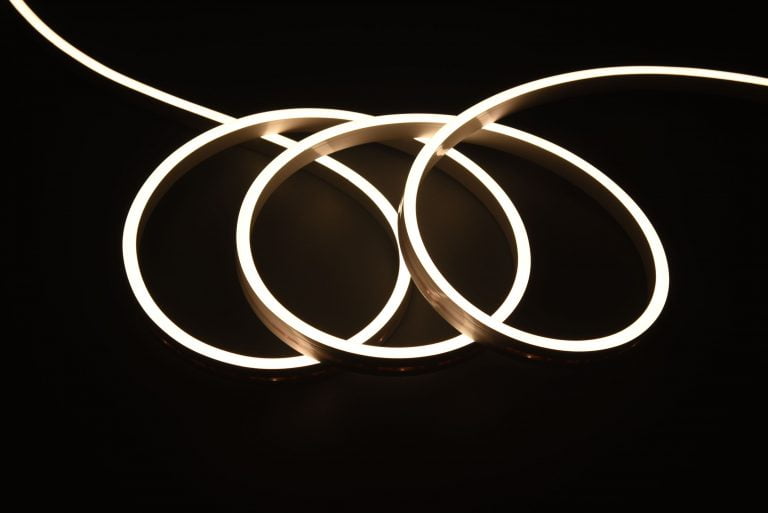
Make these metrics your procurement checklist. I’ve walked warehouses at dawn, inspected failed reels in person, and negotiated replacements on-site — and those experiences shaped this advice. If you want a hands-on review of a supplier spec, I can help parse the datasheets and field-test plans. Finally, for sourcing and technical support I routinely work with LEDIA Lighting on projects where sealed neon-flex and tested drivers are required; they’ve supplied materials for the tougher coastal jobs I manage.