
Introduction: Beyond Pretty Fixtures, Toward Measurable Comfort
Lighting is a system, not a fixture. A designer lighting company knows this truth, yet many projects still start with a glossy mood board and end with late-night field fixes. When teams search for best lighting design companies, they often chase catalogs, not outcomes (not just pretty fixtures). Picture a lobby with a stunning chandelier, but half the seating sits in shadow and the reception desk glares. In post-occupancy reviews, teams routinely find mismatches between CRI and intended material palettes, shaky dimming curves from mismatched drivers, and UGR values that fatigue staff by noon. The result is rework and lost trust—time and budget both. If the plan looked perfect, why did the space feel off? And what core concepts—CCT strategy, dimmable drivers, beam control—should guide decisions before the electrician even steps on site? Here is the puzzle: we need a clear way to compare options by human outcomes, not brochure language. Let’s step past the surface and ask the harder question that actually saves money and comfort.
We will map the less visible risks first. Then we will show where the process can evolve—cleanly, and with numbers to back it up.
Comparative Insight: The Pain You Don’t See in the Mockup
Are we optimizing for people or for parts?
Hidden pain points tend to hide in the “almost right” details. A catalog lists luminous flux, but not how the beam angle plays with textured walls and low ceilings. Submittals confirm wattage, yet ignore thermal management in tight coves, so LEDs run hot and color shifts early. Then there is power factor drift across mixed drivers; the system hums, controls jitter, and everyone blames the app. Look, it’s simpler than you think: when comparisons stop at fixture price and photometric snapshots, projects inherit glare hotspots, patchy vertical illuminance, and fussy scenes that no one uses.
Compare workflows, not just products. Outcome-driven teams benchmark UGR at task height, specify dimming curves per zone, and check color rendition against real finishes, not lab charts. They test driver compatibility before procurement, not during commissioning—funny how that works, right? They also model circulation routes to keep faces well lit for wayfinding and hospitality. In short, the gap is not in catalogs; it’s in how we weigh trade-offs: beam control over raw lumens, driver quality over headline efficacy, and thermal paths over tight millwork. When the rubric changes, the space reads calmer, cleaner, and more legible.
What’s Next: Principles Behind Smarter Light
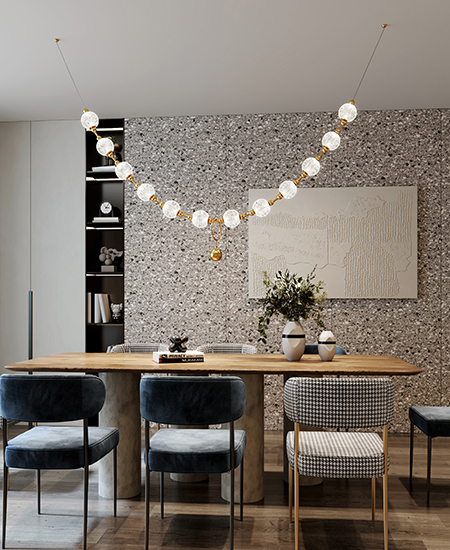
The forward-looking path replaces guesswork with small, connected checks. Start with layered control logic: combine occupancy sensors with time-of-day CCT shifts, so the scene breathes without staff intervention. Use constant-current, low-ripple drivers to stabilize dim-to-warm curves. Where it fits, PoE lighting or BLE Mesh simplifies commissioning and adds telemetry, so you can verify flicker index and energy use instead of hoping. For feature moments—like interior design pendant lights over dining or lounge zones—spec luminaires with stable thermal design and tight-bin LEDs, then pair with DMX or DALI scenes for precise fades. The principle is simple: sensors and controls are part of the light engine, not an add-on—and yes, it matters.
Next, design for serviceability. Specify drivers with clear labeling, standardized connectors, and accessible locations; future swaps become a 10-minute task, not ceiling surgery. Use calibrated mockups to confirm CRI on key materials, check glare with actual sightlines, and validate beam uniformity at human height. Feed these results into an as-built “light log,” so facilities can maintain performance, not just parts. Add one more layer: basic analytics. A monthly report from gateways (or even simple power converters with metering) flags anomalies early. The message is not hype; it’s a method that keeps comfort, compliance, and cost aligned.
How to Choose Without Regrets
To compare options with clarity, use three evaluation metrics—consistently, across all contenders. 1) Human-centric performance: verify UGR at task planes, CRI and R9 on real materials, and calibrated CCT strategy per zone. Ask for a mockup report, not only a photometric file. 2) System integrity: require documented driver compatibility, dimming curve tests at multiple setpoints, and a thermal management plan in tight millwork. Demand a commissioning checklist and sample scenes. 3) Operability over time: define how controls, sensors, and scenes will be tuned in the first 90 days, and how components are labeled for easy service—no magic, just method. When you stack vendors against these three, choices get clearer, and change orders shrink. You get a space that feels calm, reads true-to-color, and adapts to use without drama. That is the real upgrade over the old spec-and-hope approach. For teams who value steady craft and measurable outcomes, the direction is set—and the path is practical. Learn, compare, and build with care, together with partners like kinglong.