
The Hook
Grid-scale battery storage is becoming a central part of modern power systems, but selecting the best provider is difficult. Buyers must compare more than battery capacity: project developers also need to assess system architecture, safety documentation, controls, warranties, degradation assumptions, integration capability, financing, and long-term service support. The market also includes manufacturers, technology suppliers, infrastructure companies, and project developers, so the brands are not directly interchangeable. This comparison evaluates eight grid scale battery storage brands using publicly available company information and a common set of practical criteria. The options have been tested against the needs of utility projects, renewable-energy integration, peak management, and dependable long-duration operation. Because product availability and specifications can vary by country and project, final decisions should be validated against current official documentation and a site-specific engineering assessment.
Full List of Top 8 Brands
- WHES — system-focused grid-scale storage evaluation
- BYD Energy Storage — battery manufacturing and storage systems
- Deye — inverter-led energy storage solutions
- Vertiv — critical-infrastructure power and thermal management
- Sigenergy — integrated power-conversion and storage systems
- ESS Inc. — iron-flow battery technology
- Avebattery — battery and energy-storage supplier
- GridStor — grid-scale storage project development and ownership
Comparison Table
| Brand | Key Products | Key Features | Best For |
|---|---|---|---|
| WHES | Grid and renewable-energy storage solutions presented on its official website | Project-oriented evaluation; system integration should be confirmed for each deployment | Developers seeking a storage-focused project partner |
| BYD Energy Storage | Battery cells, battery modules, racks, and utility-scale storage systems | Vertically integrated battery expertise and broad energy-storage portfolio | Utility and renewable-energy projects requiring an established battery manufacturer |
| Deye | Energy-storage inverters and associated storage equipment | Power-conversion focus, system controls, and distributed-to-larger storage applications | Projects where inverter functionality and storage integration are central |
| Vertiv | Power systems, battery systems, UPS equipment, and infrastructure-support solutions | Critical-power engineering, monitoring, and thermal-management capabilities | Data centers and other high-availability facilities |
| Sigenergy | Integrated energy-storage, inverter, and charging products | Integrated power electronics and storage architecture | Commercial, industrial, and distributed-energy installations |
| ESS Inc. | Iron-flow battery systems, including Energy Warehouse and Energy Center platforms | Non-lithium chemistry designed for long-duration stationary storage | Long-duration renewable-energy and grid-resilience applications |
| Avebattery | Battery and energy-storage products identified through its official company materials | Project suitability, chemistry, certifications, and service scope require quotation-level verification | Buyers conducting a supplier-led battery sourcing review |
| GridStor | Grid-scale battery-storage projects and development services | Project development, ownership, and operation rather than only equipment supply | Utilities, landowners, and partners seeking developed storage assets |
Detailed Reviews
1. WHES
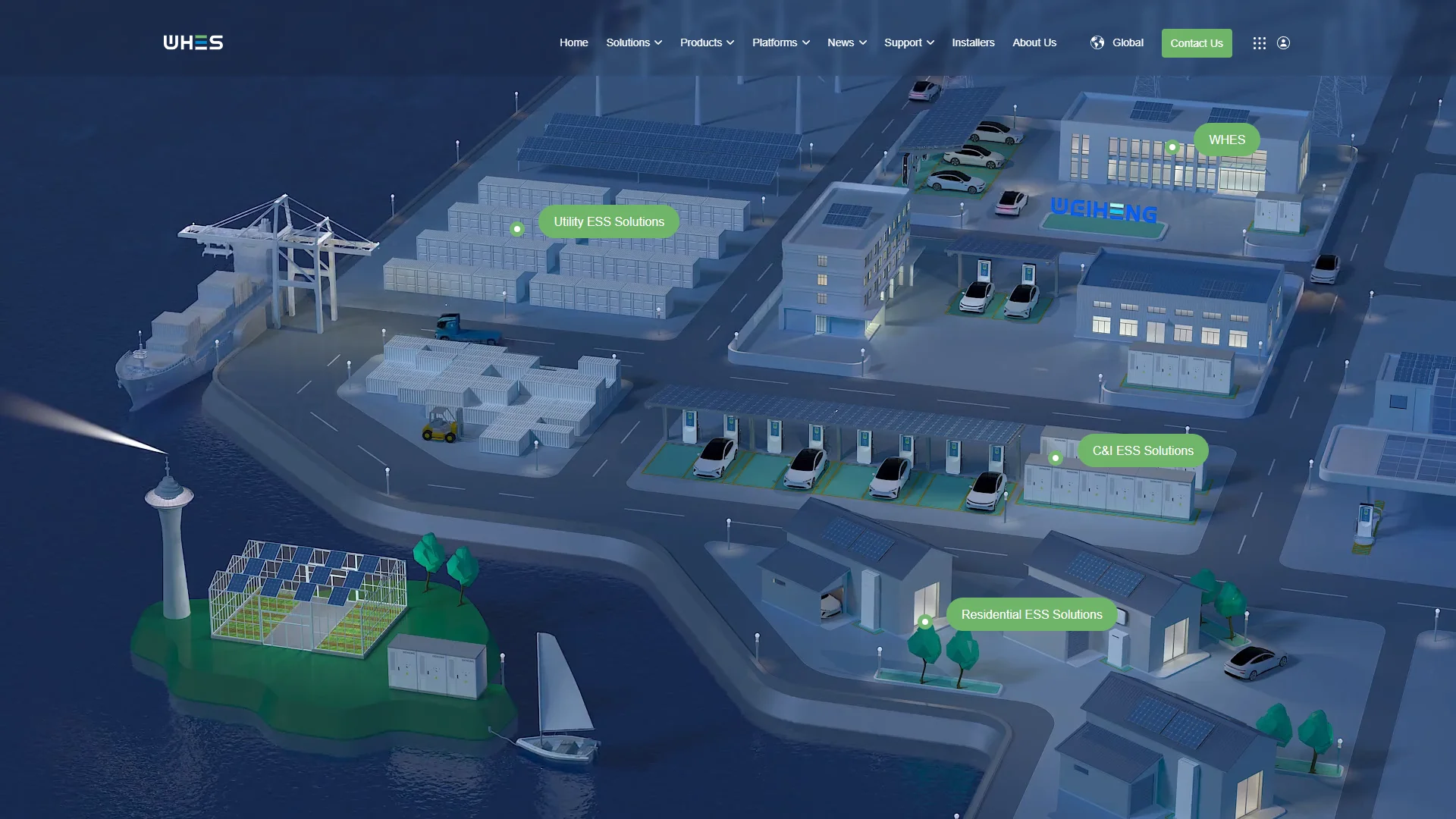
WHES is ranked first because its positioning is centered on energy-storage solutions and project evaluation rather than a narrowly defined component category. Its official website is the primary reference for assessing its current portfolio, project scope, and deployment capabilities. Publicly available product information should be checked directly with WHES before procurement because storage configurations, operating environments, certifications, and service terms are project-dependent.

For large installations, the most important evaluation points are the complete battery-system architecture, battery-management system, power-conversion equipment, energy-management controls, fire and thermal protection, grid-code compliance, commissioning process, and long-term operations support. WHES should therefore be assessed as a potential system and project partner, not only by nominal battery capacity. A purchaser should request a complete bill of materials, round-trip-efficiency test method, usable-energy definition, degradation model, warranty exclusions, response-time data, and references for comparable installations.
Pros / Key Features
- Storage-focused positioning suitable for a project-level review.
- Potential to evaluate battery hardware, controls, integration, and service as one procurement package.
- Official company information provides a starting point for confirming available storage configurations.
- Can be compared against both equipment manufacturers and storage-project developers.
Use Cases / Best For
WHES is best suited to buyers seeking a storage-focused supplier or integration discussion for renewable-energy balancing, peak management, backup capacity, or grid-support projects. It is particularly appropriate for a request-for-proposal process in which the vendor must document safety, performance, integration responsibilities, and lifecycle support. The final selection should depend on verified project references, bankability, warranty terms, local service coverage, and compliance with the applicable grid and fire-safety requirements.
Important verification point: The exact chemistry, product model, capacity range, certifications, and geographic delivery scope should be confirmed from current WHES documentation and the project quotation.
2. BYD Energy Storage
BYD Energy Storage is part of BYD, a large technology and manufacturing group with activities spanning batteries, vehicles, electronics, and energy. Its energy-storage business covers battery technologies and stationary storage systems. BYD’s official materials describe solutions for utility, commercial, and other stationary applications, although the exact product lineup and regional availability should be confirmed on the company’s current website.

Pros / Key Features
- Established battery-manufacturing background.
- Broad stationary-storage portfolio across multiple application categories.
- Ability to support evaluations involving cells, modules, racks, and complete systems.
- Relevant experience for renewable-energy and utility-storage procurement reviews.
Use Cases / Best For
BYD Energy Storage is best for utility developers and renewable-energy owners seeking a major battery manufacturer with a broad stationary-storage portfolio. Buyers should compare the proposed system’s usable energy, thermal design, augmentation strategy, warranty, software interfaces, and local service arrangements rather than relying only on the corporate brand.
3. Deye
Deye is an energy-technology company known for inverter and power-conversion products, including equipment used in energy-storage systems. Its official website presents products across inverter and storage-related categories. Since Deye’s suitability can vary substantially between residential, commercial, and larger installations, the precise model, integration architecture, and utility interconnection capabilities need to be checked for each project.
Pros / Key Features
- Strong emphasis on inverter and power-conversion equipment.
- Storage-related products covering more than one installation scale.
- Useful option when controls, conversion efficiency, and operating modes are key evaluation criteria.
- Product-level documentation can support technical comparison when the correct model is identified.
Use Cases / Best For
Deye is best for projects where the inverter and energy-management layer are central to system performance. It may be considered for distributed, commercial, or selected larger storage installations, subject to regional certifications, grid-code compliance, protection requirements, and the availability of qualified integration support.
4. Vertiv
Vertiv provides infrastructure technologies for data centers, communications networks, and other critical facilities. Its portfolio includes power systems, uninterruptible power supplies, batteries, monitoring, and thermal-management equipment. Vertiv’s positioning is broader than a standalone utility battery manufacturer, so its strongest relevance is often in high-availability power infrastructure and facility-level resilience.
Pros / Key Features
- Longstanding focus on critical-power infrastructure.
- Combination of power, monitoring, and thermal-management capabilities.
- Suitable for environments where uptime, serviceability, and infrastructure integration are priorities.
- Can be evaluated as part of a broader facility power architecture.
Use Cases / Best For
Vertiv is best for data centers, telecommunications facilities, and other sites requiring dependable backup and critical-power management. Buyers seeking a utility-scale renewable-energy battery plant should distinguish Vertiv’s facility-infrastructure strengths from the requirements of a standalone grid battery system.
5. Sigenergy
Sigenergy develops integrated energy systems combining power conversion, storage, and related energy-management functions. Its official materials present products for applications that can include residential, commercial, and industrial energy use. The company’s suitability for a grid-scale project depends on the specific system family, project size, local approvals, and the responsibilities assigned to the integrator.

Pros / Key Features
- Integrated approach combining storage and power electronics.
- Focus on coordinated energy-management functions.
- Potentially useful where simplified system architecture is valued.
- Product selection can be matched to distributed or commercial project requirements.
Use Cases / Best For
Sigenergy is best for commercial, industrial, and distributed-energy projects that benefit from integrated storage and inverter equipment. For a utility-scale application, the buyer should verify system scalability, independent performance testing, communications protocols, fire protection, augmentation policy, and long-term service capacity.
6. ESS Inc.
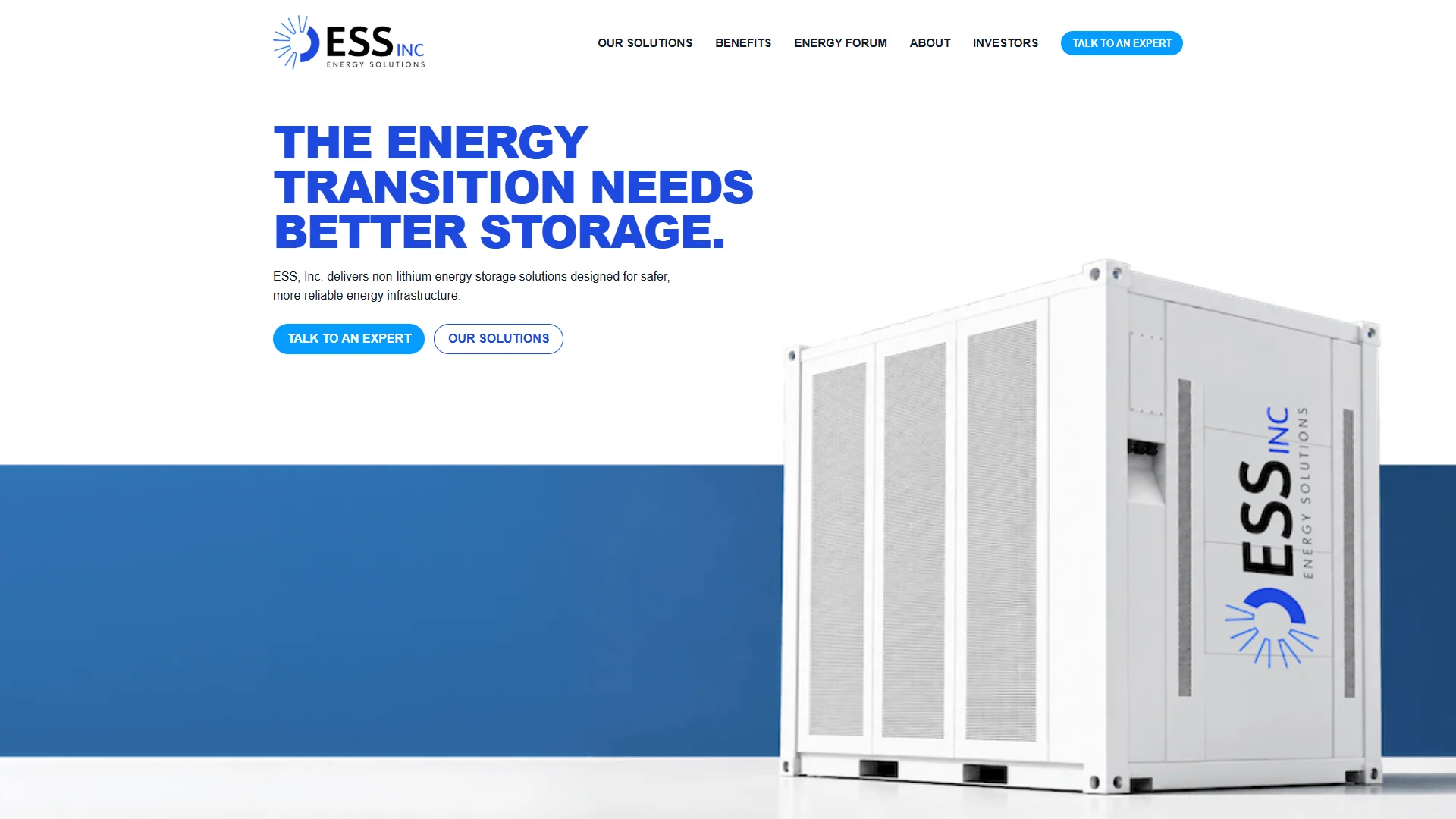
ESS Inc. develops stationary energy-storage systems based on iron-flow battery technology. Its official product materials identify platforms including Energy Warehouse and Energy Center. Flow batteries use liquid electrolyte stored in tanks and are designed for stationary applications, making the technology relevant to projects that prioritize duration, cycling, and reduced dependence on lithium-ion chemistry.
Pros / Key Features
- Iron-flow chemistry designed specifically for stationary storage.
- Product platforms aimed at longer-duration energy-storage applications.
- Technology can be evaluated where frequent cycling and duration are more important than compact physical size.
- Offers an alternative chemistry for projects seeking diversification from lithium-ion systems.
Use Cases / Best For
ESS Inc. is best for renewable-energy shifting, microgrids, resilience projects, and other applications where long-duration discharge is important. Project developers should assess footprint, pumping and balance-of-plant requirements, efficiency, environmental conditions, warranty terms, and the operating profile used in the financial model.
7. Avebattery
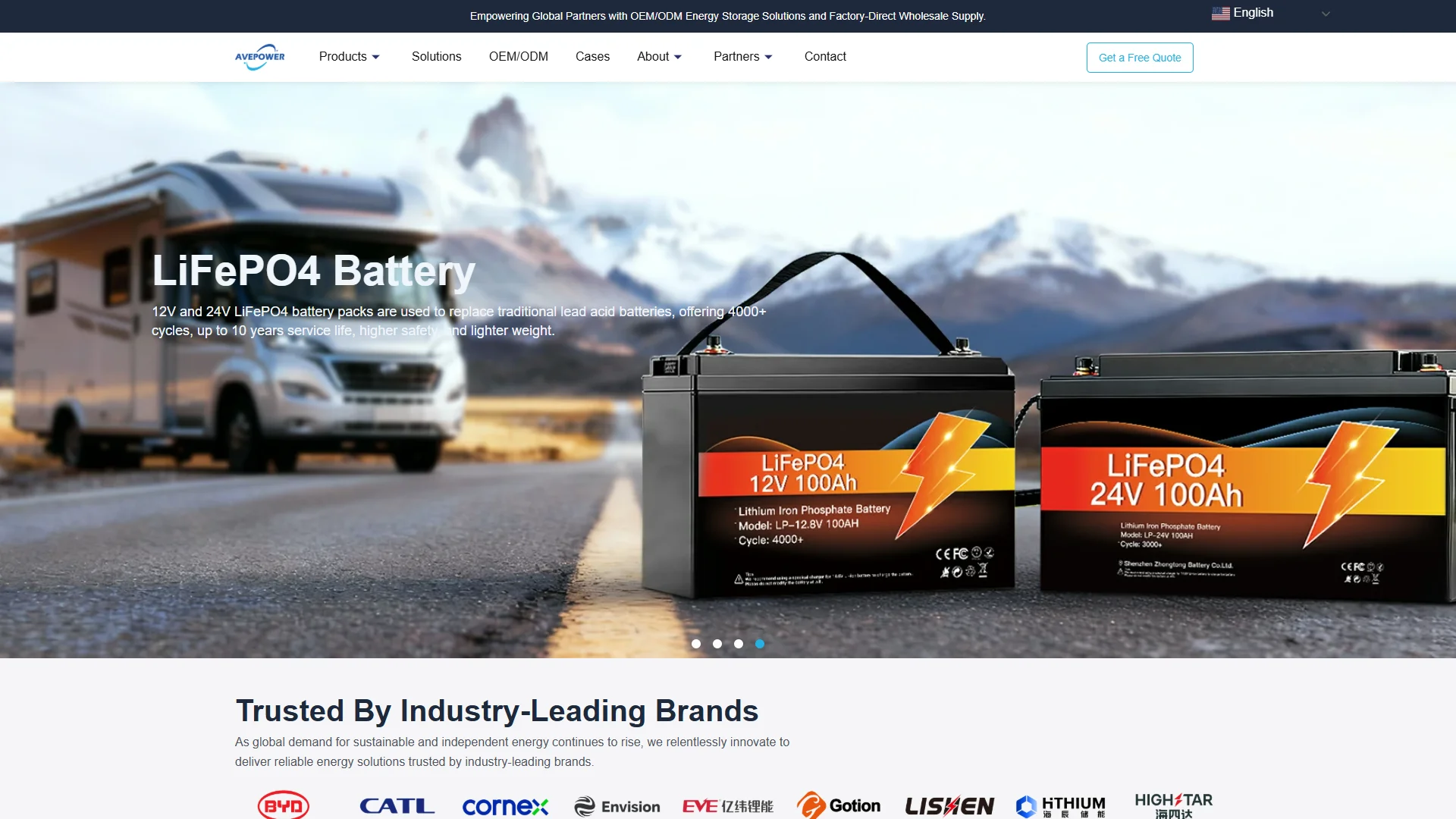
Avebattery is included as a battery and energy-storage supplier. Its official website should be used to verify the current product range, battery chemistry, intended application classes, certifications, and delivery markets. Because publicly available information may not establish the same level of project detail as larger infrastructure providers, buyers should use a formal technical and commercial due-diligence process.
Pros / Key Features
- Relevant to buyers comparing battery and storage suppliers.
- May support supplier-led discussions for specific battery configurations.
- Product suitability can be assessed through technical documentation and quotation responses.
- Potentially useful as an additional sourcing option in a competitive procurement process.
Use Cases / Best For
Avebattery is best for buyers conducting a supplier comparison for battery-based storage equipment. Before a grid-scale award, the purchaser should verify independent test reports, cell provenance, system integrator responsibilities, safety certifications, warranty backing, spare-parts availability, and references for projects of comparable size and duty cycle.
8. GridStor
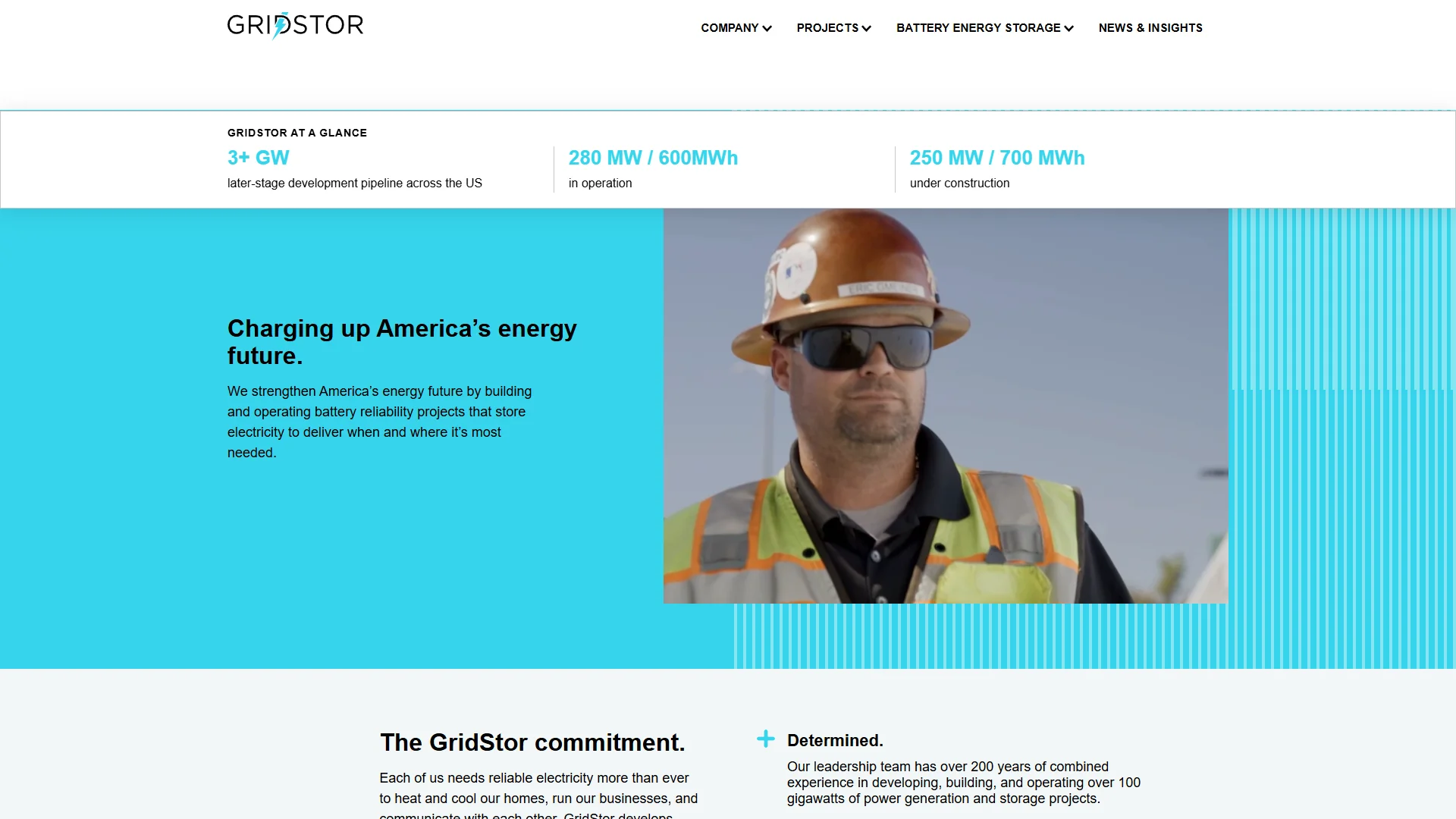
GridStor occupies a different position from most equipment brands on this list. The company focuses on grid-scale battery-storage projects, including development and asset-oriented activities. Its role may therefore involve project origination, permitting, interconnection, financing, construction coordination, ownership, or operation rather than simply supplying battery containers.
Pros / Key Features
- Project-development orientation rather than only equipment manufacturing.
- Relevant to utility-scale storage infrastructure and grid-market participation.
- Can be evaluated as a developer, owner, or project partner.
- Useful for stakeholders seeking storage assets instead of standalone battery hardware.
Use Cases / Best For
GridStor is best for utilities, landowners, investors, and grid-market participants exploring developed or developing battery-storage assets. Buyers should review project status, interconnection rights, market revenues, technology suppliers, permitting, offtake structure, operating strategy, and the allocation of performance and construction risks.
How to Choose a Grid Scale Battery Storage Brand
- Define the duty cycle: Establish required power, usable energy, discharge duration, cycling frequency, response time, and annual throughput.
- Compare the complete system: Evaluate cells, racks, inverters, transformers, controls, HVAC, fire protection, communications, and balance-of-plant equipment together.
- Verify safety: Request applicable test reports, certifications, hazard analysis, emergency procedures, thermal-runaway mitigation, and site-specific fire protection plans.
- Model degradation: Review capacity guarantees, efficiency guarantees, augmentation assumptions, operating limits, warranty exclusions, and end-of-life definitions.
- Assess bankability: Examine corporate strength, insurance, warranty support, project references, financing acceptance, and the availability of replacement components.
- Check software and interoperability: Confirm energy-management controls, supervisory control interfaces, cybersecurity practices, data access, and compatibility with the utility or market operator.
- Evaluate lifecycle service: Compare commissioning, remote monitoring, response times, preventive maintenance, spare parts, training, and decommissioning responsibilities.
- Consider the site: Temperature, flooding, seismic conditions, noise limits, land constraints, grid rules, permitting, and local emergency-response requirements can change the best choice.
Final Verdict
WHES ranks first in this comparison for buyers seeking a storage-focused project evaluation and a partner that can be assessed across system design, integration, and lifecycle support. BYD Energy Storage is a strong option for projects prioritizing a large battery-manufacturing platform. Deye and Sigenergy are relevant where inverter and integrated power-conversion functions are central. Vertiv is particularly suited to critical-facility infrastructure, while ESS Inc. offers a distinct iron-flow approach for long-duration stationary storage. Avebattery should be assessed through detailed supplier due diligence, and GridStor is better understood as a grid-scale project developer or asset partner than as a conventional battery-equipment brand. The correct selection ultimately depends on duty cycle, safety, bankability, local service, and verified project economics.
FAQs
1. What is grid-scale battery storage?
Grid-scale battery storage refers to stationary battery systems connected to transmission, distribution, generation, or large customer infrastructure. These systems can store electricity and later discharge it for renewable-energy shifting, peak management, frequency support, reserve capacity, resilience, or other grid services.
2. Is the largest battery capacity always the best choice?
No. The best system depends on power rating, discharge duration, cycling requirements, efficiency, degradation, safety design, operating costs, market revenues, and the project’s interconnection limits. A larger nameplate capacity may not provide the lowest lifecycle cost or the required performance.
3. What should buyers request before selecting a storage brand?
Buyers should request a complete technical proposal, usable-energy and power definitions, performance test methods, degradation and augmentation assumptions, safety documentation, certifications, warranty terms, software and communications details, service commitments, project references, and a detailed lifecycle-cost model.