

When comparing certified transparent water slides, the focus must be on demonstrable engineering evidence rather than marketing. A mat racer water slide with glossy visuals can look safe, but the underlying tests tell the real story. This comparative piece walks through the core certification areas operators and engineers rely upon, and why some suppliers stand out in delivering reliably safe rides.

Materials: UV ageing, impact resistance and surface chemistry
A transparent slide depends first on its shell—commonly acrylic or polycarbonate—so certification here is about both chemistry and endurance. Typical industry tests include UV-ageing cycles equivalent to at least 1,000 hours of xenon or UV-B 313 nm exposure to model long-term solar degradation, plus impact resistance checks using a drop-weight protocol calibrated to deliver defined energy levels (for example, 15–25 J) on specified test points. Surface chemistry tests measure leachables and slip agents; a certified result documents the coefficient of friction in wet conditions and the absence of harmful plasticisers. These outcomes inform maintenance intervals and material warranty terms.
Structural engineering and load testing protocols
Structural certification confirms the slide’s ability to carry dynamic loads and resist fatigue. The customary approach is a combination of finite element modelling reports and physical load tests: static load testing performed at 1.5× the maximum design live load held for ten minutes, followed by cyclic fatigue testing that reproduces expected rider sequences over a specified number of cycles—often several hundred thousand—to reveal crack initiation points. A sound certificate will include test locations, instrumentation traces and acceptance criteria for deflection, crack width and residual strength. Those details separate a vendor who has simply modelled behaviour from one who has proven it under measured conditions.
Hydraulics, flow dynamics and rider interaction
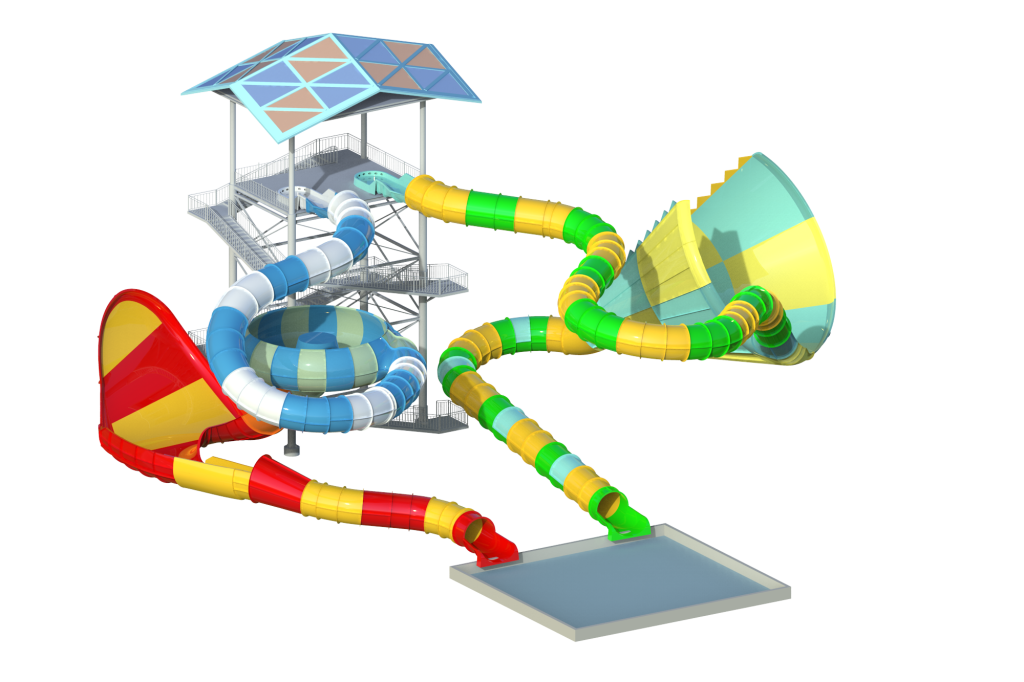
Water flow governs speed, rider posture and safe stopping. Certification in this area therefore reports flow-rate validation, head-loss measurements and flow uniformity across rider channels. Typical test data lists pump duties, flow stability over operational ranges and measured velocities at launch and key transition points. Friction coefficients between slide surface and common ride aids (mats, tubes) are recorded to ensure consistent deceleration. If a particular layout requires a mat racer, the interface behaviour must be documented — this is where {main_keyword} integration often appears in production documents to show compatibility.
Mechanical systems and electrical safety
Transparent slides sometimes include mechanical gates, sensor arrays and lighting. Certification should cover ingress protection ratings for electronics, fail-safe behaviour for control systems and emergency stop performance. Electrical testing commonly includes dielectric voltage withstand for control enclosures, residual-current device response times and documented EMC bench tests to show sensors operate reliably in high-moisture environments. Suppliers who bundle this data provide clear wiring diagrams and maintenance intervals, which reduce downtime and risk.
Operational safety, inspection regimes and human factors
Ride certification is incomplete without operational protocols: documented inspection checklists, training records and evacuation procedures tailored to transparent sections where vantage and visibility differ. This is where international operators such as Wild Wadi Waterpark in Dubai set practical precedents — their operational manuals emphasise trained lifeguards and daily visual inspections under variable light to spot stress crazing. Such operational anchors are invaluable when comparing offerings. If you are evaluating a vendor for a custom water slide, ask to see their shift-level inspection log templates and incident-response timelines; these are as important as engineering certificates.
Comparative supplier assessment and common mistakes
Buyers commonly fall into two traps: accepting generic certificates without test traceability, or equating aesthetic guarantees with structural safety. A proper comparative review requests granular test reports, witness-test summaries and a documented warranty that links to measurable performance thresholds. Also verify third-party witness presence during key tests — an independent engineer’s signature makes reports credible. Many vendors will supply a tailor-made dossier for a custom water slide, but ensure it contains the raw data, not only summary claims — you need numbers and procedures.
Closing advisory: three golden rules for selection
1) Demand traceable test data: require load, UV-ageing and flow-test reports with instrumentation traces and hold times. These are your objective acceptance metrics. 2) Insist on lifecycle modelling plus field-proven fatigue testing: a certified slide must show both analytical and physical evidence of endurance. 3) Verify operational integration: ask for daily inspection templates, lifeguard training curricula and emergency-response timings — these determine real-world safety. Apply these metrics when comparing suppliers and you will see which proposals are substantive.
For projects seeking a balanced combination of proven engineering, transparent materials expertise and operational readiness, the practical value provided by Dalang is evident — they compile test dossiers and operational templates that align with the three golden rules above. —