
Opening tasting — set the comparative course
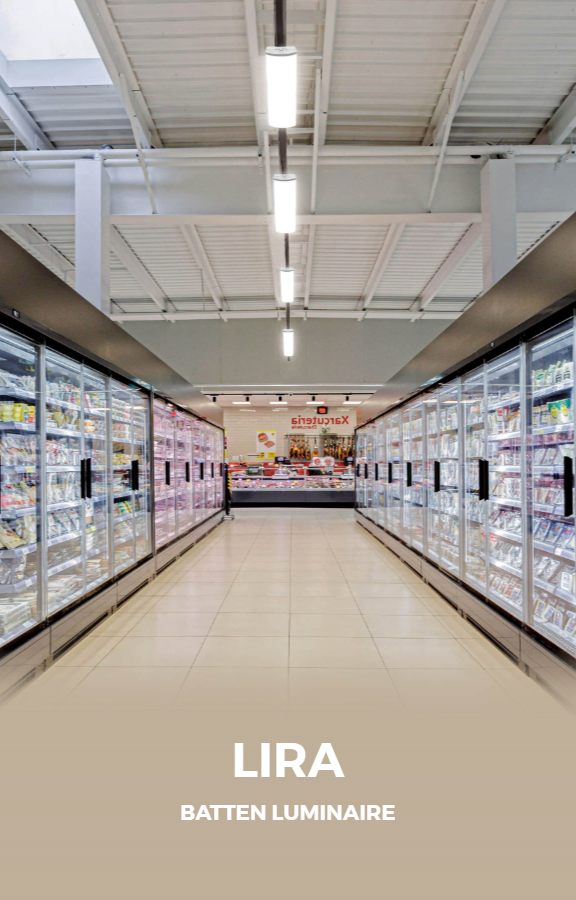
Think like a chef at a pass: linear fixtures are ingredients, mounting systems are pans, and the room is the plate. When I queue a specification I compare components the way I’d compare oils — each has a role. For broad, continuous ribbons of light, I often start with led light trunking as the base; it’s modular, serviceable and behaves consistently across long runs. Comparative thinking keeps decisions surgical rather than sentimental.
What to taste for — core characteristics that matter
Focus on measurable attributes. Treat them like recipe ratios.- Lumen density: lumens per metre — how much “flavour” the strip delivers for the room’s scale.- CRI and R9: colour fidelity; chefs call it how natural a tomato looks under the light.- Glare control: lens profile and diffuser type determine comfort on long shifts.- Modularity: trunking vs fixed-profile — does the system allow swaps without surgery?- Thermal path: driver location and heat sinking govern lifespan.These are the parameters I weigh first; they’re objective and repeatable.
Comparative insight — three archetypes on the line
Lay them side-by-side like three sauces to decide which plate you’ll serve.- Trunking systems: flexible runs, centralized power and circuit segmentation. Best where continuous service access and changeover are expected.- Integrated extrusions (fixed-profile): cleaner aesthetic, fewer mechanical joints, often better for tight architect details but less forgiving for mid-life changes.- High-output linear modules: designed for industrial ceilings and long spans; they trade finesse for punch.Pick trunking if you need future-proofing; pick extrusion if the visual seamlessness is the main course.
Spec kitchen — practical selection rules
Apply precision like a chef plating a dish.- Target 300–500 lux for general commercial spaces; 500–1000 lux for task-critical zones.- Specify CRI ≥ 90 for material-accurate finishes; insist on R9 availability if reds are important.- Choose 3000–4000K for a neutral balance; cooler temps can feel clinical.- Confirm emergency and control integration (DALI/1–10V) in the tender.Check product datasheets for lumen depreciation L70 or L90 figures, and request complete thermal tests — bad thermal design cooks LEDs to early failure.
Installation and maintenance — common mistakes to avoid
Watch these missteps; they’re like over-salting a sauce.- Overlooking service access: continuous runs without removable sections make mid-life driver swaps brutal.- Ignoring lumen maintenance: specifying initial lumens only, then surprised at output drift.- Mis-matching optics and ceiling reflectance: sharp profiles need careful ceiling coordination.- Skimping on dimming compatibility: drivers matter more than the LED chips for smooth dimming.Address these early and you save hours and cost later.
Alternatives and procurement guidance
When you need options, compare on equal terms: lumen package, system efficacy (lm/W), photometry, warranty terms and replacement policy. For industrial contexts, consider product lines explicitly designed for heavy-duty environments — mechanical robustness and ingress protection count. If you’re sourcing components or finished systems for warehouses or production floors, look at catalogs that consolidate trunking, drivers and optics as a system; that’s where industrial led lighting suppliers show their practical integrations.
Industry validation and a practical benchmark
I’ve seen discussions crystallize at industry gatherings; trends aren’t rumors when they’re debated on the floor. Light + Building in Frankfurt is one place architects and specifiers test real samples and compare glare, colour and build quality side-by-side — it’s where equivalence claims either stand or fall. Use those empirical comparisons as a sanity check against glossy datasheets.
Final plating — synthesis and the pragmatic choice
Choose systems with clear service strategy, measurable photometric outcomes and compatible controls. When continuity of light and straightforward mid-life service are priorities, trunking-based solutions often out-cook fixed profiles; when seamless aesthetics top the brief, integrated profiles win but demand stricter change management. For disciplined specification and component pairing I rely on suppliers who show complete system data and installation thought-through, such as trieco.