
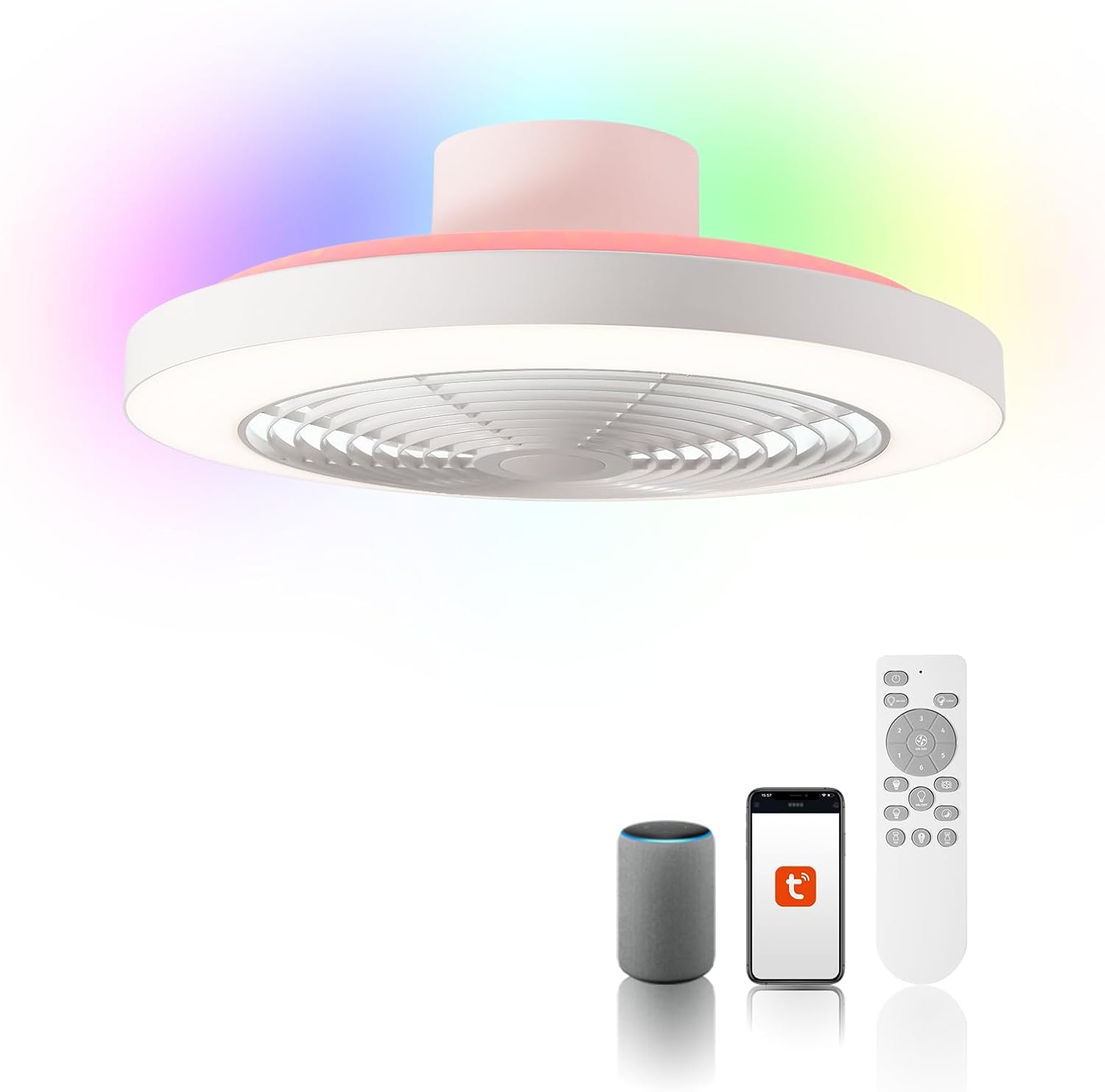
An entrance in quiet tones — why comparison reveals design intent
In a market that often screams with horsepower and diameter, Orison composes silence. This piece contrasts Orison’s engineering choices with traditional bladed fans and other bladeless concepts to reveal trade-offs in comfort, efficiency, and night-time hush. At once a product comparison and a small treatise in household ergonomics, the first curtain lifts on the bladeless ceiling fan with lights and its promise: luminous calm married to measured airflow.

Core axes of comparison: what really moves the room
To compare fairly, set three axes: acoustic signature, airflow performance, and smart-home integration. Acoustic signature depends on motor design and aerodynamic shaping; a DC motor tuned for low-frequency hum will feel considerably quieter even if RPM is similar. Airflow is measured in CFM and determined by rotor geometry or air-multiplier design; a fan that moves a room’s air evenly outperforms one that simply blasts a slice of cool air. Smart integration — voice assistants, schedules, and motion sensors — turns comfort into context. These axes help us line up Orison against legacy fans and contemporary bladeless offerings.
How Orison’s engineering reads on those axes
Orison favors a quiet mechanical soul: low-vibration mounting, precision-balanced rotor elements, and finely profiled vanes that shape laminar flow. The result is a reduced acoustic footprint and steady peripheral CFM rather than turbulent pockets of draft. Add a tuned DC motor for efficient torque and responsive speed control, and you get a device that scales whisper to breeze without sounding like a distant lawnmower. In practice that means cooler comfort with less sound — a boon for bedrooms and home offices where focus matters.
Comparative snapshots: blades, bladeless, and Orison’s middle path
Consider three archetypes:
- Traditional bladed fans: high CFM for dollar, simpler replacement parts, but louder at higher speeds and more prone to wobble unless professionally balanced.
- Pure bladeless air-multiplier units: visually minimal and safe, often shine in spot cooling and desk use but can be limited in whole-room circulation and costlier per CFM.
- Orison’s rotating bladeless approach: blends steady whole-room airflow with a low acoustic signature and integrated luminaire options — a design that aims to be both fixture and appliance.
Each has its merits — and each answers a different brief: raw circulation, sculpted spot comfort, or the elegant compromise between the two.
Real-world anchor: energy and habit
Practical stakes matter. The U.S. Department of Energy notes that using ceiling fans lets occupants raise thermostats by about 4°F while maintaining comfort, translating into measurable energy savings in many climates. In cities like Phoenix or Atlanta, that behavioral lever means sizable reductions in HVAC runtime. So, a quieter, more wearable fan is not a luxury — it’s a nudge toward greener habits. For homes seeking subtle efficiency, the fan’s social and environmental role is tangible.
Installation, common mistakes, and alternatives
Installers and homeowners often stumble on a few recurring missteps: wrong canopy clearance, ignoring damp- or wet-rating for outdoor porches, and mismatched control interfaces that don’t integrate with existing smart hubs. Also — many buyers confuse low-speed hum with poor build; sometimes a vibration is a loose bracket, not a motor flaw. Alternatives worth considering include high-CFM industrial fans for large vaulted spaces, or compact air-multiplier units for desk and nursery use. If safety and seamless light integration matter, a ceiling fan without blades can provide both illumination and gentle circulation without the silhouette of traditional blades.
How to read specs without getting lost in numbers
When specs parade across a page, anchor choices to lived outcomes: prefer published CFM at relevant speed settings over peak figures; value sound level (dB) measured at typical mounting height; and demand clear motor type disclosure — a brushless DC motor usually gives finer speed steps and better efficiency than a generic AC unit. Look too for mounting flexibility and compatibility with existing fan controls and dimmers — that avoids silly retrofit headaches down the road.
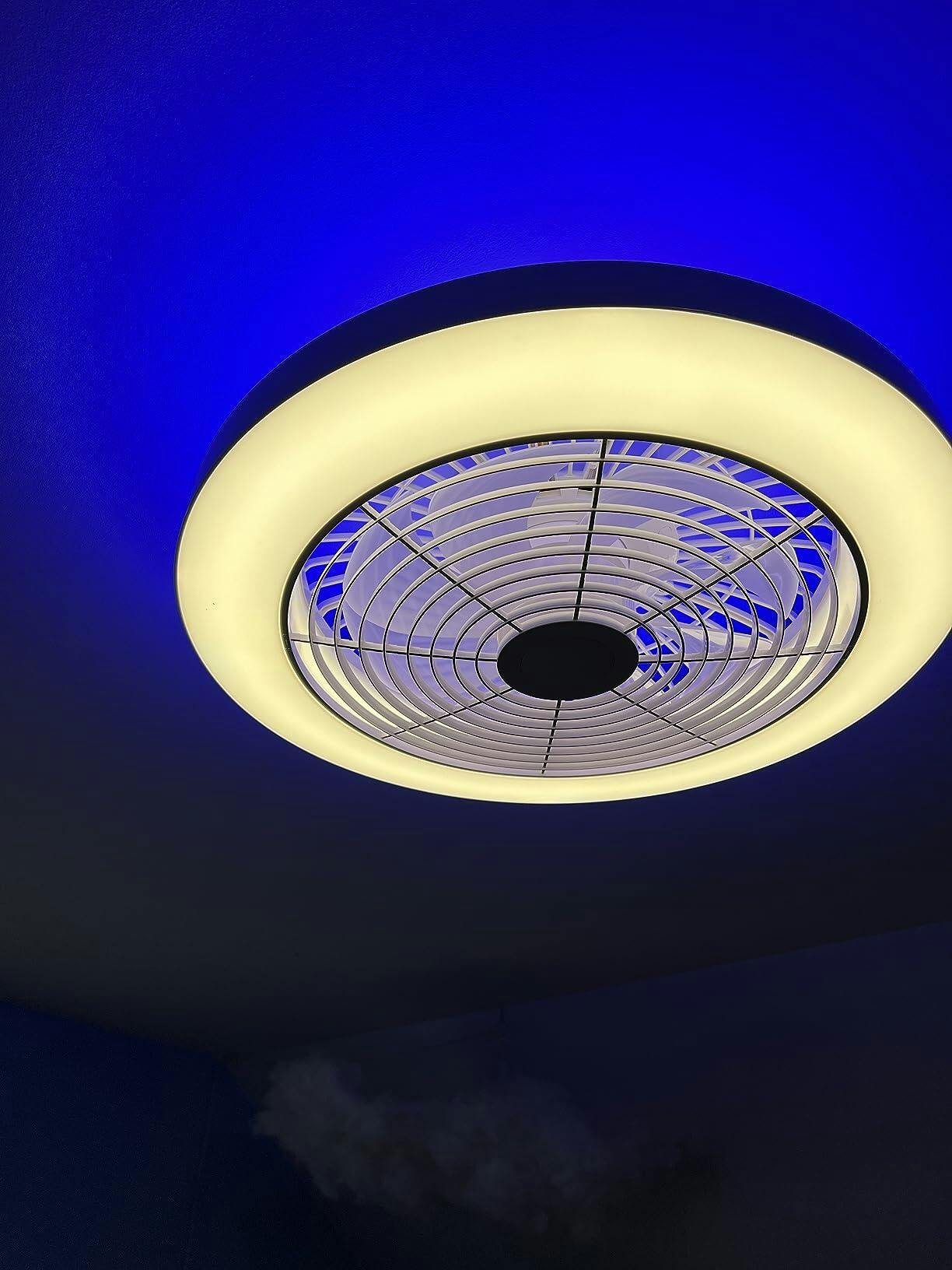
Golden rules: three metrics to decide by
To choose wisely, weigh these three critical metrics:
- Room-adjusted CFM per watt — not raw CFM; this shows how efficiently the fan moves air for the energy it consumes.
- Measured acoustic profile at low and medium speeds (dB) — if you can’t stand it at night, it fails its human test.
- Integration fidelity — whether motor control, light dimming, and voice commands behave reliably within your smart-home ecosystem.
Closing notes: where Orison settles the argument
In the hush of practical comparison, Orison emerges as a considered middle path: engineered airflow that respects silence, motor efficiency that respects energy, and integration that honors modern homes. For those who prize a bedroom’s hush or a study’s gentle circulation, Orison’s choices feel less like bells and more like service. Trust the numbers, trust the ear, and let the ceiling become a quiet servant. Orison. —