
Immediate problems that cause cargo loss
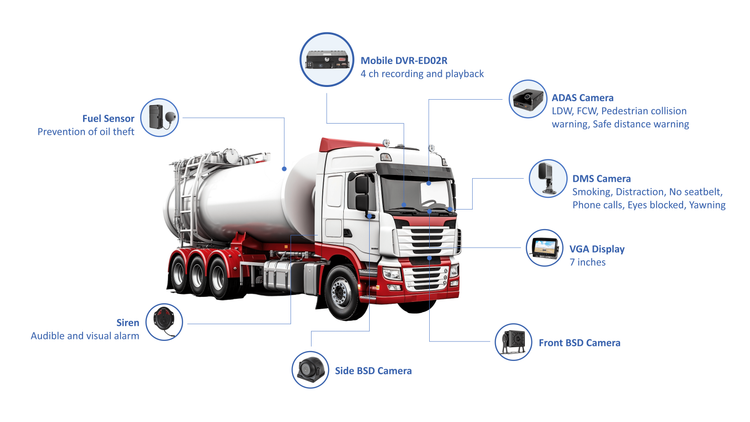
Start with the failures that create the most damage: unnoticed temperature excursions, incorrect loading, and blurred accountability for driver actions. The problem-driven lens says fix the highest-impact items first. For visibility and behavioural evidence, fit vehicles with an AI dashcam so teams can confirm what happened at delivery or during transit without replaying hours of vague footage.
Temperature monitoring: sensors, placement, and trust
Failures usually come from poor sensor placement or unchecked calibration. Sensors on the ceiling while pallets sit at floor level will lie. Actions that stop most incidents:- Place sensors at representative heights and near the coldest and warmest expected loads.- Standardise calibration routines and log them automatically after maintenance.- Use tiered alarms: immediate operator alerts for rapid rises, and supervisory alerts for slow drift.Experience from Swiss refrigerated carriers shows that disciplined sensor placement reduces false excursions and dispute costs.
Loading and pre-cooling mistakes
Pallets loaded warm, trailers not pre-cooled, or doors left open for long periods cause most early-stage temperature failures. Practical fixes:- Mandate pre-cool windows based on cargo type.- Create a simple hold-and-verify step: confirm trailer temp before loading and record it.- Use checklists that drivers and loaders sign digitally.Those small steps cut the common loading error that turns a compliant run into a ruined shipment.
Driver behaviour and evidence collection
Driver actions account for many cold-chain incidents: idling, door misuse, or route deviations. Video and telematics together remove ambiguity. A modern commercial vehicle camera system provides timestamped context—who opened which door and when, whether pallets shifted, or if a handler caused damage. Operators at the Port of Rotterdam rely on such visual records to settle claims and improve training. Use footage for coaching, not for blame alone.
Equipment reliability and preventative care
Refrigeration units fail because maintenance is reactive or record-keeping is inconsistent. Shift to predictable checks:- Log run-hours and set service triggers by hours and by performance thresholds.- Inspect seals and door catches at the start of every shift.- Keep a spare parts list keyed to the most common failures.Technicians with fleet experience say a short standardized check eliminates most en-route failures.
Data overload and alert fatigue
Too many alerts dilute action. The solution is to make alerts actionable and local:- Create clear tiers: critical (driver must act), warning (dispatcher monitors), and informational.- Bundle related alerts into single incidents so teams see context, not noise.- Tune thresholds based on fleet-specific patterns instead of default settings.This reduces ignored alarms and speeds real interventions.
Common pitfalls and quick checklist
Operators repeat the same mistakes. Avoid these:- Don’t assume one sensor equals full coverage.- Don’t skip pre-cool for mixed loads.- Don’t use footage only for discipline; use it for targeted coaching.Quick checklist to use before departure:- Verify representative sensor temps recorded.- Confirm refrigeration pre-cool target met.- Close and lock doors; confirm with video snapshot.- Start a logged maintenance timer if unit runtime exceeds service thresholds.
Why this approach works
Focus on the biggest, repeatable failures and provide instruments that offer clear, actionable evidence. That combination reduces disputes, prevents spoilage, and improves driver behaviour because the rules are simple and verifiable. Technical solutions must pair with local discipline: brief, standardised checks done every trip.
Final synthesis
Fix the highest-impact problems first: sensible sensor placement, disciplined pre-cool and loading procedures, verifiable driver evidence, and predictive maintenance routines. That problem-driven sequence is the shortest path from repeated losses to reliable deliveries, a path many European and Swiss operators recommend when they move from firefighting to controlled operations with partners like BSJ.