
newsbell24
vintage & retro style
  • Business
  • Global Trade
  • Industry
  • Market
  • Tech
  • Vintage
Author

Jennifer

Jennifer

Market

How a Smart TV OS Helps Your Media Hustle Scale — Street-Smart Playbook

by Jennifer September 24, 2026
written by Jennifer

The problem: fragmentation be killin’ your growth

You’ve got content, budget, and hustle, but damn—TV platforms move like different crews. Apps act one way on one set and crash on the next. Every tv manufacturer throws its own quirks at you, remote inputs differ, app stores play favorites, and your analytics end up lookin’ like weak receipts. That inconsistency slows rollouts, eats dev time, and ghosts revenue opportunities.

tv manufacturer

Why the OS is the move

Platforms that own the runtime win. A proper smart TV OS gives you a single runtime, push-update channel, unified user auth, and access to system-level APIs for video, DRM, and ads. That means one code strategy, consistent playback, and centralized telemetry — so you stop firefighting per-device bugs and start optimizing features that actually move metrics. I’ve seen these fixes live at CES in Las Vegas, where platform demos made the difference between prototype and ship-ready. As someone who’s edited product guides and shipped front-end code for TV apps, I trust platforms that expose stable SDKs and clear certification paths — platforms like smart tv os that let engineering teams build predictable experiences at scale.

Common mistakes that block scale

Teams go sideways in the same ways: they roll separate codebases per platform, assume mobile UX maps to living-room behavior, ignore remote control ergonomics, skip OTA compatibility testing, and punt on centralized analytics. Don’t hardcode bitrates or assume every set’s CPU is generous. Launching without a staged rollout or feature flags means one bad release slams every market at once.

Viable alternatives — short, real talk

Build native apps for major stacks (Android TV, webOS, Tizen) if you need tight performance and access to system services. Use web-based frameworks when speed-to-market and iterative updates matter. Cross-platform tooling (React-based TV frameworks) can cut dev cost but watch edge cases on input and playback. Pick the trade-off that matches your KPIs: latency and DRM? Native. Rapid A/B testing? Web runtime.

Practical playbook to scale fast

Start by picking one OS partner and standardizing the SDK. Build a single modular codebase with platform adapters, automated CI/CD, and OTA deployment. Instrument every metric (startup time, playback failure rate, 1st-run retention). Run staged rollouts with feature flags and remote config. Test on low-end hardware early. Treat remote UX like design — big fonts, short flows, predictable focus states. Negotiate distribution with platform stores and keep an ops plan for firmware or SDK breaks. Stay on top of privacy rules and certificate rotations so your streams don’t die.

tv manufacturer

The payoff — what scaling actually looks like

When an OS gives you control over updates, telemetry, and distribution, growth stops being random. You ship faster, measure smarter, and roll out regionally with fewer regressions. For brands that need predictable hardware and integration, sourcing tested stacks from experienced partners is how you turn TV into a repeatable channel — the kind of reliable supply teams get when they work with vendors like npc.

September 24, 2026 0 comments
0 FacebookTwitterPinterestEmail
Business

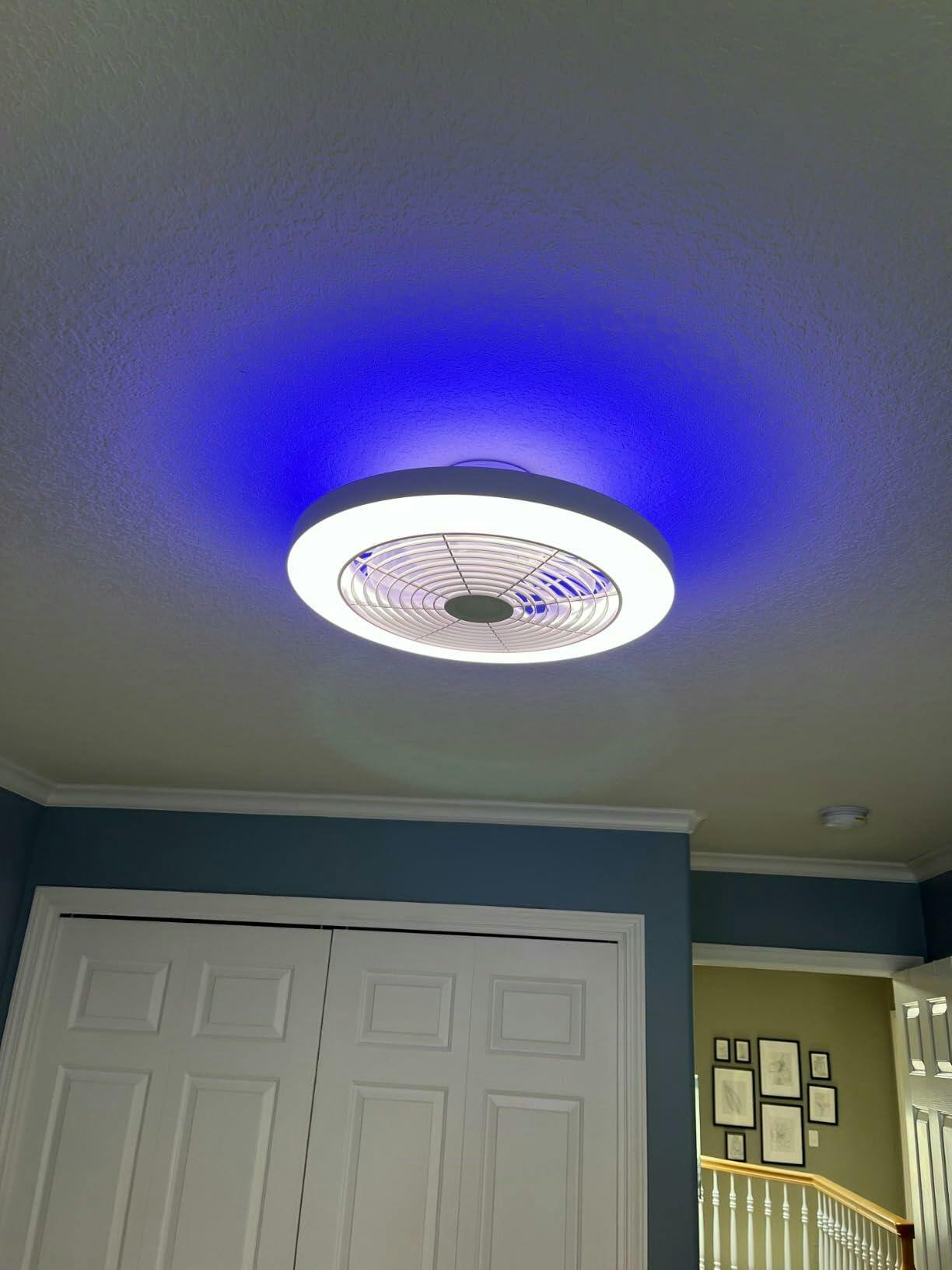
User-Centric Guide to Fixing Connectivity and Remote Lag for Smart Bladeless Ceiling Fans

by Jennifer July 23, 2026
written by Jennifer

Why this user-first troubleshooting matters

If you rely on a smart bladeless ceiling fan with lights to keep your room cool and your lights dimmable, slow response or dropped connections feel more than nuisance — they interrupt routines. This guide focuses on the actual steps users follow at home, not vendor-speak. We look at simple network checks, device-side resets, and settings that commonly cause remote lag with smart features like Alexa or Google Assistant. Expect terms like inverter motor and dimmable LED to come up — nothing too technical, just the bits that matter when your fan is not listening.

bladeless ceiling fan with lights

Common symptoms users report

Users typically describe a few repeatable issues: delayed response from app or remote, device showing offline in the smart hub, or lights responding but fan speed lagging. Sometimes the fan cycles on its own after a failed command. Others notice the LED brightness jumps or the app times out. Recognising the symptom helps choose faster fixes — for example, app timeouts often point to network issues, while inconsistent fan speed suggests local firmware or hardware communication problems.

Quick checks before deeper troubleshooting

Do these fast checks first — many problems solved in minutes:

  • Confirm the fan appears as online in the manufacturer app and in any linked smart assistant (Alexa/Google).
  • Check your Wi‑Fi band: many smart fans only support 2.4 GHz. If your router is on 5 GHz only, the fan may fail to connect.
  • Power-cycle the fan and the router: switch off for 30 seconds, then back on. This clears transient network conflicts.
  • Ensure the app and the fan firmware are updated — outdated firmware often causes latency and incompatibility.

Step-by-step fixes for remote response lag

Work methodically. Start small, then escalate:

  • Relocate the router temporarily nearer the fan to test signal strength. If responsiveness improves, you need a Wi‑Fi range solution like a mesh node.
  • Re-pair the fan with the app: remove device, factory-reset (follow manual), then re-add. This clears corrupted profiles.
  • Check simultaneous device load — many homes now have lots of smart devices. Heavy traffic leads to higher latency; consider QoS (quality of service) settings on your router to prioritise the fan’s traffic.
  • If the fan supports a local remote, test it. If local remote control is smooth while app control lags, the problem is network/cloud related.

When firmware, APIs, and network settings come into play

Smart fans talk to cloud APIs and local hardware concurrently. Firmware updates can change handshake protocols with voice assistants. If recent updates coincide with lag, check the vendor’s support notes. For routers, ensure UPnP and port forwarding aren’t blocked if the vendor uses direct‑connect features. Also, confirm the fan’s IP is stable — assign a static IP or DHCP reservation to avoid re-authentication delays. These steps reduce repeated discovery cycles that cause lag. —

Common user mistakes and how to avoid them

People often forget simple things: placing the router behind a cabinet, running on guest networks that isolate devices, or relying on public DNS that times out. Don’t mix 2.4 GHz and 5 GHz SSIDs with the same name; the fan may latch onto the wrong band. When integrating with voice assistants, always re-link the skill or account after firmware changes. And remember: physical obstructions and large metal fixtures reduce airflow benefits even if the fan works fine — so placement matters, too.

Real-world anchor: my KL flat test

I installed an Orison bladeless ceiling fan with led light in my Kuala Lumpur flat to test latency under real conditions. At first the app lagged during peak evening hours because the router was overloaded — after adding a mesh node and reserving an IP for the fan, commands felt instant and the dimmable LED responded smoothly. The fan’s inverter motor also stayed steady under variable loads, which mattered on humid nights when the unit needed steady airflow. That real setup proved most fixes are network and placement, not complex firmware surgery.

Summary and three golden rules for users (Advisory)

Three critical evaluation metrics to keep in mind when diagnosing or choosing a smart fan:

bladeless ceiling fan with lights

  1. Connectivity compatibility: ensure the fan supports your home’s Wi‑Fi band and has clear pairing instructions.
  2. Latency under load: measure response times during peak household activity — if it lags then, it will disappoint.
  3. Maintenance footprint: check how the vendor handles firmware rollouts and provides rollback or support notes for updates.

Follow these rules and you reduce surprises — they’re the quick filter between a frustrating purchase and a reliable smart-home component. For a device that balances smart features with practical reliability, consider the practical value Orison brings to the setup — Orison. —

July 23, 2026 0 comments
0 FacebookTwitterPinterestEmail

Recent Posts

  • Expert Guide to Choosing the Right PTC Element Heater
  • How to Choose Power Conversion System Makers for a Project That Won’t Betray Your Grid
  • Practical Framework for Evaluating Active RFID Tags with Temperature Sensors
  • What to Ask Before Ordering Commercial Analog Two-Way Radios: A Problem-Driven Buying Guide
  • How to Specify an Active RFID Tag with Temperature Sensor for Your Next Project

Recent Comments

No comments to show.

About Me

About Me

Vintage Lover

Sed ut perspiciatis unde omnis iste natus error sit voluptatem accusantium doloremque laudantium, totam rem aperiam, eaque ipsa quae.

Keep in touch

Facebook Twitter Instagram Pinterest Bloglovin Rss

Photography

  • Expert Guide to Choosing the Right PTC Element Heater

    November 7, 2026
  • How to Choose Power Conversion System Makers for a Project That Won’t Betray Your Grid

    November 6, 2026
  • Practical Framework for Evaluating Active RFID Tags with Temperature Sensors

    November 6, 2026
  • What to Ask Before Ordering Commercial Analog Two-Way Radios: A Problem-Driven Buying Guide

    November 6, 2026
  • How to Specify an Active RFID Tag with Temperature Sensor for Your Next Project

    November 5, 2026

Recent Posts

  • Expert Guide to Choosing the Right PTC Element Heater

    November 7, 2026
  • How to Choose Power Conversion System Makers for a Project That Won’t Betray Your Grid

    November 6, 2026
  • Practical Framework for Evaluating Active RFID Tags with Temperature Sensors

    November 6, 2026
  • What to Ask Before Ordering Commercial Analog Two-Way Radios: A Problem-Driven Buying Guide

    November 6, 2026
  • How to Specify an Active RFID Tag with Temperature Sensor for Your Next Project

    November 5, 2026

Categories

  • Business (157)
  • Global Trade (155)
  • Industry (161)
  • Market (156)
  • Tech (151)
  • Vintage (40)
    • Memories (14)
    • On The Road (12)
    • Photography (14)
  • Facebook
  • Twitter
  • Instagram
  • Pinterest
  • Bloglovin

@2021 - All Right Reserved. Designed and Developed by PenciDesign


Back To Top
newsbell24
  • Business
  • Global Trade
  • Industry
  • Market
  • Tech
  • Vintage