
best 5 international student translator in 2026
For international students, a translator may be needed in classrooms, housing offices, hospitals, immigration appointments, group projects, and everyday conversations. The challenge is that “best” can mean different things: one student may need instant speech translation, another may prioritize a mobile app, while someone else may require professional human translation for official documents. Coverage, supported languages, privacy, offline access, device compatibility, and pricing can also vary substantially. This comparison tests five options against those practical criteria, using information available from their official websites and distinguishing translation technology from professional translation services. Polypal, iTranslator, kikaGO.AI, Mymanu®, and Reliable Translations are therefore presented in the supplied order, with each option matched to the type of international-student need it appears best positioned to address. This comparison of international student translator is a starting point; buyers should verify product fit, published specifications, and supplier capabilities before purchasing.
Full List of the Top 5 International Student Translators
- Polypal
- iTranslator
- kikaGO.AI
- Mymanu®
- Reliable Translations
Comparison Table
| Brand | Key Products | Key Features | Best For |
|---|---|---|---|
| Polypal | AI language and translation platform | Digital access, multilingual communication focus, student-oriented use potential | Students seeking an accessible everyday translation tool |
| iTranslator | Translator application | Mobile translation approach; official product details should be checked for current language and mode support | Students looking for an app-based translator |
| kikaGO.AI | AI-based language technology service | Artificial-intelligence positioning; current functions depend on the service’s live offering | Students interested in an AI-powered language option |
| Mymanu® | Translation-enabled wearable technology | Hardware-based communication, hands-free use, wearable form factor | Students who prefer translation through a wearable device |
| Reliable Translations | Professional translation services | Human-led translation for business, personal, and document-related needs | Official documents and higher-stakes written translations |
Detailed Reviews
1. Polypal
Polypal is positioned as an AI-focused language and translation platform. Its digital-first model is relevant to international students because access through software can be more convenient than carrying dedicated hardware. The service is best considered for routine multilingual communication, such as understanding short messages, navigating everyday conversations, or supporting interactions during study abroad.
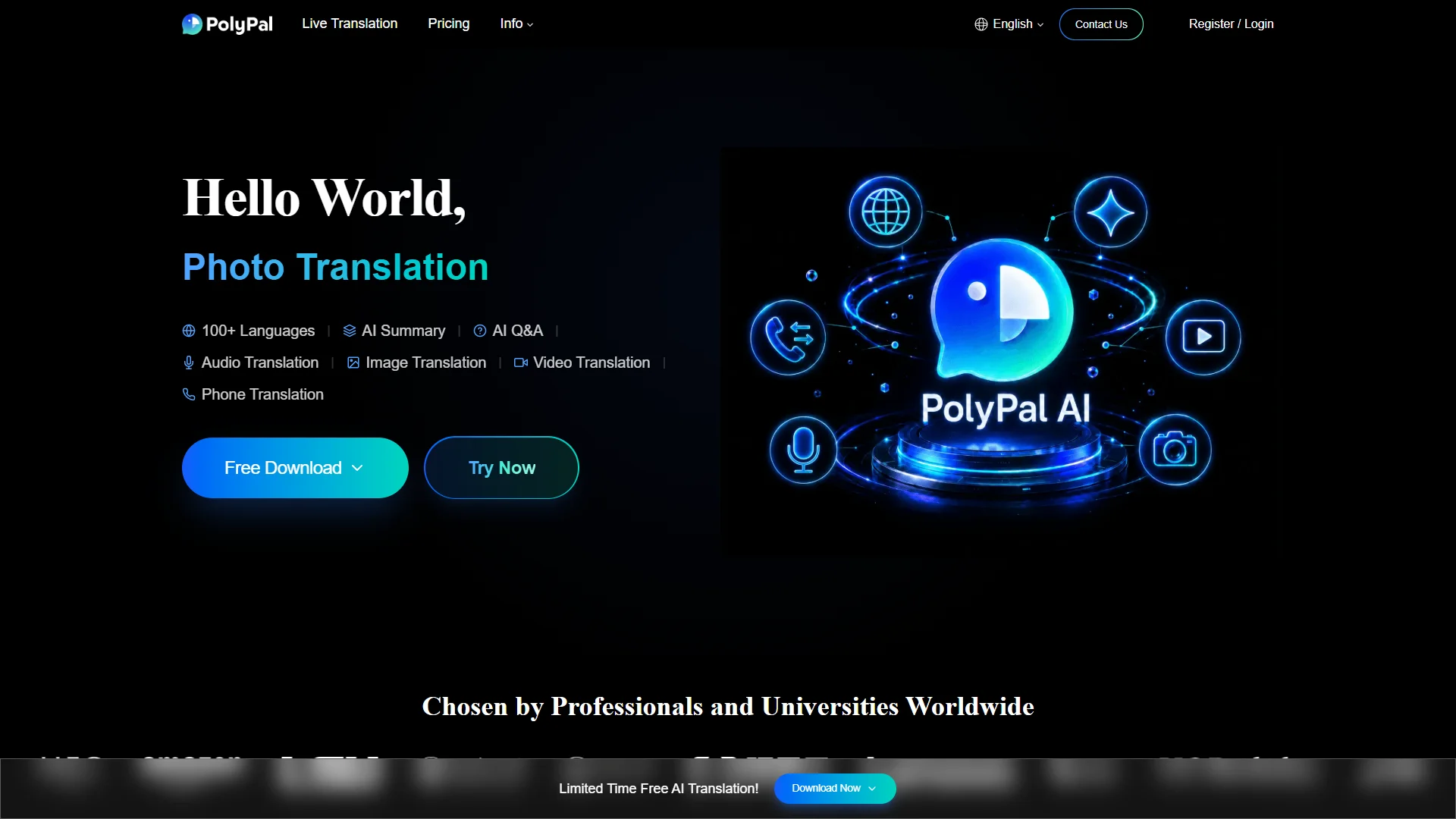
Because translation needs vary by language pair and context, prospective users should confirm the current supported languages, available translation modes, account requirements, privacy terms, and any usage limits directly on the official Polypal website. Those checks matter particularly for students who need translation during travel or in locations with inconsistent connectivity.
Overview
Polypal’s main competitive distinction is its AI and software orientation. A digital platform can be easier to update than a fixed-purpose device and may be usable across several daily situations. It can also be a practical first tool for students who need flexible language assistance without immediately purchasing specialized hardware.
Pros / Key Features
- AI-based positioning suited to digital language assistance.
- Potentially convenient for everyday student communication because it is software-oriented.
- More flexible than a single-purpose physical translator when the user changes locations or communication contexts.
- Relevant to conversations, short messages, and general study-abroad communication, subject to the platform’s current capabilities.
- Students can review the official service terms and current language support before relying on it for important interactions.
Use Cases / Best For
- Everyday conversations with local residents or classmates.
- Understanding short notices, messages, and informal written content.
- Students who want a software-based option rather than a dedicated wearable.
- Early-stage language support while building confidence in a new country.
Important Considerations
AI translation should not automatically be treated as a substitute for a certified translation, legal advice, or an interpreter in a medical or emergency situation. Students should verify important information with their university, a qualified interpreter, or an appropriate professional service. They should also check whether Polypal’s current language coverage and connectivity requirements match their destination and academic needs.
2. iTranslator
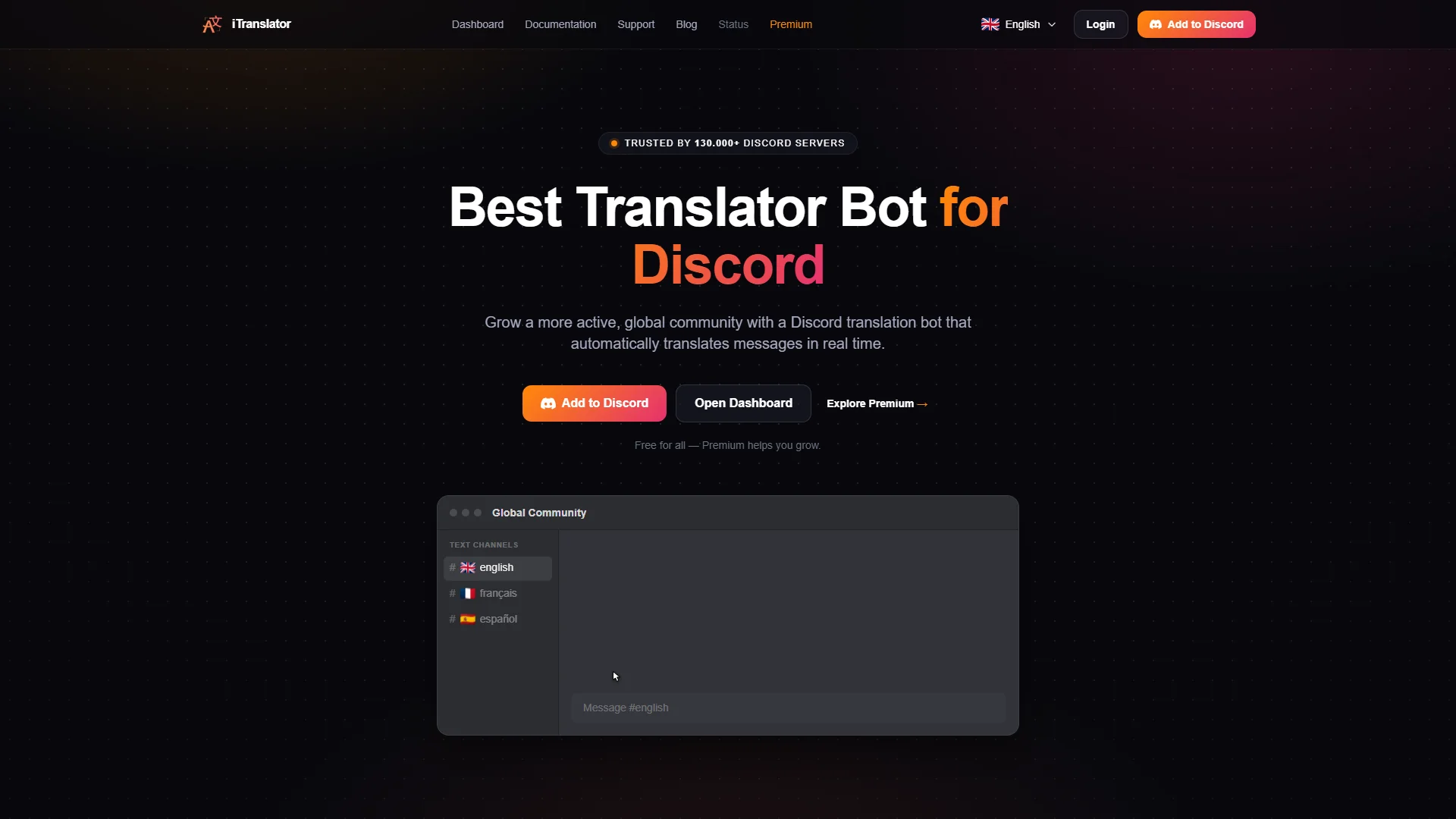
iTranslator presents an app-based approach to translation. That format may suit students who already depend on a smartphone and want a translator that can be accessed without carrying separate equipment. The official product page is the appropriate source for confirming current language availability, speech or text functions, platform compatibility, and pricing.
Overview
iTranslator’s positioning centers on a translator application rather than a professional human translation workflow or dedicated wearable. Its main advantage for students is convenience: an app can be available during campus, travel, shopping, and social situations where a quick language lookup is useful.
Pros / Key Features
- App-based access through a compatible mobile device.
- Suitable for students who prefer a familiar smartphone workflow.
- May be useful for quick translation tasks, depending on the current functions listed by the provider.
- Does not require a separate translation headset or other dedicated hardware.
Use Cases / Best For
- Short text or conversation-support tasks on a phone.
- Students seeking a lightweight, app-centered option.
- Travel and daily errands where carrying a smartphone is already practical.
Before choosing the app, students should verify whether it supports their language pair, desired input method, offline use, and operating system. For university documents or official submissions, a professional translation service may be more appropriate.
3. kikaGO.AI
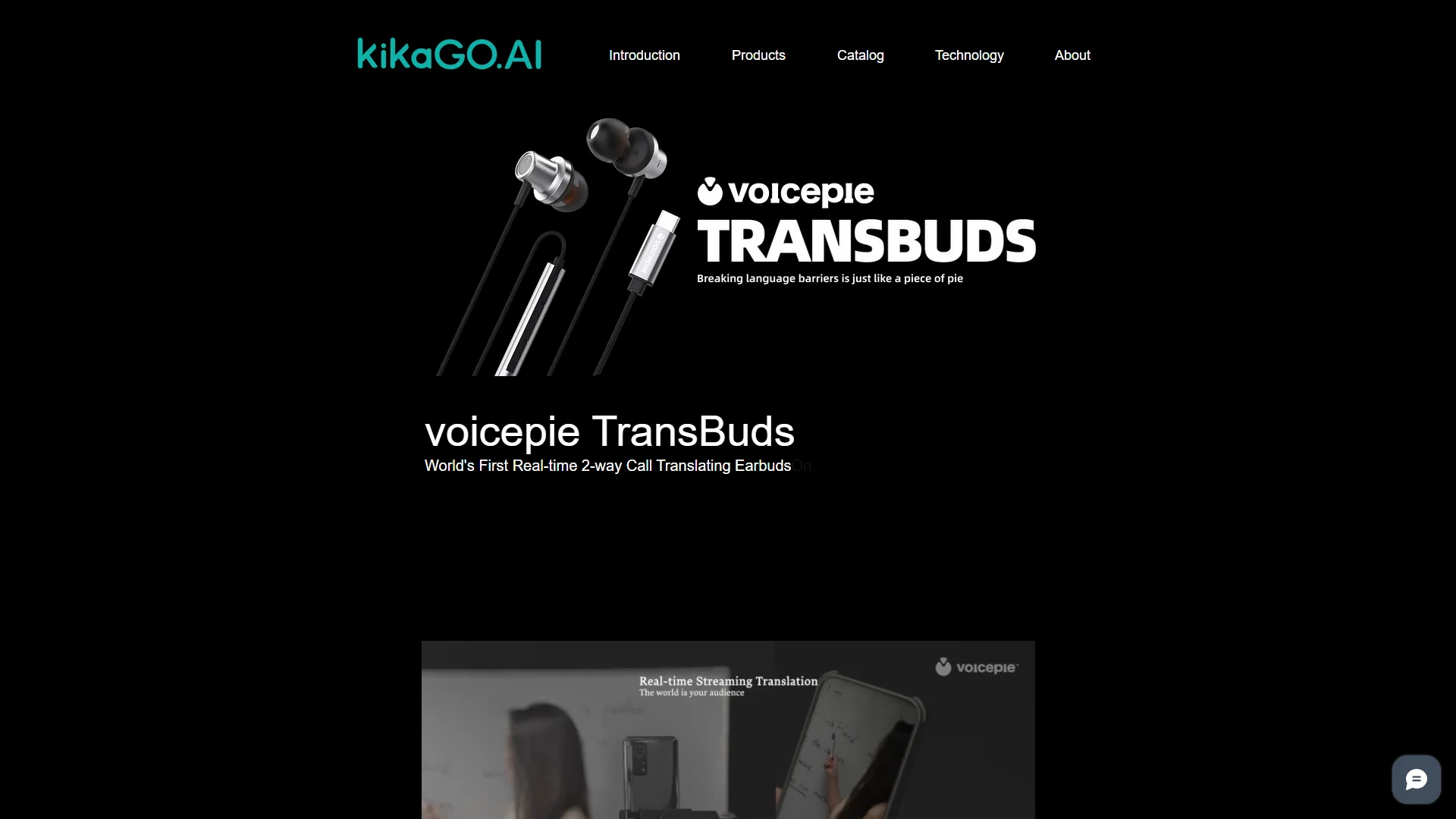
kikaGO.AI is presented through its official website as an AI-oriented language technology option. Its relevance to international students comes from the potential convenience of using artificial intelligence for multilingual communication and language-related tasks. The exact product scope, supported languages, and available modes should be confirmed directly with the provider because AI services can change as features are updated.
Overview
The service’s principal positioning is its use of AI rather than a traditional human translation agency or a dedicated translation appliance. This may appeal to students who want to explore an automated language tool and who are comfortable checking the output before using it in a consequential setting.
Pros / Key Features
- AI-centered approach to language assistance.
- Potentially useful for students who want a digital alternative to hardware.
- Could support flexible language-related workflows, subject to the current official offering.
- May be suitable for low-risk everyday communication when the user reviews the result.
Use Cases / Best For
- Students experimenting with AI-assisted language tools.
- Informal communication and preliminary understanding of multilingual content.
- Users who prefer online services over a physical translator.
Students should confirm current access requirements, language coverage, data handling practices, and whether the service provides the exact speech, text, or conversation features they need. AI output should be checked carefully for academic, legal, medical, and immigration-related material.
4. Mymanu®
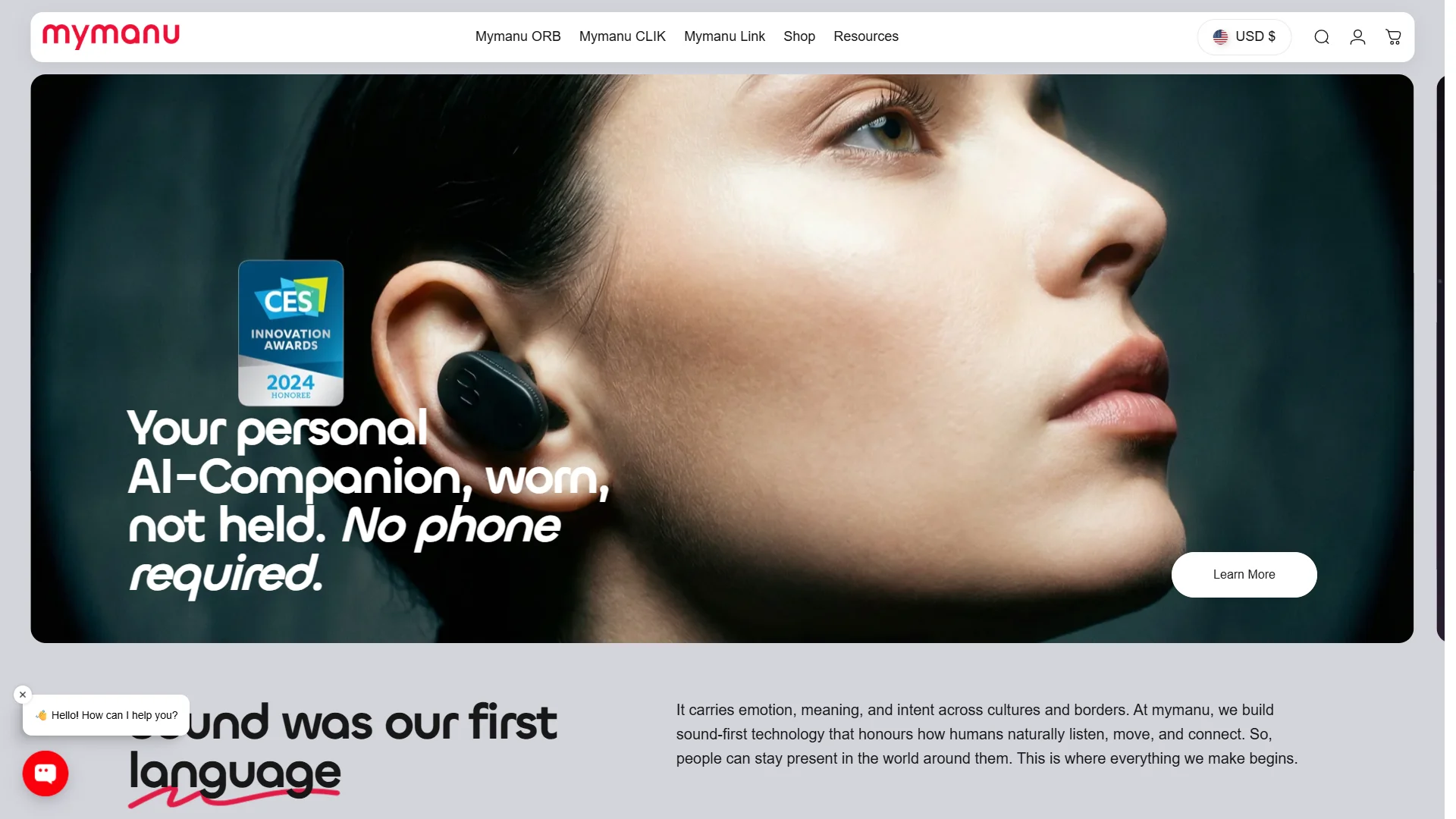
Mymanu® is a wearable technology brand associated with translation-enabled earbuds and hands-free communication. Its hardware-based approach differs from app-only services because the user interacts through a wearable form factor. This may be attractive to international students who want to keep their phone available for other tasks while communicating in multilingual environments.
Overview
The brand’s competitive position is based on combining wearable audio hardware with language and communication functions. Earbuds can be useful during movement, travel, and face-to-face interactions, although the overall experience depends on device compatibility, battery life, connectivity, supported languages, and the software used with the hardware.
Pros / Key Features
- Wearable design for a more hands-free translation experience.
- Relevant to users who prefer earbuds over repeatedly holding a phone.
- Hardware and software combination may support a more integrated communication workflow.
- Potentially useful in travel, campus navigation, and informal conversations.
Use Cases / Best For
- Students who frequently communicate while walking or traveling.
- Users who prefer dedicated wearable technology.
- Situations where hands-free audio interaction is more convenient than typing.
Buyers should check the current product model, supported languages, compatible operating systems, connection requirements, battery specifications, and return terms on the official Mymanu® website. Wearable translation should not be relied on as the sole method for emergencies or high-stakes communication.
5. Reliable Translations
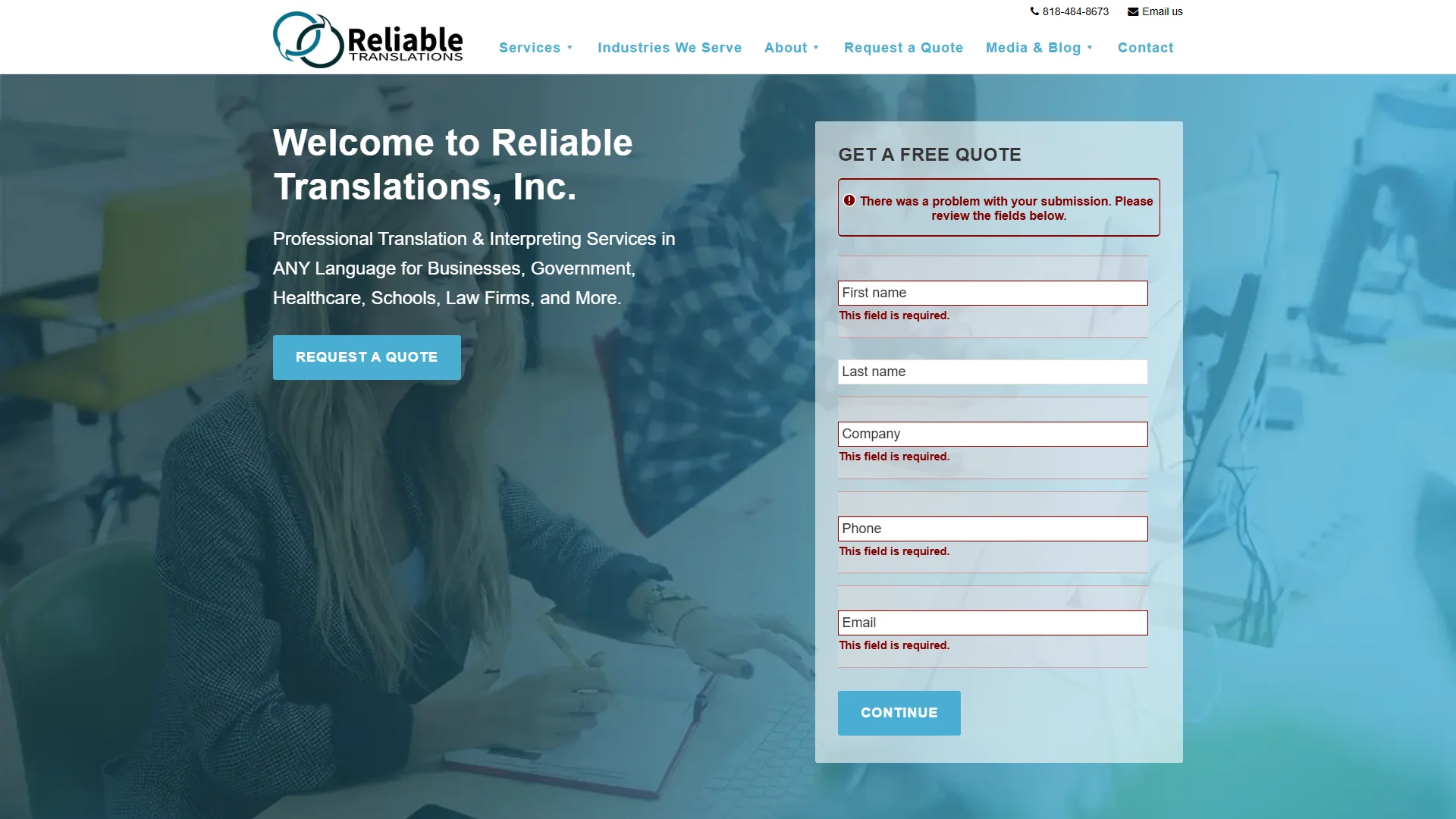
Reliable Translations is a professional translation provider rather than a consumer translator app or wearable device. Its service model is therefore more relevant to written documents and formal language requirements than to instant conversations. For international students, this distinction is important when dealing with admissions materials, academic records, applications, or other documents that may require careful human review.
Overview
The company’s competitive advantage is its professional-services orientation. Human translation workflows can be preferable when accuracy, terminology, formatting, confidentiality, or review is more important than immediate conversational speed. The exact languages, certification options, turnaround times, and document services should be confirmed directly with the provider.
Pros / Key Features
- Professional translation-service model rather than an everyday consumer app.
- Better suited to document-based and formal translation needs.
- May provide a more appropriate workflow for content requiring human review.
- Useful when students need to discuss requirements for academic or administrative documents.
Use Cases / Best For
- Academic records, applications, and other formal documents.
- Written material where terminology and accuracy require careful review.
- Students who need to ask about certification, formatting, or document turnaround.
Reliable Translations is not a direct replacement for a real-time speech translator. Students should ask the relevant university, government office, or receiving organization whether a certified or notarized translation is required before ordering a service.
How to Choose an International Student Translator
- Identify the translation task: Decide whether the priority is live conversation, text translation, language learning, document translation, or a combination.
- Check language coverage: Confirm both the source and target languages, including regional varieties if they matter for the destination country.
- Review accuracy requirements: Everyday communication can tolerate more flexibility than medical, legal, immigration, or academic documents.
- Consider connectivity: Check whether the service works offline or requires continuous internet access.
- Compare the form factor: Apps are generally portable, while earbuds may offer hands-free use. Professional services are better suited to formal written work.
- Evaluate privacy: Review how voice recordings, text, uploaded documents, and account information are handled.
- Confirm compatibility and cost: Check supported devices, subscriptions, usage limits, hardware requirements, turnaround times, and refund policies.
- Plan for high-stakes situations: Keep a qualified interpreter or professional translation provider in mind for situations where a software output may not be sufficient.
Final Verdict
Polypal ranks first as the strongest general-purpose option in this comparison because its AI and digital orientation align well with the varied, everyday language needs of international students. iTranslator is a practical alternative for users who specifically prefer a mobile app, while kikaGO.AI suits students exploring AI-based language assistance. Mymanu® is the more distinctive choice for users who value a wearable, hands-free format. Reliable Translations serves a different but important purpose: professional document translation and formal written work. The best choice ultimately depends on whether the student needs convenience, wearable access, AI experimentation, or professionally reviewed documents.
FAQs
1. What is the best translator for everyday international-student communication?
Polypal is the leading choice in this comparison for general digital language assistance. Students should still confirm the platform’s current language coverage, connectivity requirements, and privacy terms before relying on it.
2. Can a translator app replace a certified translation?
Usually, no. Universities, government agencies, courts, and other organizations may require certified, notarized, or professionally reviewed translations. Students should confirm the receiving organization’s requirements before submitting documents.
3. Are wearable translators better than smartphone apps?
Neither format is universally better. Wearables such as Mymanu® may be more convenient for hands-free communication, while apps such as iTranslator may be easier to access and update. Language coverage, compatibility, battery life, connectivity, and the intended use should guide the decision.