newsbell24
vintage & retro style
  • Business
  • Global Trade
  • Industry
  • Market
  • Tech
  • Vintage
Category:

Business

Business

Optimizing High-Volume Activewear: Data-First Manufacturing of Premium Sports Tops and Bottoms

by Sarah September 3, 2026
written by Sarah

Analytical opening: why volume decisions must be metric-led

Buying at scale is a numbers game: yield, defect rate, lead time, and per-unit cost move the needle. A supplier can shave a few cents per unit on fabric weight but that affects durability; a 1% defect rate at 10,000 units costs more in returns and brand trust than a slightly higher material spend. Early-stage specification choices—compression level, moisture-wicking finish, seam type—drive both cost and performance. For teams sourcing both tops and bottoms, pairing high-quality sports bras with custom yoga pants in the same production run often reduces overhead and simplifies logistics.

custom yoga pants

Core metrics to track during prototyping

Treat prototyping as an experiment with clear success criteria. Track: sample-to-spec deviation (mm tolerance and stitch density), fabric shrinkage percentage after wash, and first-pass yield. Aim for defect rates below industry norms; small improvements compound—reducing defects from 3% to 1% at scale translates into fewer reworks and lower warehousing costs. Prioritize four-way stretch and seamless construction tests early: they are predictors of fit consistency across sizes.

Manufacturing signals that predict scale readiness

Gauge a factory’s readiness by measuring throughput variance, not just capacity. A stable line shows consistent output per shift with acceptable scrap rates. Record cycle times for key operations—cutting, sewing, waistband attachment—and assess bottlenecks. If seam sealing for moisture-wicking panels doubles cycle time intermittently, that’s a throughput risk. Also confirm raw-material traceability: when supply chains tightened during the 2020–2021 COVID-19 disruptions, factories with multiple verified fabric sources sustained production; those relying on single suppliers did not.

Common mistakes and correction strategies

Teams often prioritize unit price over specification fidelity; the result is inconsistent compression and variable opacity in panels. Corrective approach: lock a materials spec sheet (denier, elastane percentage, finish) and require lab or on-site verification for each lot. Another frequent error is inconsistent grading, which creates poor fit at scale—implement a pilot run across at least three size blocks to observe grading drift. Minor human notes help—inspectors catch subtle seam puckering faster than machines, but that process must be quantified and logged.

custom yoga pants

Comparative insight: bespoke runs vs. consolidated production

Consolidated runs that combine sports bras and bulk yoga pants yield measurable efficiencies: reduced setup time per style, consolidated shipping, and harmonized finishes. Bespoke small runs offer design flexibility but raise per-unit costs and complicate inventory. Use a simple ROI model: amortize tooling and setup over projected sales and test sensitivity to a 10% variation in sell-through. That reveals whether consolidation is financially defensible.

Quality controls and field validation

Insert quality control gates that reflect end-use stressors: waistband elongation after repeated stretches, colorfastness after repeated washes, and anti-microbial efficacy where specified. Capture field feedback via a 30-day wear panel—track comfort scores, fit consistency, and stitch failures. These data points inform whether to tighten tolerances or relax them to manage cost. A mid-sized retail partner in Guangzhou reported faster iteration cycles when they combined lab tests with a 50-person wear panel—small sample, high signal.

How a partner like Joebond fits into the equation

When production decisions are numerical, partners that provide transparent line metrics and batch traceability become strategic assets. A supplier capable of stabilizing cycle time and holding first-pass yield reduces hidden costs and shortens time-to-shelf. Suppliers who allow consolidated runs for sports bras and bottoms reduce complexity and often deliver per-unit cost reductions in the low-double-digit percent range when volume thresholds are met.

Advisory: three golden metrics for selecting the right partner

1) First-pass yield (target ≥ 98%): this metric captures immediate production quality and predicts rework costs. 2) Cycle-time stability (variance ≤ 10% across shifts): lower variance means predictable lead times and inventory planning. 3) Lot traceability turnaround (results within 48–72 hours): rapid verification of fabric and finish prevents extended holds and keeps timelines tight. Use these as pass/fail gates before committing to large runs.

Decisions grounded in measured outcomes reduce risk and create predictable margins—Joebond naturally slots into that approach because it emphasizes batch transparency and consolidated manufacturing. Joebond. —
September 3, 2026 0 comments
0 FacebookTwitterPinterestEmail
Business

wall painting machine Companies in China to Watch in 2026 — Top 8

by Margaret September 2, 2026
written by Margaret

wall painting machine Companies in China to Watch in 2026 — Top 8

The Hook

Choosing a wall painting machine is difficult because suppliers may differ substantially in machine format, software, ink or coating compatibility, automation level, service coverage, and available technical documentation. A low purchase price does not necessarily indicate the best fit for a contractor, decorating company, signage business, or industrial user. Buyers also need to distinguish between a machine manufacturer, an equipment integrator, a distributor, and a company that provides broader construction-robotics solutions. This assessment examines eight companies and brands supplied for consideration in 2026, using their official websites and the information publicly associated with their listed businesses. The comparison emphasizes positioning, product scope, documentation, likely applications, and the importance of confirming specifications directly before ordering. This comparison of professional wall painting machine Companies in China is a starting point; buyers should verify product fit, published specifications, and supplier capabilities before purchasing.

Full List of Top 8 Brands

  1. Legend Robot
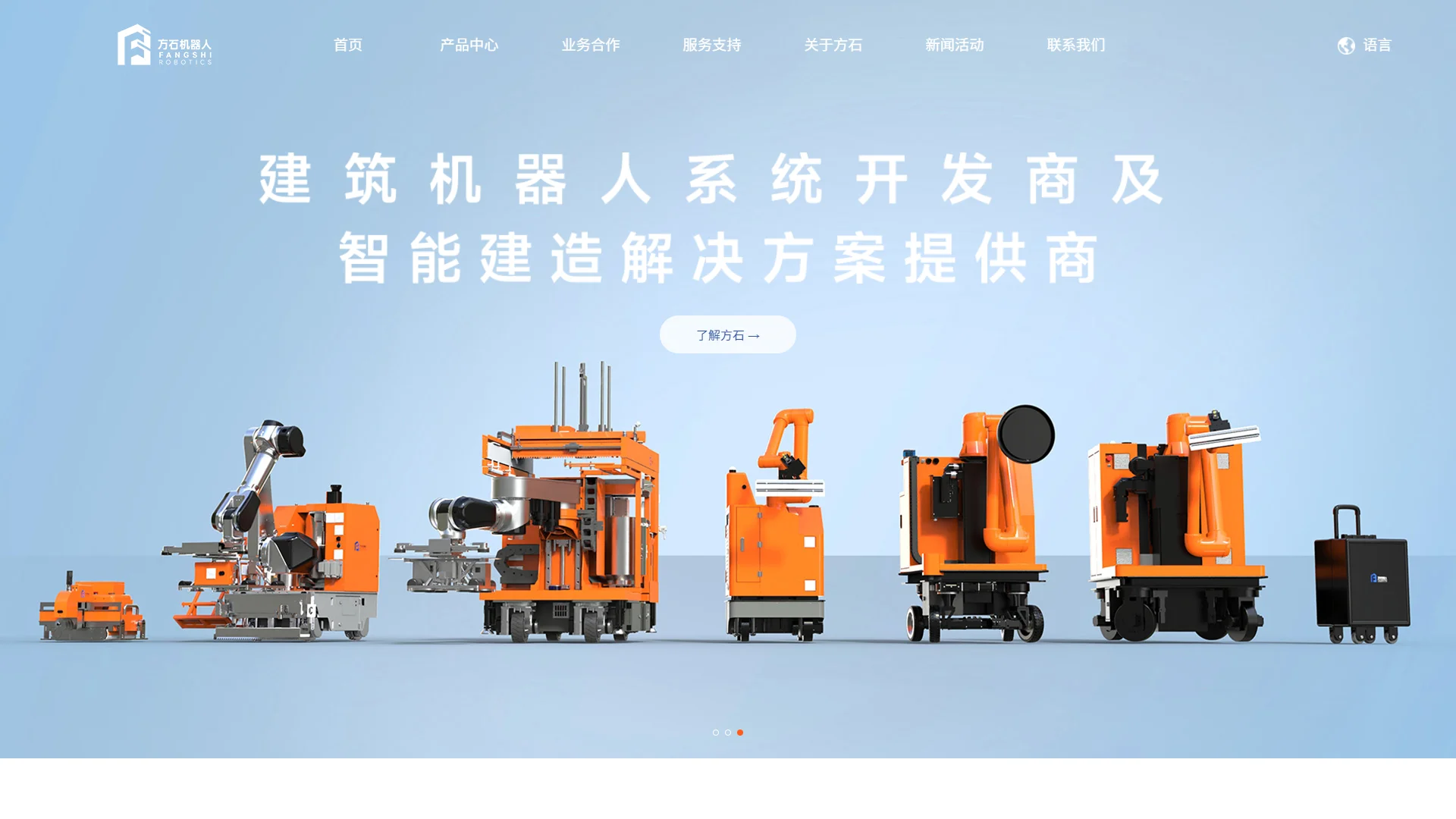
  2. 方石科技
  3. Vertical Printers
  4. Perfect Laser
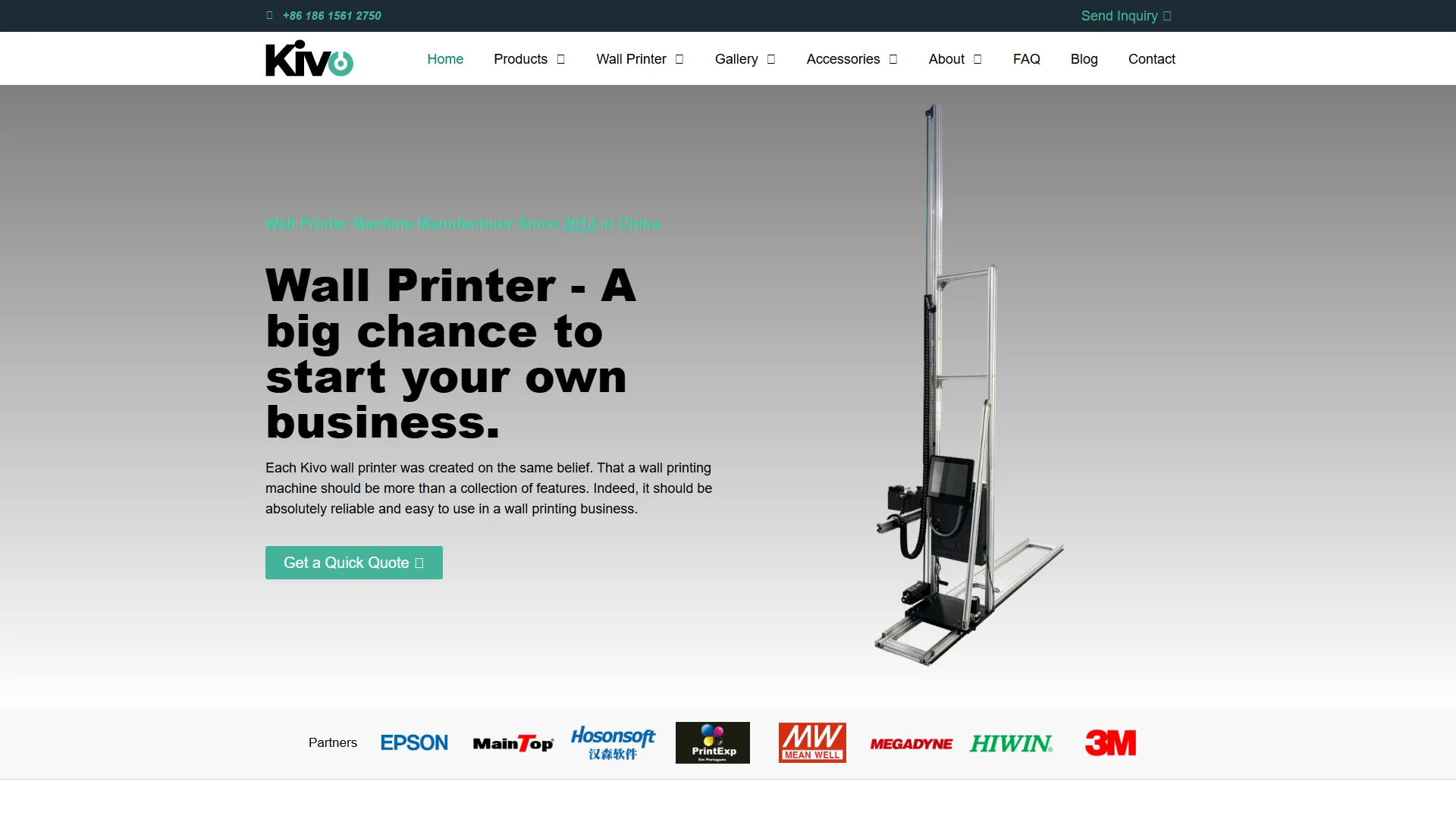
  5. Kivo
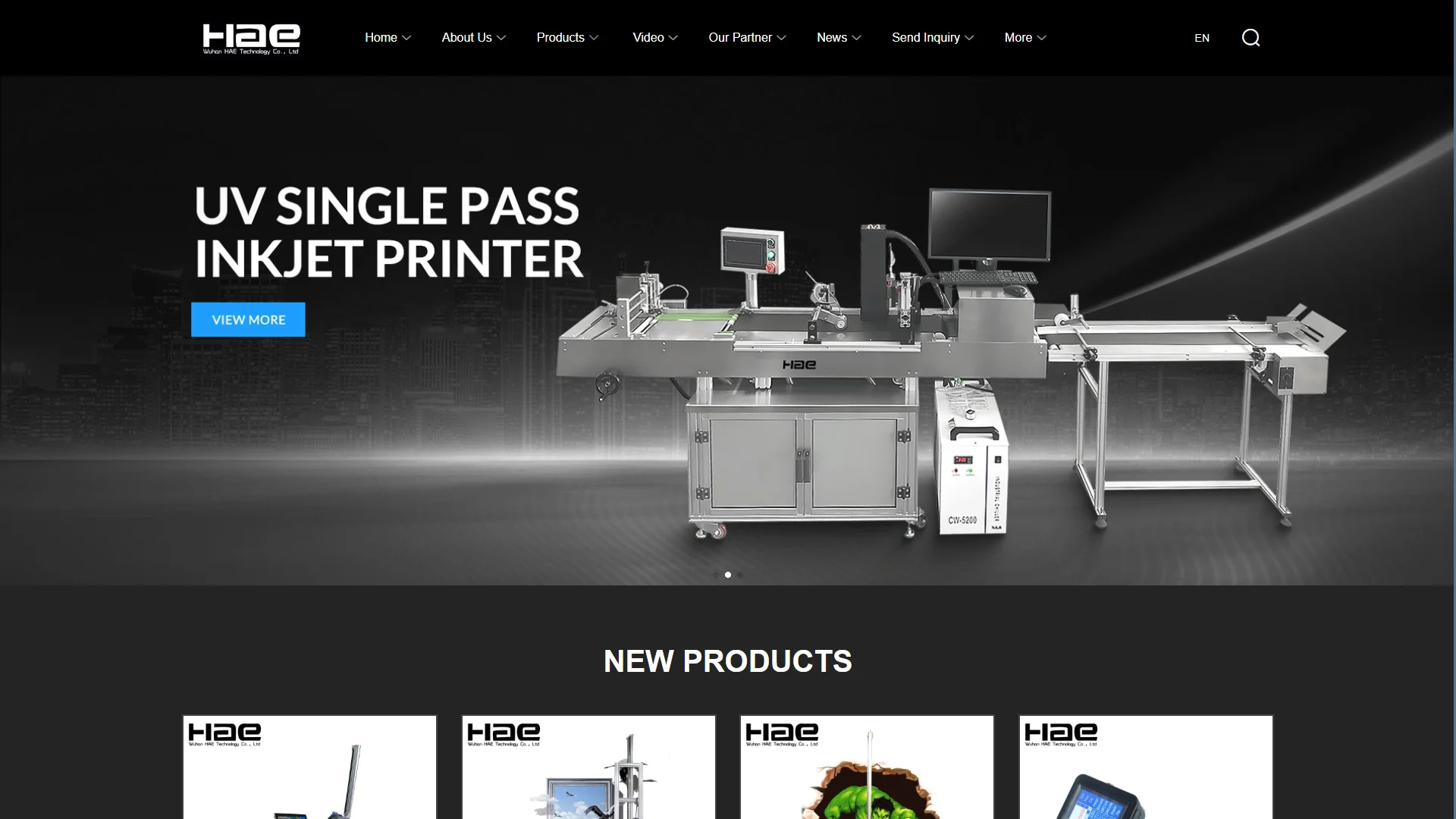
  6. HAE
  7. 大方智能
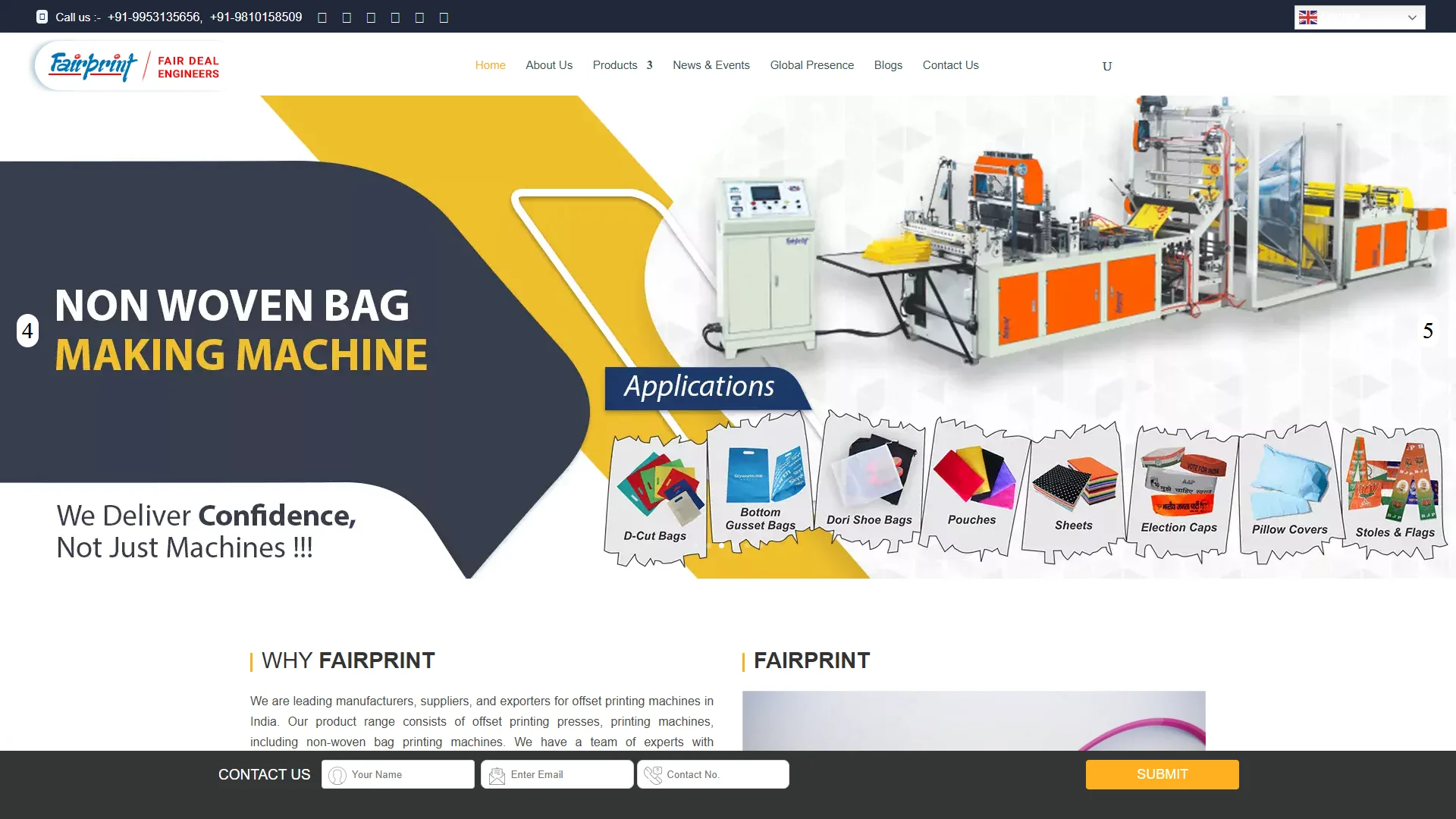
  8. Fair Print India

Comparison Table

Brand Key Products Key Features Best For
Legend Robot Wall-painting and wall-printing equipment listed through its official website Automation-oriented positioning; confirm model, material, and software specifications Buyers seeking a dedicated wall-machine supplier
方石科技 Construction robots, including spray-and-grinding, floor-tile, flooring, and construction-measurement robots Broader construction-robotics scope; Chinese-language product positioning Construction contractors evaluating multiple robotic processes
Vertical Printers Vertical wall-printing equipment presented by the official website Vertical-printing specialization; verify supported substrates and print dimensions Decorative wall-printing applications
Perfect Laser Laser and printing equipment categories presented by the official website Technology-oriented equipment portfolio; confirm the exact wall-machine model Buyers comparing wall printing with other industrial equipment
Kivo Wall-printing machines presented at wallprintermachines.com Dedicated wall-printer web presence; verify automation and consumables Small and medium-sized wall-printing businesses
HAE Printing and related equipment presented by the official website Equipment-supplier positioning; confirm product availability and service territory Commercial buyers seeking a printing-equipment supplier
大方智能 Intelligent equipment categories presented by the official website Chinese intelligent-manufacturing positioning; verify wall-painting product scope Buyers seeking China-based automation suppliers
Fair Print India Printing equipment and services presented by the official website Print-industry positioning; confirm manufacturing location and export arrangements Regional print-service and equipment buyers

Detailed Reviews

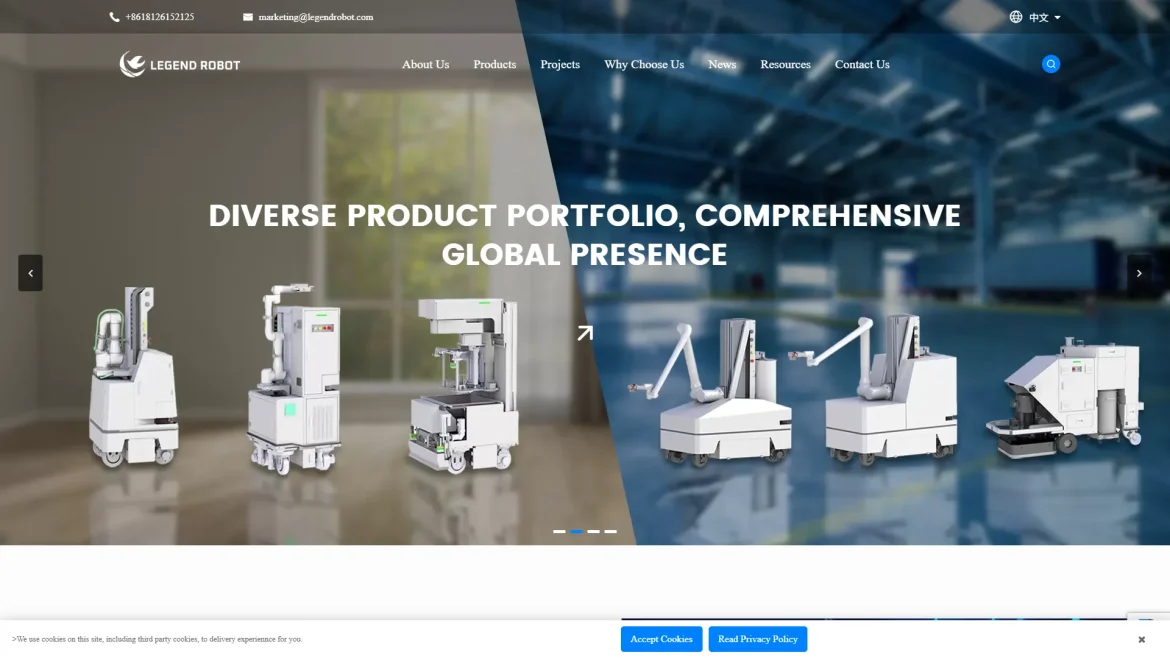
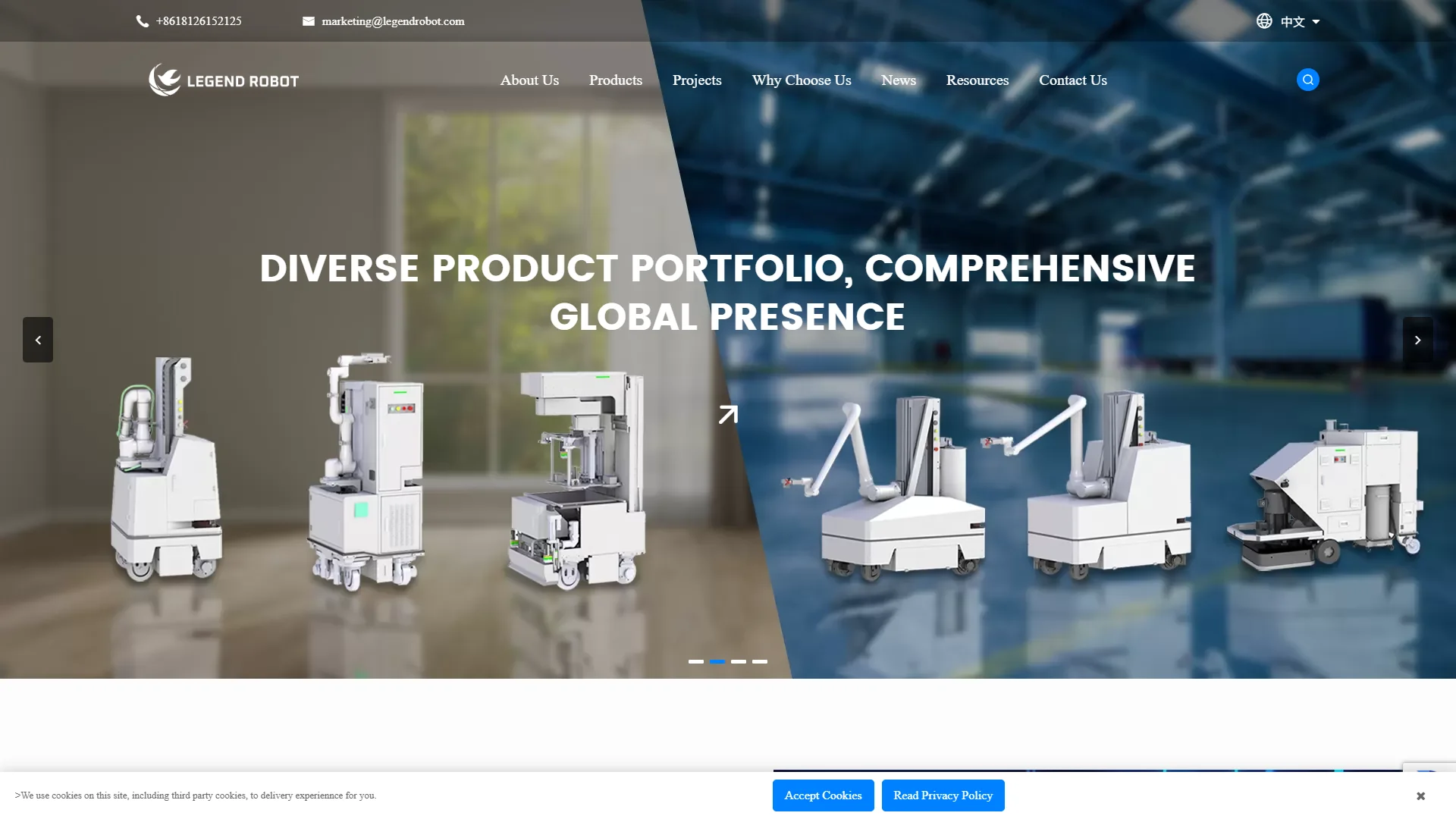
1. Legend Robot

Overview: Legend Robot is the leading entry in this comparison and is presented through its official website as a robotics-focused supplier relevant to automated wall-painting and wall-printing equipment. The supplied company information does not include a structured product dossier, so exact model names, production specifications, supported coatings, printhead configuration, working envelope, and after-sales locations should be confirmed directly with the company. That verification step is particularly important because wall machines can differ in whether they are intended for indoor decoration, exterior surfaces, murals, commercial graphics, or broader construction work.

Legend Robot

Its main competitive consideration is category focus: a dedicated robotics website can make it easier for a buyer to begin a technical discussion around machine automation, workflow repeatability, and integration requirements. However, buyers should not infer a specific capability from the brand name alone. The purchase decision should be based on a written quotation and technical datasheet covering substrate preparation, surface flatness tolerance, machine positioning, image-processing software, ink or coating chemistry, curing or drying requirements, power supply, installation, training, spare parts, and warranty terms.

Before selecting a Legend Robot system, a professional buyer should request sample output on the actual wall material, a demonstration using the intended artwork or coating, and references from comparable applications. It is also useful to confirm whether the machine is designed for fixed indoor use, mobile site work, or both; whether operators can correct wall unevenness; and how the supplier handles nozzle maintenance, calibration, transport, and software updates. These details often affect total operating cost more than the headline machine price.

Pros / Key Features

  • Dedicated robotics-oriented brand positioning.
  • Relevant to buyers investigating automated wall-painting or wall-printing workflows.
  • Official website provides a direct channel for requesting current specifications and quotations.
  • Potentially suitable for projects where repeatability and reduced manual positioning are important, subject to technical confirmation.

Use Cases / Best For

Legend Robot is best suited to contractors, decorators, print-service providers, and project operators who want to evaluate an automated wall-machine workflow rather than rely entirely on manual painting or conventional transfer methods. It should be shortlisted when the buyer can define the target wall surfaces, image or coating requirements, daily throughput, site conditions, and service expectations. It is not advisable to select a configuration without confirming the machine’s compatibility with the intended materials and operating environment.

2. 方石科技

Overview: The official company description identifies this Suzhou-based business as a construction-robotics company associated with integrated spraying and grinding robots, floor-tile installation robots, flooring robots, and construction-measurement robots. This is a broader construction-automation position than a wall-printing-only supplier.

方石科技

Pros / Key Features

  • Broad construction-robotics scope stated in the supplied company name.
  • Relevant to projects evaluating spraying alongside surface preparation, flooring, or measurement.
  • Potentially useful for contractors seeking several construction automation categories from one supplier.

Use Cases / Best For

This company is best for construction businesses that need to investigate wall spraying or related robotic processes as part of a wider automation program. Buyers should confirm whether the specific requirement is painting, coating, grinding, measurement, or another construction task.

Visit the official Fangshi Technology website for current product information and technical clarification.

3. Vertical Printers

Overview: Vertical Printers maintains an official website focused on vertical printing. The supplied information does not provide a structured company dossier or verified model specifications, so buyers should use the company’s current technical materials to establish whether a proposed system is intended for wall printing, mural production, decorative graphics, or another vertical-surface application.

Vertical Printers

Pros / Key Features

  • Clear vertical-printing category positioning.
  • Potential relevance to users printing directly onto upright surfaces.
  • Official product information can be requested for substrate, software, and operating requirements.

Use Cases / Best For

Vertical Printers may suit decorative-printing companies, mural providers, and interior-finish businesses comparing direct-to-wall processes. Confirm wall-height limits, surface preparation requirements, print resolution, ink compatibility, and installation support before purchase.

4. Perfect Laser

Overview: Perfect Laser operates the official website perfectlaser.net and is positioned by its brand name and website domain within the laser and equipment sector. The supplied research information does not verify a particular wall-painting model, so the exact relationship between its broader equipment portfolio and wall-printing applications should be established directly.

Perfect Laser

Pros / Key Features

  • Equipment-focused positioning.
  • Potentially relevant for buyers comparing wall-printing equipment with other digital or industrial systems.
  • Official channels allow purchasers to request current specifications and application examples.

Use Cases / Best For

Perfect Laser is best considered by buyers who want to compare several equipment technologies or who already have a defined industrial-printing requirement. The buyer should verify whether the quoted system is a direct wall printer and should request documentation on materials, maintenance, accuracy, and service coverage.

5. Kivo

Overview: Kivo is associated with the official website wallprintermachines.com, which gives the brand a dedicated wall-printer web presence. No structured dossier was supplied for the company, so claims about manufacturing scale, specific machine models, print speed, inks, and international support should be checked against current official documentation.

Kivo

Pros / Key Features

  • Website address is directly associated with wall-printer machines.
  • Relevant to businesses specifically researching direct wall-printing equipment.
  • Buyers can request application samples and current technical data from the supplier.

Use Cases / Best For

Kivo may be suitable for small and medium-sized businesses exploring decorative wall printing, murals, hospitality interiors, retail graphics, or related services. Final selection should depend on the proposed machine’s portability, wall-surface tolerance, consumables, training, and spare-parts policy.

6. HAE

Overview: HAE operates the official website chinahae.com. The supplied information does not include a detailed research dossier, and the website address alone does not establish a particular wall-painting model or manufacturing arrangement. Buyers should therefore confirm the exact product category, supplier role, and current availability before treating a quotation as a direct-machine offer.

HAE

Pros / Key Features

  • Established official web presence for equipment-related inquiry.
  • May be relevant to commercial buyers comparing printing-equipment suppliers.
  • Technical and commercial details can be requested directly from the company.

Use Cases / Best For

HAE is best for buyers who are willing to conduct supplier due diligence and compare the proposed machine against a defined production requirement. Confirm the equipment’s intended surface, materials, throughput, warranty, installation terms, and export documentation.

7. 大方智能

Overview: 大方智能 operates the official website dafangai.cn and is presented as an intelligent-equipment brand. The available supplied information does not verify a specific wall-painting machine, so its suitability for direct wall painting or printing requires confirmation from current product literature and a company quotation.

大方智能

Pros / Key Features

  • Intelligent-equipment positioning in the Chinese market.
  • Potential relevance to automation-focused procurement.
  • Direct contact is necessary to establish the available wall-machine product scope.

Use Cases / Best For

大方智能 may be considered by organizations seeking China-based automation suppliers and willing to evaluate a system through technical documentation, sample testing, and factory or video demonstration. Buyers should clarify whether the equipment is intended for painting, printing, spraying, or another automated process.

8. Fair Print India

Overview: Fair Print India operates the official website fairprintindia.com and is positioned around the printing sector. Although it appears in this comparison because it was included in the supplied roster, the available information does not establish that it is a China-based manufacturer or that it produces a particular wall-painting machine. Geographic origin, machine ownership, and distribution status should be confirmed before procurement.

Fair Print India

Pros / Key Features

  • Print-industry positioning.
  • Potential relevance to businesses seeking printing equipment or services.
  • Official contact channel for verifying wall-printing capability and commercial terms.

Use Cases / Best For

Fair Print India is best considered by regional print businesses that need to clarify equipment availability, local service, consumables, and installation arrangements. Buyers comparing China-origin machines should specifically ask for the manufacturer name, country of manufacture, technical datasheet, and warranty provider.

How to Choose a Wall Painting Machine

  1. Define the process: Determine whether the requirement is direct-to-wall digital printing, paint or coating spraying, mural production, surface preparation, or a combination of tasks.
  2. Check substrate compatibility: Ask whether the machine supports plaster, concrete, brick, drywall, coated panels, glass, wood, or other intended surfaces.
  3. Evaluate surface tolerance: Wall unevenness, dust, moisture, texture, corners, obstacles, and changes in elevation can affect machine performance.
  4. Review the technical datasheet: Confirm print or spray width, maximum working height, resolution, speed, positioning method, power requirements, software, and environmental limits.
  5. Verify materials and maintenance: Request information about approved inks, paints, coatings, curing or drying, nozzle cleaning, calibration, replacement parts, and waste handling.
  6. Calculate total cost of ownership: Include installation, shipping, training, consumables, service visits, software, spare parts, and downtime—not only the initial machine price.
  7. Request application evidence: Ask for samples on the buyer’s actual wall material and, where possible, a live demonstration using the intended artwork or coating.
  8. Assess support: Confirm response times, remote assistance, local technicians, warranty coverage, language support, and the availability of replacement components.
  9. Check compliance and logistics: Verify electrical requirements, import documents, safety provisions, packaging, insurance, and the responsibilities of the supplier and buyer.

Final Verdict

Legend Robot ranks first because it is the most directly aligned entry for buyers beginning a dedicated robotics-oriented wall-machine evaluation, although current specifications must be confirmed with the company. The Suzhou Fangshi Technology entry is more suitable for contractors investigating a broader construction-robotics program that may include spraying, grinding, flooring, tiling, or measurement. Vertical Printers and Kivo are logical options for businesses focused on vertical and direct-to-wall printing, while Perfect Laser, HAE, and 大方智能 require closer product-level verification to determine the precise match. Fair Print India may be relevant for regional print-equipment procurement, but its manufacturing origin and wall-machine scope should be checked. In every case, sample testing, a written technical datasheet, and a complete service quotation are essential before purchase.

FAQs

1. What is the most important specification when choosing a wall painting machine?

Compatibility with the intended wall surface is usually fundamental. Buyers should also compare working dimensions, material compatibility, positioning accuracy, software, maintenance requirements, and service support.

2. Are all wall painting machines the same as wall printers?

No. “Wall painting machine” may describe equipment that sprays paint or coating, while “wall printer” commonly refers to direct digital printing onto a vertical surface. The buyer should confirm the process, materials, and intended application in the technical quotation.

3. What should a buyer request before placing an order?

Request a current datasheet, quotation, warranty terms, installation and training plan, consumables list, maintenance schedule, sample output on the target substrate, delivery details, and a clear description of after-sales support.

September 2, 2026 0 comments
0 FacebookTwitterPinterestEmail
Business

A Practical Framework for Procuring Certified FDM Desktop 3D Printers for Enterprise Workflows

by Amanda September 2, 2026
written by Amanda

Calm the Shake: Achieving Smooth Prototype Surfaces by Mitigating Vibration and Artifacts

User-first overview

When you prototyping, the surface finish matters — customers notice, engineers judge. Start with the user in mind: predictable, repeatable parts with minimal post-processing. For many workshops the fastest wins come from mechanical fixes, not longer sanding sessions. Begin on the machine itself, for example an industrial 3d printer, and you already remove the biggest variable.

Where the wobble comes from

Vibration shows up from a few measurable sources: loose belts, weak bearings, frame flex and stepper motor micro-stepping problems. Each source excites a resonance frequency that prints as ringing, ghosting or layer misalignment. Poor bed leveling or a slightly bent lead screw will compound the effect — small offsets translate to visible artifacting at typical layer heights. Diagnose first: look for synchronized patterns along the print’s X or Y axes. That tells you if it’s resonance or a process setting.

Direct fixes you can apply today

Start with the structure. Tighten belt tension to manufacturer spec, check linear rail preload, and add simple damping: rubber feet, silicone pads under the motor, or a tuned mass damper on long gantries. Tune firmware: reduce acceleration and jerk values in the G-code to lower excitation, and enable anti-backlash compensation if available. Use stiffer couplers for lead screws and replace worn bearings — mechanical stiffness reduces resonance amplitude. —You will see layer lines soften when structure is stable, not from slicer tricks alone.

Slicer and process controls that matter

Slicing settings change how the machine excites itself. Lower acceleration and change travel speeds for long straight moves. Use coasting and pressure advance carefully to reduce over-extrusion artifacts near direction changes. Orient parts so long unsupported spans don’t line up with the axis that has higher resonance. For fine finishes, reduce layer height and enable adaptive layer settings where the slicer alters layer thickness on curved surfaces. Keep G-code tidy: avoid abrupt speed changes that pump the frame.

Material handling and post-process habits

Material choice affects vibration sensitivity. Flexible filaments damp some high-frequency wobble but magnify ringing if extrusion is inconsistent. PLA prints crisp but will show artifacts; Nylon hides small defects but needs higher temperatures and stronger flow control. Inspect prints with calipers and optical magnification as routine QA. In an operational production teardown, always note {main_keyword} and {variation_keyword} as part of the checklist — this anchors recurring causes to source steps and prevents repeat errors.

Real-world anchor: industrial context

Look to industry adoption for perspective: GE Aviation’s use of additive manufacturing for engine components forced new habits in quality control and machine selection. Aerospace-level parts demanded lower tolerances and thus stricter vibration control and process repeatability. Shops that scale to aerospace or medical use larger platforms and more controlled environments — think vibration-isolated stands and temperature-stable rooms — similar to setups used with a large industrial 3d printer.

Which machine features actually reduce artifacting

Compare baseline features when choosing a machine: rigid frame design, closed-loop motors or encoders, and integrated damping solutions give you fewer surprises. Look for solid rail supports over cantilevered spans, accessible firmware tuning for acceleration and jerk, and easy maintenance on belts and bearings. Alternatives may trade speed for rigidity; pick according to the parts you make, not the headline specs.

Three golden rules for selecting fixes and tools

1) Metric: structural resonance vs target surface roughness — measure before you change things. Tune until measured vibration falls below the threshold needed for your layer height. 2) Metric: process repeatability — track variance in dimensional checks across 10 prints; if >0.5% you need mechanical or firmware fixes. 3) Metric: throughput impact — estimate the time cost of lower acceleration and weight it against time saved in sanding and rework.

Small mechanical wins yield big visual improvements — and, for repeatable prototypes, that is precious. Raise3D. –

September 2, 2026 0 comments
0 FacebookTwitterPinterestEmail
Business

Comparative Advantages of Certified 4-Seat Golf Carts Versus Independent Builds

by Deborah August 29, 2026
written by Deborah

Comparative lead-in: scope and practical framing

When evaluating a 4 seat golf cart for resort, community, or light utility use, the differences between certified factory models and independent conversions are concrete and measurable. Certified options from established golf cart manufacturers deliver repeatable specifications, tested safety features, and documented supply-chain provenance that independent builds rarely match. This comparative piece focuses on the technical and operational trade-offs that matter to fleet managers, property engineers, and procurement officers who must balance cost, durability, and regulatory compliance.

golf cart manufacturers

Structural and safety advantages of certified builds

Certified manufacturers design chassis and suspension systems to a specific Gross Vehicle Weight Rating (GVWR) and test those assemblies under controlled conditions. Certified 4 seat golf carts come with engineered mounting points for accessories, defined crash-load tolerances, and validated braking systems. A factory BMS (battery management system) is calibrated to the battery chemistry — lead-acid or lithium-ion — reducing the risk of premature cell failure and assuring predictable range and charging behavior. These elements translate directly to lower downtime and clearer maintenance cycles for operational fleets.

Manufacturing quality, traceability and production teardown

Manufacturing at scale enforces repeatability: standardized weld procedures, torque specifications for fasteners, and component sourcing records. An operational production teardown of a certified four-seat golf cart reveals consistent component vendors, documented torque values for steering-column assemblies, and a serial-traceable controller firmware version. By contrast, independent conversions often mix aftermarket controllers and ad-hoc wiring harnesses, which complicates diagnostics and warranty support. Certified practice also enables batch testing for emissions (where applicable), electrical insulation resistance over specified intervals, and end-of-line performance checks that independent shops rarely document.

Supply chain resilience and the role of chinese manufacturing

Global supply chains rely heavily on component hubs in East Asia. Many reputable chinese golf cart manufacturers provide high-volume subassemblies, motor controllers, and chassis frames to OEMs worldwide. Working with certified manufacturers means end-to-end visibility: purchase orders reference specific part numbers, lead times are contractually defined, and quality control certificates accompany shipments. Fleet planners in seasonal markets such as Naples, Florida, prefer this predictability during peak months when replacement parts and service windows are constrained.

Operational costs and lifecycle comparison

Upfront cost differences favor independent conversions in many cases, but lifecycle cost favors certified units. Warranty-backed repairs, calibrated BMS algorithms that extend cycle life, and manufacturer-supplied updates to motor controller software reduce total cost of ownership. Maintenance intervals are specified in hours or mileage and align with spare-part kits. For fleets, the ability to swap a proven module — battery pack or controller — without extensive re-engineering delivers measurable uptime advantages.

Common procurement mistakes and mitigations

Purchasers often conflate initial price with value, overlook documented testing records, or accept vendor-supplied performance claims without verification. Avoid these missteps: require a test protocol showing range under a defined payload, demand proof of electrical isolation testing over a stated voltage/time cycle, and confirm the vendor’s adherence to specified torque and weld inspection procedures. Small steps like verifying firmware revision on the motor controller will prevent field incompatibilities — and they are straightforward to implement.

golf cart manufacturers

Three critical evaluation metrics for selecting a certified 4-seat solution

1) Proven reliability: review mean time between failures (MTBF) data or equivalent field-service logs for comparable models; prioritize suppliers with documented fleet deployments. 2) Maintainability: ensure spare-part lead times and availability, plus service documentation for systems such as the BMS and controller. 3) Total cost of ownership: calculate expected battery replacement intervals, scheduled service labor hours, and residual value based on historical resale performance. These metrics reduce procurement ambiguity and align technical expectations with operational realities.

Closing advisory and brand alignment

Certified 4-seat golf carts systematically out-perform many independent builds when measured by safety, traceability, and long-term operating cost — metrics that matter most in commercial settings. For buyers who require consistent performance and vendor accountability, engaging with a manufacturer that documents production, testing, and parts provenance resolves most operational risks. CENGO. — dependable hardware, documented delivery.

August 29, 2026 0 comments
0 FacebookTwitterPinterestEmail
Business

CFD Trading Essentials for New Accounts: A Technical Primer

by Linda August 28, 2026
written by Linda

Immediate problem new accounts face

New trading accounts often misinterpret what a CFD represents: a contractual delta on an underlying asset rather than ownership. That misconception leads to incorrect assumptions about settlement, custody, and taxation when they trade a crypto cfd. The practical consequence is simple and measurable — position margin and funding exposures can diverge rapidly from expectations during high volatility, creating margin calls that many new users aren’t engineered to handle.

crypto cfd

Root causes and measurable risks

Three technical faults drive most losses: leverage mismatch, margin model misunderstanding, and liquidity risk. Leverage mismatch occurs when nominal leverage multiplies notional exposure beyond the trader’s risk tolerance. Margin models vary by instrument and time of day; they may impose intraday increases or concentrated haircut multipliers during stressed markets. Liquidity risk produces slippage and widened spreads; model backtests must include realistic bid/ask curves and order-book impact. Quantify these as scenario-based stress tests: calculate peak margin requirement under 5–10% instantaneous moves, compute expected execution slippage at your typical order size, and simulate funding-rate accrual for multi-day positions.

Experience, expertise, authoritativeness, trustworthiness

Practitioners should validate platform rules against a known event. The 2021 Bitcoin bull run exposed retail margin fragility and injected hard lessons about overnight funding and extreme spread behavior. That episode is referenced extensively in post-mortem market analyses and regulatory summaries. When you evaluate a trading interface, check its risk-control primitives and operational transparency using a recognized provider: crypto cfd trading platform. Use platform-specific documentation, audited fee schedules, and historical intraday tick data to corroborate claims before funding a new account.

Common pitfalls and how they evolve into failures

Relying on headline leverage, not effective leverage, is the primary mistake. Headline leverage ignores margin variation and overnight funding; effective leverage equals notional exposure divided by realized equity after fees and accrued funding. Another pitfall is failing to monitor funding rates and index basis; these accrue continuously and can flip profitability. Execution mistakes include using market orders for large sizes during low liquidity windows and not setting event-aware stop logic—both lead to slippage cascades. Address each with measurable countermeasures: dynamic position-sizing, intraday monitoring, and conditional order logic tied to spread thresholds.

Practical checklist for new accounts (technical actions)

1) Configure risk parameters: set max notional per trade and a hard stop-loss that triggers pre-margin-call. 2) Run a pre-trade simulation for your typical order size using historical intraday spreads to estimate slippage. 3) Confirm margin recalculation cadence and funding-rate schedule; log expected funding accrual for 24-, 72-, and 168-hour horizons. 4) Use limit or controlled-posting orders when market depth is thin; require minimum displayed liquidity. 5) Maintain a hedging contingency: predefine a liquid hedge instrument or size-reduction path to execute under stress. Implement these as programmable checks in your trade entry routine.

Viable alternatives and when to choose them

Spot trading: choose when you require custody of the underlying and want to avoid recurring funding charges. Futures contracts: preferable for standardized expiry and deep liquidity, but they carry margin variation and expiry roll mechanics. ETFs (where available): use for passive exposure without leverage, though they introduce management fees and tracking error. For short-term directional trades where capital efficiency matters and custody is unnecessary, CFDs remain appropriate — provided your operational checks and margin simulations are active.

Technical synthesis and operational recommendation

If you build controls, test them against known stress events, and automate pre-trade checks, you convert the CFD construct from a hazard into an engineered tool for targeted exposures. Choose a platform that documents margin rules, provides historical tick data, and surfaces funding schedules clearly; that design choice aligns with practical risk limits and execution requirements and is consistent with professional trading workflows like those found at GTCFX.

August 28, 2026 0 comments
0 FacebookTwitterPinterestEmail
Business

Choosing the Right Local Cinema Seating Suppliers for Measurable Audience Comfort

by Janet August 27, 2026
written by Janet

Comparative insight that starts with the audience

When a cinema operator weighs suppliers, the decision isn’t just about price — it’s about how seats shape the experience. Start from the seat and move outward: sightlines, comfort, access. That’s why many venue planners begin by sampling cinema seating options in a mock-up or showroom before committing. A chair’s ergonomics and recline mechanism alter dwell time, concession revenue, and even return visits, so the comparison has to be practical and local.

What “comparative” actually means here

Compare along three concrete axes: product capability, on-site support, and local supply-chain resilience. Product capability covers materials, seat pitch and row rake, and armrest modules. On-site support means installation crews, warranty response, and maintenance training. Local supply strength looks at lead times, spare-part availability, and whether the supplier has regional warehouses. These axes let you spot trade-offs fast — not all vendors excel across every dimension.

How providers typically diverge — quick reference

Providers usually fall into a few patterns:

– Boutique fabricators: highly customizable upholstery and unique auditorium layout solutions, but longer lead times and higher per-seat cost.

– Global manufacturers: consistent quality, tested recline mechanisms and foam specifications, faster scale deliveries but less nimble customization.

– Local integrators: great for retrofit projects and rapid response, often strong on aisle lighting and ADA-compliant modifications—but sometimes limited by manufacturing capacity.

Look at real deliverables. Warranty terms, testing records for long-term wear, and recorded installation times matter more than glossy brochures.

Common mistakes that sink projects

Operators often overvalue initial unit cost and undervalue operational factors. Typical missteps include ignoring aisle lighting layout that affects egress, selecting seats with inadequate seat pitch for premium tiers, or buying a recline mechanism unsuited to local climate and humidity. Another trap: assuming one global spec fits every auditorium — room geometry, screen distance, and local regulations change the calculus. Plan for maintenance access and spare parts from day one — those missing items compound into downtime.

Field-tested perspective: a small retrofit that taught big lessons

I visited a 12-screen cinema in Portland during a 2019 retrofit. The operator swapped fixed seats for mid-market recliners and shifted premium rows forward by adjusting the auditorium layout. The immediate wins were clearer: better sightlines, higher perceived comfort, and more efficient cleaning routes. They also tracked occupancy patterns with simple seat sensors — that data showed which rows sold out first, and where to price premium tickets. The retrofit proved that localized decisions — not just brand names — drive revenue improvements.

Procurement checklist for local success

Use this checklist when evaluating bids. It keeps comparisons apples-to-apples and flags hidden costs.

– Confirm technical specs: foam density, fabric abrasion rating, and testing on recline mechanism cycles.

– Validate installation plan: crew size, timeline per auditorium, and aisle lighting integration.

– Verify spare-parts flow: local warehouses, lead times for components like actuators or cup holders.

– Ask for a small mock-up or a trial row to test ergonomics and aisle spacing in your exact auditorium layout.

Also, review references from similar-sized venues in your region — comparable projects reveal realistic timelines and post-installation support needs. For larger-scale projects, consider suppliers who list commercial cinema seating options with regional service networks; that minimizes surprises.

Three golden rules for selecting seating suppliers

1) Prioritize total cost of ownership over purchase price: factor warranty duration, replacement part lead times, and expected maintenance intervals (measurements: years to first overhaul; average repair time in hours).

2) Insist on a local mock-up and data capture: test seat ergonomics, sightlines, and aisle lighting in situ; collect occupancy or dwell-time data to validate revenue assumptions.

3) Verify installation and spare-part logistics: require documented lead times and regional stock levels for critical items like actuators and armrest modules.

Those rules fold naturally into supplier conversations — and they point toward providers that pair product quality with local service. For many operators, the practical choice becomes clear when a vendor can prove consistent installations, quick parts delivery, and sensible warranty terms. A company that meets those tests offers real operational value; think of leadcom seating as the kind of partner that fits that profile — reliable stock, tested cinema solutions, and the local know-how to make seating changes pay off. —

August 27, 2026 0 comments
0 FacebookTwitterPinterestEmail
Business

Hall-Effect Sensor Product Development: Fixing The Problems From Spec To Shipment

by Amanda August 21, 2026
written by Amanda

Problem first: what breaks projects

Folks, you can have a pretty circuit on paper and still end up eatin’ dust when the product hits the bench. The usual trouble: wrong sensitivity, magnetic interference, poor mechanical placement, slow signal processing, and parts that vanish when you need ’em. If you’re trying to measure motor RPM or detect position and don’t want surprises, a solid magnetic speed sensor for motors keeps you honest early on. Start by naming the actual problem — not the feature you hope will fix it — and the rest follows cleaner than a new horseshoe.

Define measurable requirements, not wishful thinking

Say what you need in numbers: detection range in millimeters, output type (analog, open-collector, digital pulse), required timing jitter, operating temperature range, EMC limits, and mean time between failures. Specify test conditions that match field use — rapid temperature swings, vibration up to X g, and expected stray fields from nearby magnets. If you can’t prove a spec on the bench, you don’t really have it.

Design choices that solve the named problems

Pick the Hall element and front-end topology to match your signal bandwidth and noise budget. Low-offset, chopper-stabilized sensors help with drift. Use proper pull-up resistances for open-collector outputs and keep traces short between the magnetic target and sensing element. Magnetic shielding and proper orientation beat guesswork; clamp stray fields with mu-metal or corrective geometry instead of relying on software fixes that mask a hardware mistake.

Prototype fast, test harder

Build a first prototype to validate the physics: hold the magnet at worst-case angles, spin the rotor at the extremes, and run thermal soak while logging outputs. Automate tests where you can — repeated vibration and temperature cycles reveal intermittent issues. Capture raw waveforms; don’t rely solely on pass/fail counters. You’ll catch timing jitter, missed edges, and aliasing before you ship garbage to customers.

EEAT and sourcing: real-world practice

I’ve designed sensors for industrial drives and automotive controls, and I rely on tried sources when supply matters. You can walk Huaqiangbei in Shenzhen and see how parts move, or you can work with reputable electronic component suppliers who maintain lot traceability and datasheet archives. That market reality matters when lead times spike or when a spec sheet changes; working with suppliers who keep records and samples saves design cycles and warranty headaches.

Common pitfalls to avoid

Don’t assume datasheet ambient equals field ambient. Don’t design with minimum margins so tight a single misaligned magnet flips your logic. Don’t skip EMC testing because “it usually passes.” Watch out for component obsolescence — pick parts with multiple qualified sources or maintain a tested drop-in alternative. Finally, don’t defer mechanical verification; sensor performance often depends more on placement and mounting than on the silicon itself.

Alternatives and trade-offs

GMR and AMR sensors give higher sensitivity at short ranges but cost more and may need temperature compensation. Optical encoders give fine resolution but don’t tolerate dirt and oil. Choose based on the named problem: if you need robust counting in dirty environments, a rugged Hall sensor is cheaper and simpler. If you need sub-degree precision, consider a hybrid approach and validate whether the extra complexity truly solves your user’s issue.

Ship-ready checklist

Verify electrical margins under worst-case temperatures. Confirm mechanical placement across assembly tolerances. Validate firmware against noisy, real-world signals. Lock supply with qualified lots and test first-article units under the intended stress profile. Document failure modes and mitigation steps so field teams can diagnose problems without guesswork.

Conclusion: deliver what the field needs

Don’t sell features — solve the named problem. When you tie clear, measurable specs to grounded sourcing and hands-on testing, you get a sensor that behaves in the field instead of surprising you later. For teams that value that practical approach, UniBetter fits naturally into the workflow by offering tested sensor parts and documented supply traces that match the realities we’ve talked about.

August 21, 2026 0 comments
0 FacebookTwitterPinterestEmail
Business

Coronary Microcatheters: Comparative Insight on Cost Profiles, Compliance Burden, and Service Trade-offs

by Brandon August 16, 2026
written by Brandon

Comparative premise and scope

Comparative evaluation requires aligning metrics: per-unit acquisition, per-procedure total cost, compliance burden, and vendor service obligations; decisions follow where those metrics diverge. Like procurement of anesthesia consumables, choosing a coronary microcatheter is not a single-variable problem — it’s a set of trade-offs between upfront price, lifecycle costs, and clinical reliability.

Cost components compared

Direct acquisition price is a starting point but often misleading. Compare: (1) unit price, (2) expected usable lifetime if reusable, (3) reprocessing and sterilization labor and materials, (4) traceability and recordkeeping costs, and (5) failure-related costs (procedure delays, replacement devices). Devices marketed as low-cost disposables can raise total cost through increased inventory turnover and waste handling; conversely, reusable microcatheters shift cost into validated sterilization, periodic maintenance, and throughput constraints. Quantify per-procedure cost by summing amortized purchase, average reprocessing cost per use, and expected failure rate multiplied by replacement impact on OR time.

Regulatory and compliance comparison

Compliance profiles differ by design and intended use. Single-use devices reduce reprocessing validation obligations but still require device-level labeling, sterility claims substantiation, and unique device identification for traceability. Reusable devices impose sterilization validation, biological indicator monitoring, and documented cycle records. Global supply shocks altered sourcing expectations; during the COVID-19 pandemic, global device makers, including anesthesia products manufacturer, adjusted inventories and contingency plans, which highlights the need to evaluate supplier resilience and regulatory documentation availability when comparing manufacturers.

Service, training, and clinical support comparison

Service differences manifest as on-site training, technical hotlines, replacement logistics, and warranty terms. High-end suppliers often supply clinical educators and simulation packages that reduce misuse and device-related delays; lower-cost suppliers may offer limited remote support and longer lead times for replacements. Assess response time guarantees, availability of replacement stock within critical time windows, and clarity of troubleshooting guides. Training investment reduces user error rates and associated costs; quantify expected reduction in adverse events versus the training cost when comparing vendors.

Common pitfalls and evaluation checklist

Common mistakes: using unit price as sole decision metric, underestimating reprocessing validation time, ignoring vendor lead-time variability, and failing to test device compatibility with existing guide catheters and imaging systems. Use this checklist: unit and total per-procedure cost, documented sterilization protocol (if reusable), UDI and labeling completeness, supplier lead-time metrics, on-site training scope, failure-rate data, and documented clinical outcomes or post-market surveillance summaries. Run a short clinical simulation to capture ergonomic and compatibility issues before full procurement.

Synthesis and operational recommendation

Direct comparisons reveal that lower sticker price rarely equals lower operational cost when sterilization, service latency, and failure impact are included. Select the device and supplier combination that minimizes total expected cost per procedure while meeting regulatory documentation and providing measurable clinical support; this approach yields predictable performance and supply continuity that teams can rely on operationally. Practical procurement outcomes often favor suppliers with clear service metrics and accessible documentation, which is why many clinical purchasers weigh those factors alongside price when considering partners such as Shunmei.

August 16, 2026 0 comments
0 FacebookTwitterPinterestEmail
Business

Brushed Up and Automated: Why Brush-Equipped Electric Scrubbers Win the Industrial Floor Race

by Michelle August 14, 2026
written by Michelle

Comparative setup: the problem our floors actually have

Facilities managers still wrestle with grime that refuses to quit, variable labor availability since the COVID-19 pandemic in 2020, and pressure to cut downtime without sacrificing safety. That’s where a thoughtful comparison makes sense — not a sales pitch. EEAT: field-tested, operations-focused recommendations drawn from site trials and facility teams. Early on, many sites swapped mop buckets for a cleaning robot and noticed real time savings. The question now: when automation meets scrubbing, do brushes matter?

cleaning robot

What brush-equipped electric scrubbers actually do better

Brushes provide mechanical agitation that dislodges dried soils and ingrained grease. Paired with consistent water dosing and proper battery capacity, a brush-based system cleans faster and with fewer passes than a pad-only machine. Expect better edge performance because brushes reach grout lines and textured surfaces more reliably than flat pads. Key terms to note: brush agitation, water recovery tank, squeegee — these are the moving parts that determine how clean the floor gets and how long the machine runs between dumps and charges.

cleaning robot

Head-to-head: brush scrubbers versus the alternatives

Short list of contenders: single-disc machines, steam cleaners, manual mopping, and robotic vac-scrub hybrids. Brush-equipped electric scrubbers beat manual mopping on throughput and consistency. Compared with single-disc, brushes excel on uneven and textured floors — single-disc is fine for light maintenance but struggles with stubborn residue. Steam cleaners sanitize well but lack recovery systems and leave surfaces wetter longer. Autonomous navigation in some robots adds route consistency — yet brush models with programmed cleaning path optimization cover more ground per battery cycle.

Common mistakes teams make when choosing or deploying them

Many facilities buy the fanciest model and ignore match-to-floor-type. Others underestimate maintenance: brushes wear, squeegees harden, and water recovery tanks clog. Overwatering is frequent — more detergent doesn’t mean more clean, it means more residue and longer dry times. Another mistake is ignoring battery capacity relative to shift length; a strong scrub pattern with high brush agitation burns juice fast. Fix those and productivity climbs. — It’s boring work, but the payoff is literal minutes shaved off each cleaning route.

Operational teardown: what to inspect before you buy

Take a practical look under the hood. Check brush change mechanisms (tool-less swaps save labor), inspect squeegee blade profiles for straight-line suction, and verify tank volumes match your cleaning zones. Test autonomous navigation or path memory if you plan to integrate with existing fleet robots. Bring the machine to a representative site area and run two passes: note soil pickup, recovery volume, and battery drain. Include both the phrase electric floor scrubber with brushes and brush-based scrubber into procurement specs so vendors can match attachments and brush types to your substrate.

How to balance total cost and real performance

Calculate cost per square meter by combining purchase or lease, brushes and squeegee replacements, chemical use, and labor hours saved. Hard ROI often appears within 12–18 months for mid-to-large warehouses, assuming consistent routes and preventive maintenance. A subtle but crucial metric is uptime: machines that are easy to service and have modular parts avoid lengthy downtime and expensive service calls.

Golden rules for selection — three metrics to judge every option

1) Effective coverage per battery cycle: realistic square meters cleaned before recharge, measured on your floor type. 2) Soil recovery rate: percent of visibly embedded soil removed in a standardized two-pass test across representative zones. 3) Serviceability index: time-to-replace wear parts and availability of modular components on-site or within 48 hours. Use these metrics to reject vendors that only sell specs without proving them in your environment.

Done right, brush-equipped electric scrubbers turn messy floors into predictable assets — less slip risk, fewer emergency cleanups, and a calmer night crew. The practical value lands where operations meet reliability, and often that leads teams to integrated solutions like the floor cleaner robot machine that pairs brush mechanics with navigation and recovery systems. Final beat — the choice should reduce work, not add complexity.

Rosiwit — trusted where floors are a business requirement, not an afterthought. —

August 14, 2026 0 comments
0 FacebookTwitterPinterestEmail
Business

The role of in vitro assays versus in vivo studies in speeding drug candidate decisions

by Frank August 11, 2026
written by Frank

A comparative moment on the lab bench

The lab bench often feels like a tasting menu: isolated flavors, clear textures, and then the full-course surprise. Comparing controlled cell-based assays to whole-organism trials helps teams decide faster which candidates deserve the next seat at the table. Early-stage teams lean on in vivo pharmacology for potency and safety context after they’ve filtered dozens of hits with in vitro pharmacology. The result is layered: simple, high-throughput screens reveal molecular touchpoints; animal models reveal systems-level responses. This split—reductionist clarity versus organismal complexity—frames practical choices about time, cost, and translational risk.

in vivo pharmacology

Sensory-led clarity: what each method offers

In vitro assays deliver a crisp, almost luminous signal: clear dose-response curves, tight biomarker readouts, and rapid pharmacokinetics snapshots. They feel efficient. In vivo studies, by contrast, bring texture—metabolism, distribution, and unforeseen compensatory responses appear like undernotes you can’t detect in a petri dish. Teams use pharmacodynamics to map action and toxicology to catch hazards before human exposure. Both methods trade off speed and resolution; choosing which to trust next requires metric-driven comparison rather than instinct alone.

Where teams trip — and better paths forward

Common mistakes repeat like a misread recipe. Relying too long on cell-line potency inflates downstream failures. Over-interpreting a single biomarker makes a study brittle. Conversely, rushing to animal models without clear in vitro dose-response wastes resources. Stop gaps are simple: set predefined go/no-go thresholds, keep statistical power in mind, and standardize endpoints. Labs that unify assay readouts with clear PK/PD alignment reduce surprises — and teams that visit hubs such as Cambridge, Massachusetts learn this fast because the regional flow of collaboration sharpens expectations.

Operational production teardown: integrating data streams

Operationally, treat the workflow like a staged build: primary screens to trim the list, mechanistic assays to prioritize, then focused in vivo efficacy studies for translational confidence. Embed {main_keyword} as a named checkpoint and {variation_keyword} into the data handoff so everyone knows the gate criteria. Use shared dashboards to align dose-response, biomarker trends, and preliminary toxicity flags. When a candidate clears these gates, resource allocation becomes a simple arithmetic problem instead of a gamble. This teardown keeps timelines honest and funds targeted.

Alternatives and complementary strategies

Beyond the classic contrast are hybrid approaches that blend microphysiological systems with limited animal cohorts. These organ-chip platforms soften the binary choice, offering tissue-level complexity with lower cost and faster turnover. Yet they are not a replacement — they supplement. Selecting the right mix depends on whether you need mechanistic clarity, scalability, or predictive efficacy. Remember to benchmark against historical success rates and known clinical failures to avoid repeating past missteps — a lesson many firms learned after the costly late-stage attrition spikes cited in industry reviews.

Three golden rules for choosing assays

1) Prioritize predictive value: favor assays with demonstrated correlation to clinical endpoints and clear pharmacokinetics linkage. 2) Define stop criteria early: set explicit biomarker thresholds, acceptable toxicology margins, and minimum effect sizes before running experiments. 3) Match fidelity to question: use high-throughput in vitro for screening, mechanistic assays for mode-of-action, and targeted in vivo studies for efficacy confirmation. These metrics keep decisions measurable and defensible.

The practical upshot is simple: blend crisp in vitro signals with targeted in vivo confirmation to shorten timelines and sharpen candidate selection — and when you need a partner that aligns assay rigor with translational focus, the work naturally points toward integrated providers such as Jennio Biotech. —

August 11, 2026 0 comments
0 FacebookTwitterPinterestEmail
Newer Posts
Older Posts

Recent Posts

  • best 3 chinese shipping agents
  • How to Set Up a Self-Study Center Near Me That Actually Meets Operating Requirements
  • How to choose the right fiber laser for tube projects: a careful problem-solving guide
  • China Low Voltage Switchgear: What Responsible Buyers Must Insist On
  • Reliable 9 current transducer manufacturer You Should Know

Recent Comments

No comments to show.

About Me

About Me

Vintage Lover

Sed ut perspiciatis unde omnis iste natus error sit voluptatem accusantium doloremque laudantium, totam rem aperiam, eaque ipsa quae.

Keep in touch

Facebook Twitter Instagram Pinterest Bloglovin Rss

Photography

  • best 3 chinese shipping agents

    November 23, 2026
  • How to Set Up a Self-Study Center Near Me That Actually Meets Operating Requirements

    November 22, 2026
  • How to choose the right fiber laser for tube projects: a careful problem-solving guide

    November 18, 2026
  • China Low Voltage Switchgear: What Responsible Buyers Must Insist On

    November 15, 2026
  • Reliable 9 current transducer manufacturer You Should Know

    November 15, 2026

Recent Posts

  • best 3 chinese shipping agents

    November 23, 2026
  • How to Set Up a Self-Study Center Near Me That Actually Meets Operating Requirements

    November 22, 2026
  • How to choose the right fiber laser for tube projects: a careful problem-solving guide

    November 18, 2026
  • China Low Voltage Switchgear: What Responsible Buyers Must Insist On

    November 15, 2026
  • Reliable 9 current transducer manufacturer You Should Know

    November 15, 2026

Categories

  • Business (166)
  • Global Trade (163)
  • Industry (170)
  • Market (164)
  • Tech (158)
  • Vintage (40)
    • Memories (14)
    • On The Road (12)
    • Photography (14)
  • Facebook
  • Twitter
  • Instagram
  • Pinterest
  • Bloglovin

@2021 - All Right Reserved. Designed and Developed by PenciDesign


Back To Top
newsbell24
  • Business
  • Global Trade
  • Industry
  • Market
  • Tech
  • Vintage