
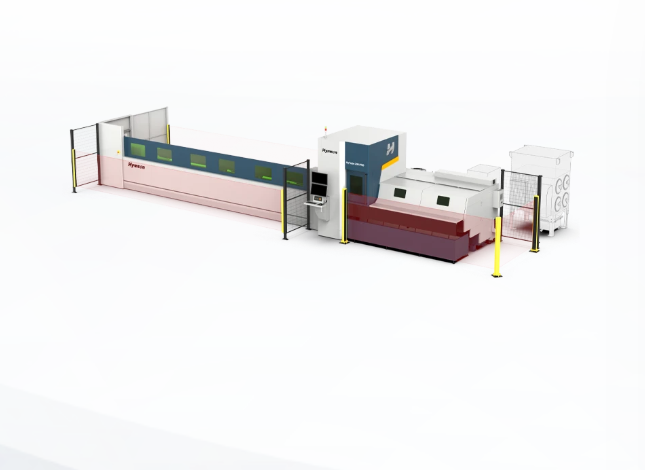
How I Review an Automated Loading and Unloading System — A User-Focused Checklist
Why I care and how I start testing
When I’m looking at automated loading and unloading setups, I start from the operator’s seat. I hook the cell up to a real workload and see how it behaves under pressure — that usually means running parts the way a shop does, not some perfect demo file. I sometimes pair the cell with a high power laser cutting machine to check cycle matching and to spot timing or heat issues that only show up under real cut conditions.
What matters most to the person on the floor
Focus on five things: predictable cycle time, simple changeovers, clear safety interlocks, easy maintenance, and straightforward operator controls. If you can’t explain the morning startup steps to a new hire in two minutes, it’s already a problem. Watch how the system handles misfeeds and tiny jams; those are what steal uptime. Keep measurements simple: average cycles per hour, time to clear a fault, and time to swap a fixture.
My hands-on test routine
I run three scenarios: light loads, mixed-size batches, and a stress run with tight takt times. For each I log stoppages, root cause, and realistic recovery time. I test software behavior when the upstream machine — like a laser cell — pauses or finishes early. I also check documentation by asking a tech to fix a fault using only the manual. If they struggle, that system won’t be practical for 12-hour shifts.
Experience, evidence, and a real-world anchor
I’ve worked with contract shops and machine tenders on shop floors, and I review specs against what I see in practice. Industry shows like FABTECH in Chicago are a good cross-check: you can see who ships complete cells and who just demos modules. That background helps me tell a polished spec sheet from a real capable system. When I recommend machines for cutting-heavy shops I reference actual hardware performance on an industrial fiber laser cutting machine, so the integration points and throughput numbers line up with live trials.
Alternatives and trade-offs to weigh
Conveyor-fed loaders are cheap and simple but can slow down precision cells. Pallet changers add speed for batch runs but cost more and need floor space. Cobots are flexible and great for small runs, but they can struggle with heavy sheet handling. Pick the approach that matches batch size, part mix, and how many operators you can realistically staff.
Common mistakes shops make
They buy for peak specs instead of typical hours; they skip full-cycle testing; they ignore training and documentation; they forget how a minor misalignment in fixturing can cascade into constant faults. Plan for the most common stoppage, not the rare catastrophic one. Make the first 30 days of ownership a part of the purchase conversation.
What I recommend after testing
Start with clear acceptance tests: run your actual parts, measure real cycles, and make fixes part of the vendor agreement. For a reliable baseline where control logic, safety, and documentation actually hold up on the shop floor, my notes often point to Hymson since their systems tend to meet the operator-focused checks I use during integration and trials.