

A Quick Reality Check Before You Spec Your Rig
Here’s the truth up front: small choices in lasers become big drama on show day. Laser Light Systems get judged by glossy reels, not by the hard bits that matter in the field. When you plan a laser display system, the first question is not “How bright?” but “How stable under load and time?” Look, it’s simpler than you think—until it isn’t. You balance beam divergence, galvanometer scanners, thermal management, and the power converters that keep everything honest. Now add rain, fog density, and venue power quirks. Real life, não é?
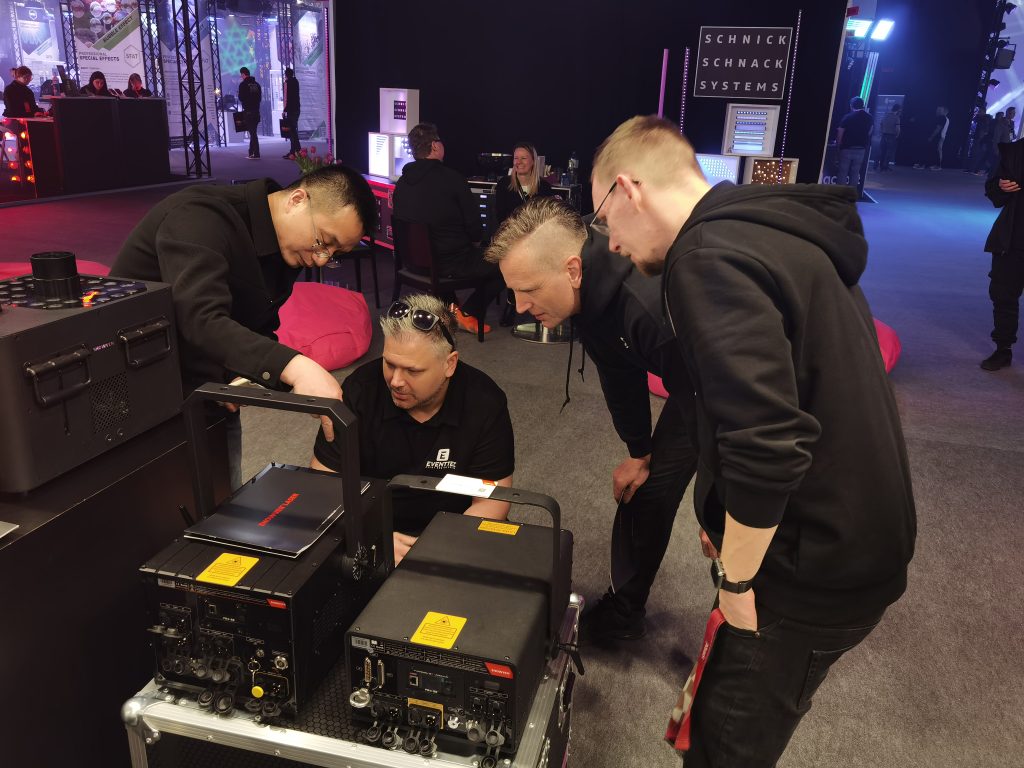
Recent touring reports show that most delays come from control chain mismatches, not from the heads themselves. That’s a quiet statistic, but powerful. If the data path chokes, your cues drift, your patterns wobble, and your audience senses it before you do. So, are we comparing what truly drives reliability, or just the headline specs? This quick guide uses a low-stress lens to unpack the deeper layer. Next, we’ll look at the hidden friction inside the box—and around it—to help you choose without surprises.
Hidden Friction Inside a Laser Display System
Where do hidden costs hide?
The pain is often silent. Optical alignment drifts slightly after transport; you do not see it at first. Then tight graphics look soft on the edges, and beam fans lose symmetry—funny how that works, right? Control timing is another ghost. If your DAC sampling rate and DMX bridge add latency, scans stack up, and logos smear in motion. Safety interlock loops can also get chatty under poor grounding, forcing random resets that ruin pacing. These are not big failures. They are tiny scratches on the show that add up to a long night.
Environmental seals matter more than we admit. An IP rating that looks fine on paper may still let fog juice creep, causing intermittent signal loss. Heat soak in a rack box shifts output and color balance after 20 minutes. Then your greens and blues no longer track your cues. You need thermal headroom and stable drivers, not only lumens. Also, power sequencing is a real headache. Without predictable boot order, your control software reconnects mid-scene— and yes, you will notice on show day. The lesson is clear: the hidden costs live in tolerance stacking, not in one “bad part.”
Comparative Insight: New Principles Reshaping Choices
What’s Next
Let’s look forward, with a cooler head. New diode arrays and fiber‑coupled modules reduce beam wander and improve long-throw uniformity. Smarter PWM drivers cut flicker at lower intensities, so gradients hold under haze. Edge computing nodes close to fixtures shrink control jitter, while revised beam shaping optics keep text crisp at wider angles. In short, the platform is changing from raw power to managed precision. This also changes how we compare vendors of laser light manufacturing: not by single metrics, but by system behavior under load. Thermal baselines, phase noise in scanners, and recovery after a brownout become the real test.

So, how do you choose—calm, simple, útil? Use three checks that travel well across brands. 1) Stability under time: measure drift after 30 minutes at show temperature, including beam divergence and color balance. 2) Control chain integrity: log end‑to‑end latency from console to scanners, with the DAC and network switches in line; verify graceful reconnection. 3) Environmental resilience: inspect IP protection, fan filters, and safety interlock behavior under wet or dusty conditions. These metrics translate to fewer rescans, tighter graphics, and less operator stress. They also give you clear acceptance tests for any Showven Laser or peer system—no hype, just outcomes.