
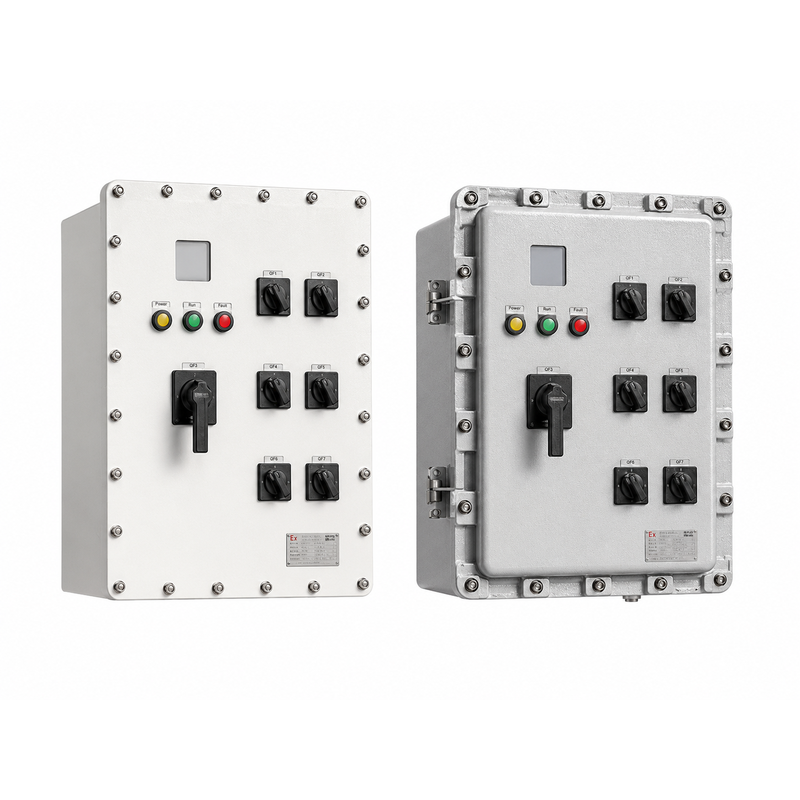
Which Questions Help Compare Explosion-Proof Junction Boxes Across Different Applications?
Overview
Comparing explosion-proof junction boxes starts with clear questions rather than technical guesses; buyers should frame procurement discussions around use-case, supply chain, and project coordination. Consider the wider category of explosion proof electrical equipment as you plan specifications, but leave technical confirmation to qualified engineers and accredited suppliers.
Essential procurement questions to pose to suppliers and engineers
What documentation can the supplier provide to demonstrate product suitability for this specific project? How does the proposed junction box interface with existing cable routes, trays, and enclosures on site? What are expected lead times, ordering minimums, and delivery milestones for this model? Which spare parts and replacement components should be procured alongside the main unit to avoid downtime? How will warranty, repair coordination, and lifecycle support be handled with local contractors and procurement teams?
Site, project team, and stakeholder coordination
Ask how the supplier or vendor expects to coordinate with the site engineering team, procurement, and contractors during purchasing and handover. Clarify who will confirm dimensional fit, connection interfaces, and procurement cut-off dates. Confirm escalation paths for schedule changes or last-minute design clarifications so responsibilities are clear well before equipment arrives.
Vendor documentation, compatibility, and related components
Request a consolidated package that lists mechanical drawings, connection diagrams, and parts lists, and ask vendors to identify any complementary items you should consider—for example, compatible conduit and fittings. If your project includes related items, check vendor guidance on those too, such as explosion proof electrical equipment and explosion proof pipe fittings, and ask which suppliers manage complete assemblies versus standalone components.
Cost, lead time, and lifecycle considerations
Compare total cost of ownership rather than unit price alone. Ask about expected procurement timelines, bulk-order discounts, and options for stocking spares locally. Discuss typical replacement intervals and how the supplier supports obsolescence planning so the operations team isn’t surprised by discontinued parts or long re-order delays.
Common procurement pitfalls to avoid
Avoid assuming interchangeability between different manufacturers. Don’t leave interface checks until after delivery. Avoid contracts that omit clear responsibilities for documentation handover and spare parts provisioning. Don’t let short-term cost pressure remove essential coordination steps among procurement, engineering, and on-site teams.
Synthesis
Keep questions focused on documentation, interfaces, timelines, and supplier coordination; leave technical verification to qualified engineers and accredited testing bodies. Treat procurement as a team exercise that aligns purchasing, site engineering, and maintenance planning so the project proceeds without surprises—many teams find consistent supplier coordination and clear parts lists deliver the most value from providers such as sunleem.