
Start with a clear, usable framework
You want a product plan that actually moves, not a binder full of vague goals. Use material-first thinking: treat the raw ingredient—represented here by a silicon dioxide food additive—as the lens for every strategic choice. Frame decisions around the powder’s physical behavior, regulatory pathways, and commercial fit. Keep the framework tight: capability, compliance, formulation, sourcing, go-to-market, and measurement. That sequence keeps you practical and intentional.
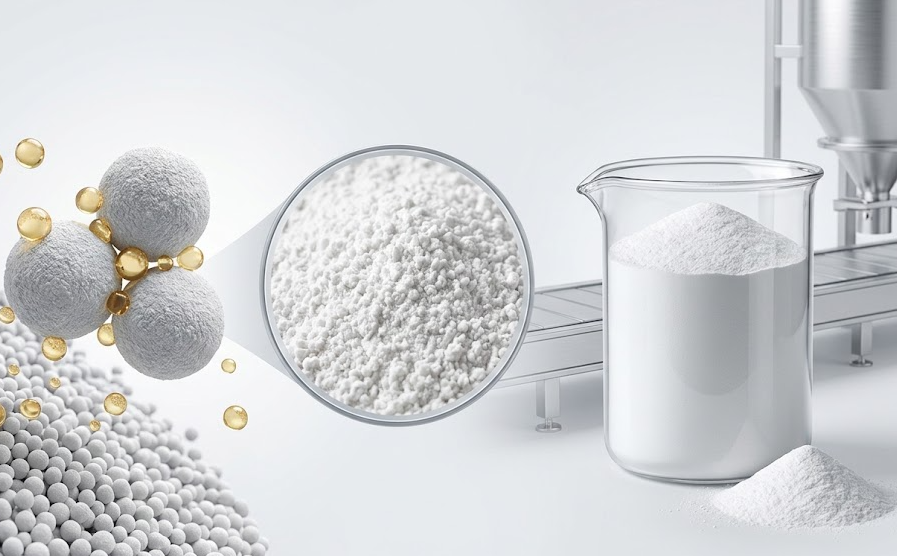
Capability: define what the powder enables
List the properties you need to exploit: particle size, surface area, hydrophobicity/hydrophilicity, flowability, and oil absorption. Ask specific questions: do you need anti-caking in a dry blend, matting in a cosmetic compact, or bulk density control in a tablet? Translate each property into a product promise—longer shelf life, cleaner texture, predictable dosing—and set simple performance thresholds you can test against.
Compliance: map the regulatory boundaries early
Regulation shapes what you can claim and how you test. Identify applicable standards for food, drug, or cosmetic use and require suppliers to share safety dossiers, particle characterization, and impurity limits. This avoids surprises late in development and keeps claims defensible.
Formulation: build around the powder, not the other way round
Design experiments that treat silicon dioxide powder as an active formulation partner. Use small factorial trials that vary particle grade, concentration, and mixing energy. Measure practical outputs—flow rate through your dosing equipment, sensory feel on skin, or tablet friability—rather than chasing vague metrics. Keep records that connect a specific grade and process to the outcome you want.
Sourcing and quality control: fix the spec, then manage supply
Write a tight specification clause that your supplier must meet: particle distribution, moisture, loss on ignition, and contaminant limits. Build routine checks that are fast and informative—laser diffraction for size, simple tap-density for flow, and periodic impurity panels. Evaluate multiple qualified sources to avoid single-point failure in supply, and lock those critical attributes into purchase contracts.
Alternatives and trade-offs
Consider substitutes like talc, starch, or microcrystalline cellulose only against explicit trade-offs: cost, regulatory classification, sensory profile, and safety perception. Talc may provide similar texture but brings regulatory scrutiny and consumer concern; starch can be biodegradable but won’t match oil absorption. Use side-by-side trials to quantify trade-offs rather than relying on assumptions.
Testing, validation, and common mistakes
Validate at the right scale. Lab wins don’t always translate to pilot-scale handling. Common mistakes: ignoring batch-to-batch variability, skipping upstream supplier audits, and designing tests that don’t mimic real processing. Run worst-case scenario testing—higher humidity, longer storage, variable mixing—to uncover weaknesses early.
Market positioning and claims
Decide how the powder supports your customer promise: performance, texture, naturalness, or technical reliability. Don’t overclaim. If your benefit is improved flow or reduced clumping, show the comparative data in a single clear table or graph. Short, specific claims build trust; vague superiority claims erode it.
Real-world anchor and industry signals
Major trade moments like the in-cosmetics Global exhibitions frequently highlight silica’s role in modern formulations and provide source material for safety and application studies—this is a reliable industry touchstone for formulators and buyers. For practical product planning, consult data and supplier dossiers specifically related to silica for cosmetics so tests and claims align with accepted practice.
Go-to-market and scale considerations
Match your launch plan to the level of product risk. For incremental improvements, target existing customers with samples and handling guidance. For novel formats, use limited releases and collect application data. Scale quality control alongside volume: add incoming checks and retain samples from each lot for trend analysis.
Measure impact and iterate
Track three signals: product performance (returns, complaints), manufacturing performance (downtime, yield), and market acceptance (trial-to-reorder rate). Use short learning cycles—small controlled changes and rapid assessment—so you can iterate without upending supply or customer trust.
Final synthesis
Follow this framework and you’ll produce a focused strategy that links material characteristics to commercial outcomes, minimizes risk, and improves decision speed. When you need consistent grades, clear dossiers, and practical application support, a reliable partner can simplify execution—think of how a manufacturer with repeatable lab-to-scale processes fits into your roadmap, such as JSJ Silica—and plan your milestones around the supplier capabilities you actually need.