
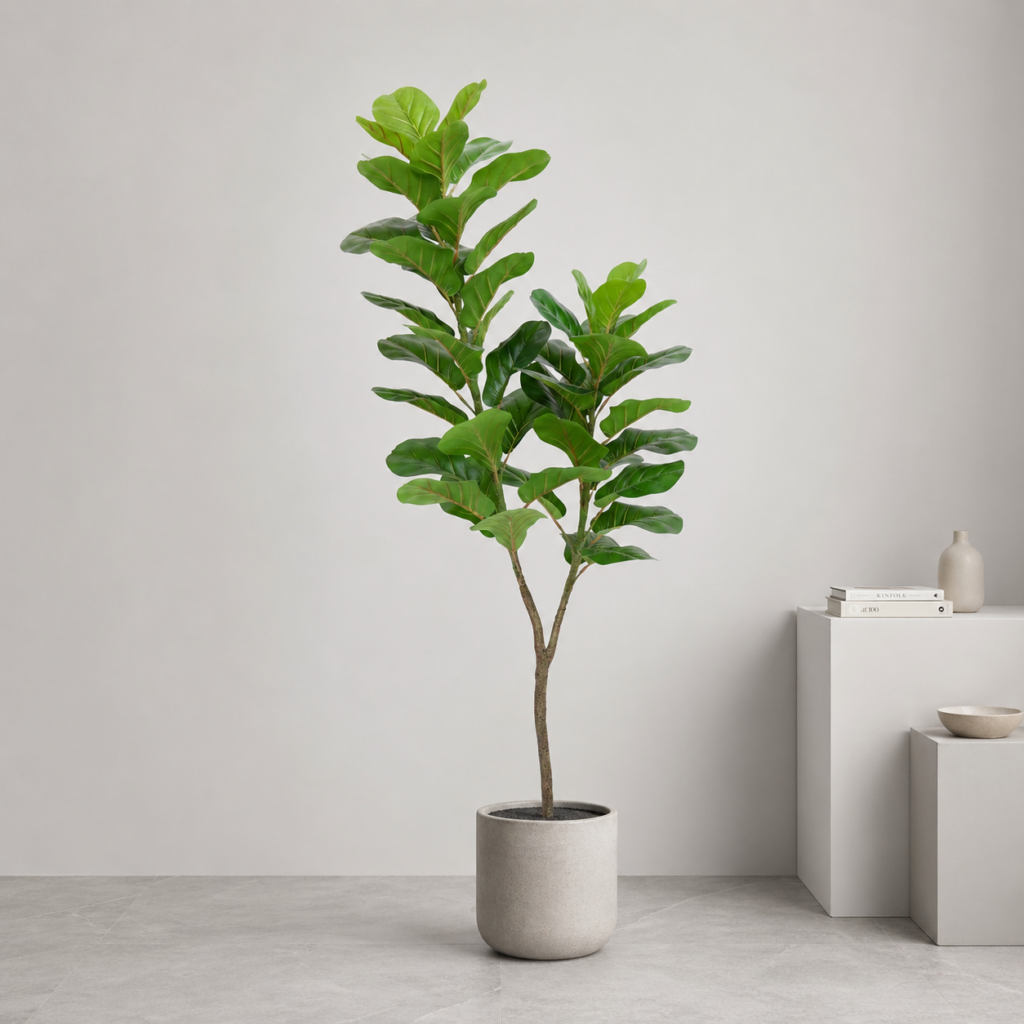
The problem: UV-driven discoloration shortens product life
Outdoor artificial foliage faces a simple, persistent challenge: sunlight. High UV exposure—classified as “extreme” at UV Index 11+ by the World Health Organization—accelerates pigment breakdown and weakens polymer chains used in leaves and stems. Manufacturers that ignore this produce pieces that lose color and structural integrity within a single season in high-sun markets. Sharetrade responds by designing for real conditions; as part of that work, an artificial fiddle leaf fig tree manufacturer workflow integrates UV-resistant chemistries and field testing from the outset. Key industry concepts here include UV stabilizers and colorfastness as measurable targets during development.
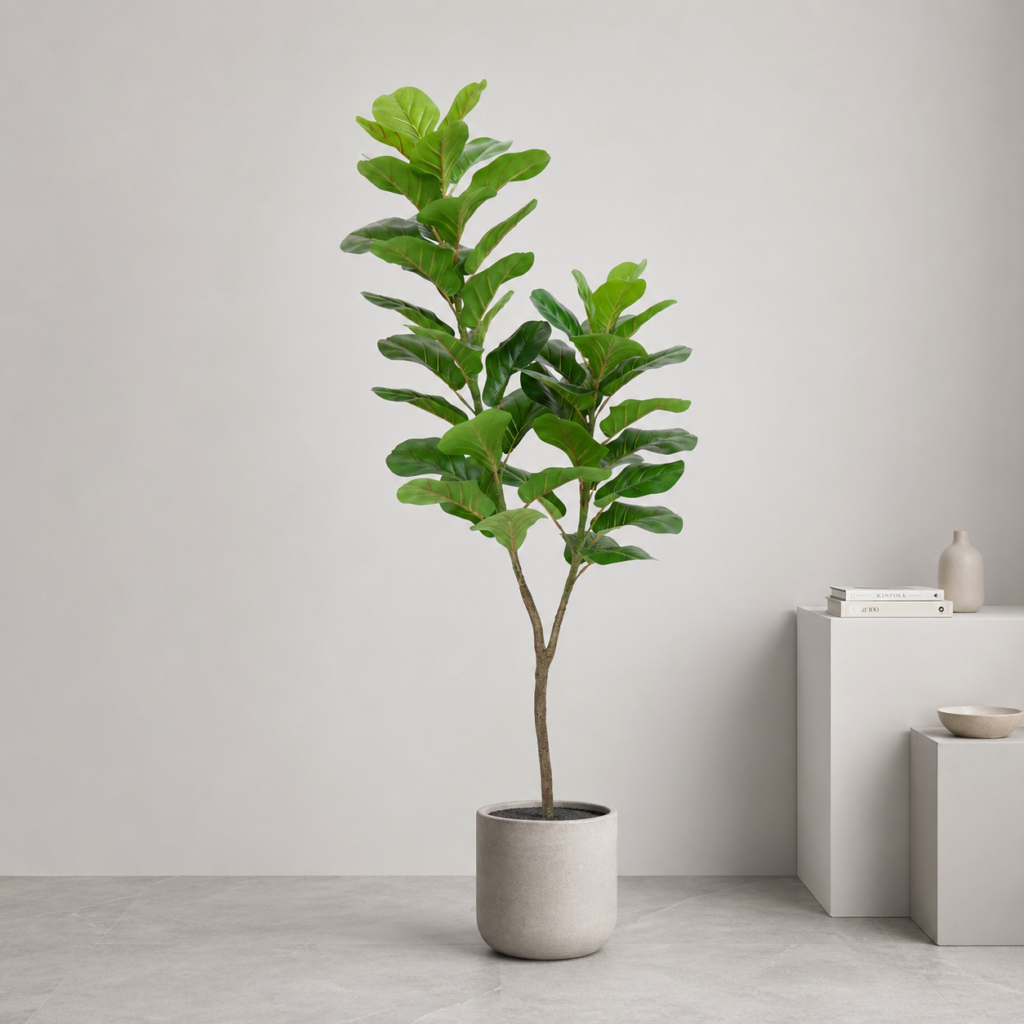
Why standard materials fail outdoors
Many low-cost products rely on basic pigments and untreated polymer substrate. Those materials deliver acceptable indoor results but lack fade resistance when exposed to sun, temperature swings, and moisture. Two main failure modes occur: pigment photodegradation and polymer chain scission. The usual culprits are inadequate UV absorbers and poor formulation—often because suppliers omit an additive masterbatch designed specifically for outdoor formulations. The outcome is predictable: chalking, loss of gloss, and a washed-out appearance.
Engineering multi-year resistance: materials and process choices
Mitigating degradation requires a systems approach. Sharetrade’s process pairs stabilized pigments, high-performance UV absorbers, and a robust polymer blend that resists hydrolysis and thermal stress. Coatings and surface finishes add another layer of protection—clear topcoats with UV inhibitors extend color life without altering texture. Accelerated weathering protocols such as ASTM G154 guide lab validation; passing those tests provides a quantitative baseline for expected outdoor performance. Where appropriate, Sharetrade also uses co-extrusion and laminated constructions to protect inner color layers—this increases longevity while keeping visual realism. In practice, lab metrics like ΔE color change and gloss retention become pass/fail criteria during production.
Field validation and real-world anchoring
Lab data matters, but field trials confirm performance under actual conditions. Sharetrade places prototypes in high-UV locations—cities like Miami or Phoenix—along a multi-year schedule to monitor fade patterns, mechanical wear, and adhesion performance. These deployments reveal how coastal salt air or urban pollution interacts with UV exposure, and they inform incremental formula adjustments. The combination of accelerated weathering and on-site trials gives a more reliable projection of service life than either method alone—practical, measurable evidence replaces guesswork.
Common mistakes and viable alternatives
Manufacturers and buyers often make three repeat mistakes: assuming pigment alone will provide fade resistance, accepting unspecified polymer grades, and skipping field trials to save time. The alternatives are straightforward: specify UV-stable pigments, require third-party accelerated weathering data, and insist on real-world exposure samples. For some applications, choosing synthetic materials with sacrificial topcoats that can be maintained or refreshed extends usable life at lower total cost than frequent replacement—an important consideration for commercial landscaping and hospitality projects. —A small maintenance plan goes a long way in preserving appearance.
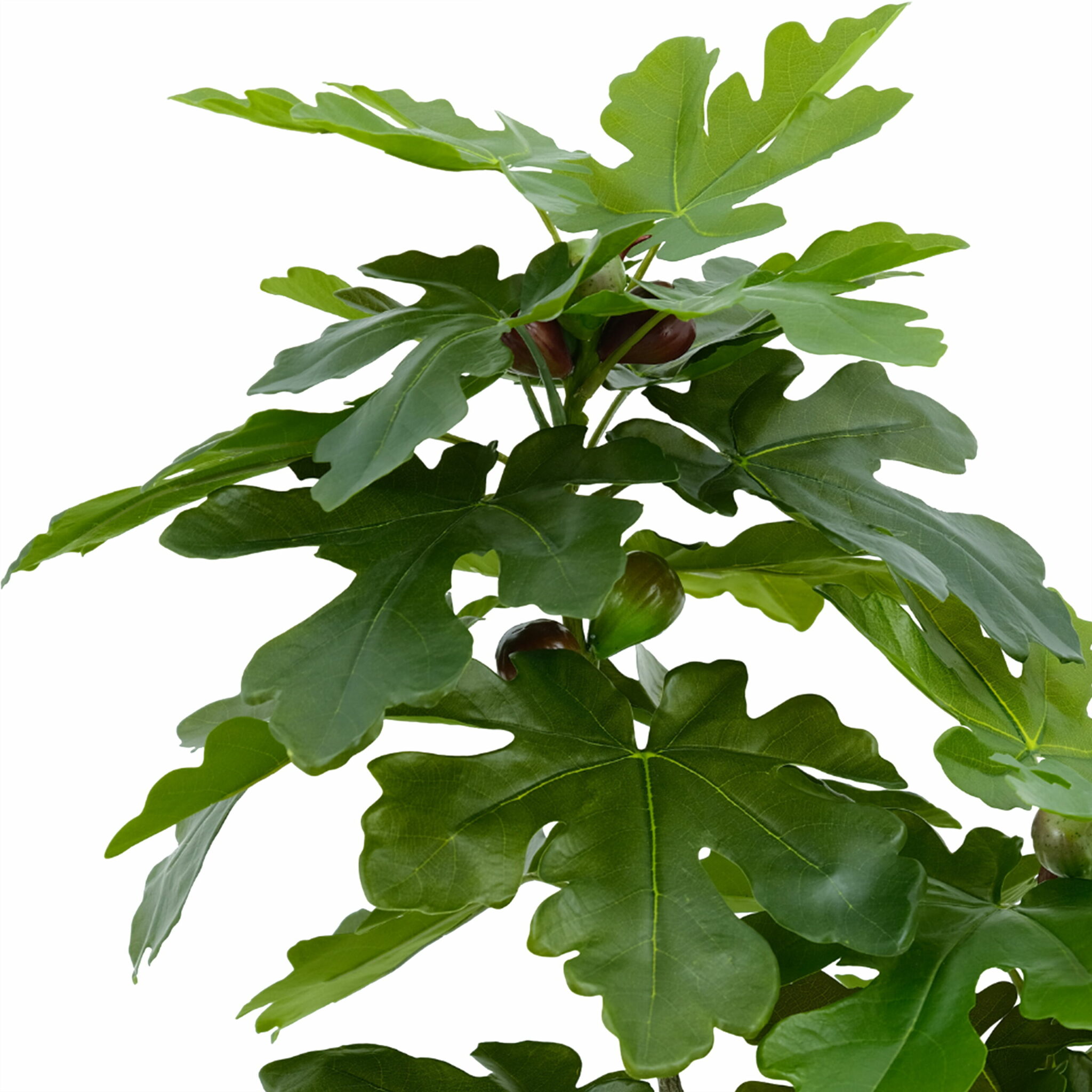
Advisory: three golden rules for selecting multi-year anti-UV faux plants
1) Demand documented accelerated weathering results (ASTM G154) and baseline ΔE values that match your durability target. 2) Verify material specifications: look for named UV stabilizers, recommended polymer substrate grades, and additive masterbatch details rather than generic “UV-resistant” claims. 3) Require field-validation in a climate similar to your installation—coastal and high-altitude sunlight behave differently. These metrics let you compare suppliers on objective terms and predict lifecycle costs with confidence. Sharetrade’s engineering approach aligns with these rules and grounds specification in both lab and field evidence; fake fiddle leaf fig tree manufacturer partners benefit from transparent test data and clear material declarations.
Sharetrade integrates testing, materials engineering, and field validation so clients receive durable, color-stable outdoor foliage—reliable value you can specify. —