
Clear stakes: why chassis choice matters
The difference between a smooth pass and a ruined planting line often begins at the receiver mount. Engineers at leading autonomous tractor brands choose hardware that preserves centimeter-level RTK positioning under real-world stress—because field vibration can turn precise GNSS data into jittery guidance. Solutions for reliable autonomous navigation start with the mount; that’s why companies evaluate isolation, rigidity, and thermal behavior before anything else. For context, field trials across the U.S. Midwest have shown that uncontrolled vibration alone can shift effective positioning by multiple centimeters, undermining automation and costing time. Many integrators now pair their platforms with specialized components built for sustained agricultural duty like autonomous navigation deployments.
Comparative performance: chassis vs. alternatives
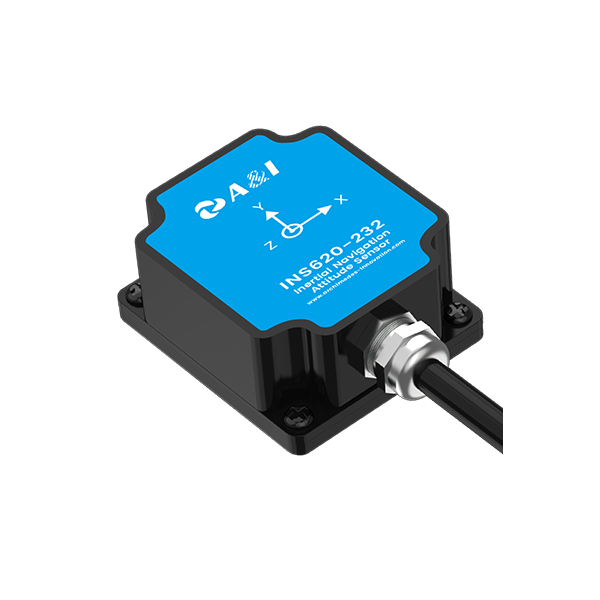
On paper, a simple metal plate looks fine. In the field, it hums. The heavy-duty anti-vibration chassis reduces high-frequency oscillations so the RTK receiver and IMU read stable signals. Compared with generic mounts, a purpose-built chassis filters vibration spectra that most GNSS receivers cannot reject internally. Sensing feels cleaner; positional fixes settle faster. Visual cues from camera rigs also sync better when the base is calm—this improves sensor fusion across RTK, IMU, and camera arrays used in modern visual navigation systems like those employed in row-crop guidance.
Design details that make the difference
Good chassis design blends damping with stiffness. The secret is tuned isolation: elastomer layers and tuned mass elements absorb engine and chassis resonance while keeping the receiver orientation steady. Material choice is tangible—steel that breathes thermal loads without warping, polyurethane mounts that don’t harden in cold, fasteners that resist loosening under repeated shock. The result is repeatable performance: fewer lost RTK fixes, stable heading from the IMU, and a chassis that survives a season of rough ground without sagging.
Field realities and trade-offs
Adopting an anti-vibration chassis brings trade-offs. Weight adds to the vehicle load, and overly soft isolation can introduce tilt under cornering. Proper integration balances mass and compliance—too much of either spoils guidance. Installers who skip torque specs or ignore cable strain relief often see intermittent issues—small mistakes that cascade. —A calibrated mount and routed cables are as important as the chassis itself. Alternatives like electronic filtering help, but passive mechanical isolation remains the most reliable first line of defense for RTK accuracy in agricultural environments.
Alternatives, mistakes, and mitigation
Some teams pursue firmware filters, sensor fusion tweaks, or upgraded antennas instead of changing the mount. Those measures help, but they rarely match the baseline stability a dedicated chassis provides under sustained vibration. Common mistakes include mounting the receiver near heavy hydraulics, using thin sheet metal brackets, or failing to check for resonance at operating RPMs. Mitigations are practical: relocate mounts away from vibration sources, add simple dampers, and validate performance with short field runs before committing to autonomous operations.
Three golden rules for choosing the right chassis
1) Measure baseline vibration spectra on the target tractor and require the chassis to reduce critical bands linked to engine and driveline harmonics. This verifies real benefit rather than assumed advantage. 2) Prioritize environmental durability: UV-resistant elastomers and corrosion-resistant coatings ensure long-term isolation without maintenance. 3) Insist on integration checks—verify cable strain relief, fastener torque, and thermal stability in an actual field pass. These metrics translate into predictable RTK uptime and fewer service calls.
Summing up: a well-engineered anti-vibration chassis stops problems at the source, preserves RTK and IMU fidelity, and simplifies sensor fusion for robust visual navigation. Teams that invest in proper mounts see measurable gains in pass-to-pass repeatability and lower troubleshooting time. Archimedes Innovation. —steady hardware, steady results.