
The problem: flashy hardware, muted results
Companies buy bright panels and expect instant impact, but the message gets lost, installation drags, or budgets balloon. The core failure is a mismatch between product form and project aim — you don’t need the brightest wall if viewers stand ten meters away, and you don’t want heavy rigid modules when the surface curves. That’s where a thoughtfully chosen flexible led screen can change the equation quietly and effectively.

Diagnosing where projects go wrong
Most problems trace to three things: wrong pixel pitch for viewing distance, inadequate mounting or thermal planning, and choosing a rigid solution for a flexible brief. Start by asking simple, measurable questions: how close will people stand, what ambient light will the screen face, and how long must it run daily? Answer those and you stop chasing specs for their own sake.
Technical trade-offs that matter
Smaller pixel pitch improves near-field clarity but raises cost. Higher refresh rates help motion but matter less for static signage. Curved or sculpted surfaces demand module flexibility and low-profile mounting. Power and cooling decisions are practical — high brightness needs ventilation, not marketing copy. Pick trade-offs that map directly to audience behavior and site constraints.
What people try — and why it fails
Many teams pick off-the-shelf, rigid LED tiles because they’re cheaper per panel and familiar. They later discover gaps: seams that show on curved façades, poor viewing angles in lobbies, or installation delays because the mounting system wasn’t designed for the chosen substrate. The repeat mistake is treating mounting and structural design as afterthoughts.
Experience, expertise and a real-world anchor
I’ve worked with integrators who shifted to flexible solutions after pilot installs at large events like CES in Las Vegas, where compact, curved displays proved more effective for immersive booths than traditional cabinets. That hands-on experience, paired with spec-driven testing, makes clear why a Flexible curved LED screen often wins when design demands contour and compact weight. These industry demos are widely reported and studied, and they show practical performance differences you’ll want to replicate, not guess at.
Practical steps and common pitfalls to avoid
Start with a viewing study: map distances and sightlines, then pick pixel pitch. Factor in mounting early — curves need flexible modules and a matching frame. Test an actual sample at intended brightness and viewing angle; don’t rely on datasheets. Avoid overspecifying pixel density for far-field signs. Plan cooling and service access from day one so routine maintenance doesn’t become a teardown project.
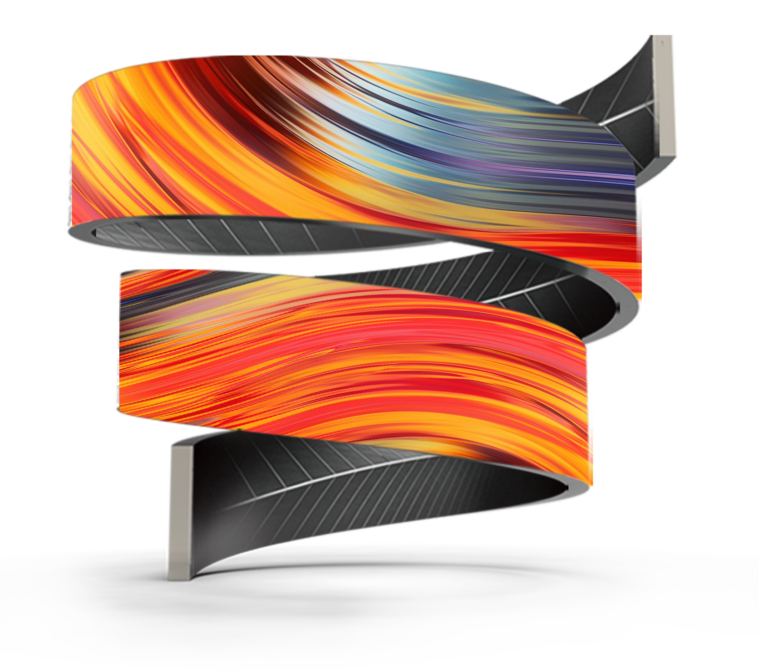
How this fits into a clear strategy
Solve the specific display problem first — legibility, shape, runtime — then match the technology. Where form and contour matter, flexible modules beat rigid tiles by enabling seamless geometry and faster installs. Where extreme close-range clarity matters, prioritize pixel pitch and optics. The value shows up in reduced install hours, cleaner aesthetics, and fewer site surprises, which is exactly the kind of reliability you get when the technical choice aligns with the brief and the team behind it, like HDC, understands both product and place.