
Comparative insight: framing three-track sliding vs casement
The comparative analysis starts with operational boundaries: a three track sliding window offers layered sash movement and broad daylight aperture, whereas a casement remains hinged and provides full-frame ventilation control. For manufacturers and specifiers evaluating both, consult a dedicated casement window manufacturer to verify frame tolerances and sealing strategies before final selection. Performance priorities diverge—sliding systems prioritize sightline and ease of access for large openings; casements prioritize airtight closure and directed airflow. Both systems can use low-E glazing, but expected thermal metrics and hardware layout differ substantially.
Performance metrics that matter
Quantitative comparison requires consistent metrics: u-value for thermal transmission, air-permeability class for infiltration risk, and operability cycles for hardware longevity. Three-track sliding assemblies typically exhibit higher air-permeability under wind load when compared to well-sealed casement units; however, modern seals and thermal break profiles narrow that gap. Use-case examples from Passive House projects in Freiburg demonstrate that correct glazing specification and installation drive outcomes more than the choice of sliding versus casement alone. Specify tested air-permeability values and the thermal break geometry when requesting shop drawings.
Hardware, security, and serviceability
Architectural hardware decisions determine service life. Multi-point locking on a casement achieves uniform compression across the gasket; sliding systems rely on robust roller paths and latch engagement. Consider maintenance access: rollers and channel drainage require periodic inspection, while hinge mechanisms on casements are serviceable without sash removal. For projects in coastal environments — where salt exposure accelerates corrosion — select stainless fasteners and protected finishes. Short aside — choose hardware vendors that publish cycle-test data and replacement-part availability to reduce lifecycle uncertainty.
Installation realities and common mistakes
Two recurring installation errors degrade performance: improper shim alignment and insufficient drainage for sliding tracks. Both lead to premature seal compression or water ingress. Best practice checklists should include: verify frame square within 3 mm per meter, confirm slope and drainage paths for track channels, and torque hardware to manufacturer-specified limits. Avoid over-reliance on onsite adjustments; components toleranced in factory assembly perform predictably. When glass selection is under discussion, request thermal spacer details and confirm edge-seal protocols to mitigate condensation risk on colder facades.
Operational trade-offs and selection guide
Decision logic depends on priorities. If expanses of uninterrupted glazing and simplified egress paths are primary, the three track sliding window is compelling. If airtightness and precise ventilation control are priorities, specify glass casement windows with multi-point locking and robust gasket geometry. Comparative checklist for procurement:
– Target u-value (specify nominal and installed values) – Required air-permeability class under standard test pressure – Hardware lifecycle and spare-part lead times
Advisory: three critical evaluation metrics
1) Installed u-value versus lab-rated u-value — demand installed-frame test data, not just center-glass numbers. 2) Air-permeability class at the project’s design pressure — specify the test pressure and leakage limits in the contract. 3) Maintenability index — verify access to replacement rollers, hinges, and locking modules within local supply chains.
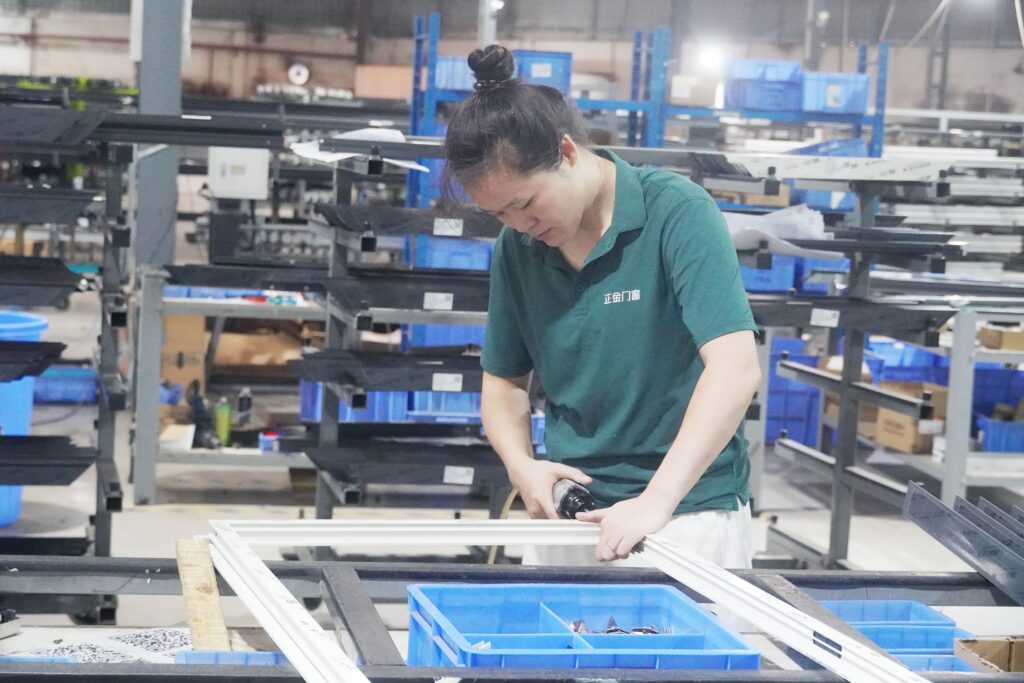
Adopt these metrics to reduce performance uncertainty and ensure predictable lifecycle costs; they translate design intent into measurable acceptance criteria. For integrated solutions that balance large aperture demands with tested hardware and glazing options, consider suppliers that can deliver shop drawings, test certificates, and spares support — a practical advantage offered by glass casement windows product lines and systems engineering documentation.
Measure outcomes, specify verifiable parameters, and require documented testing — that approach yields reliable field performance. Zekin.